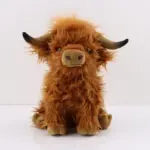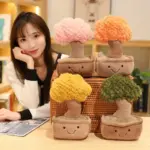
The Short Answer
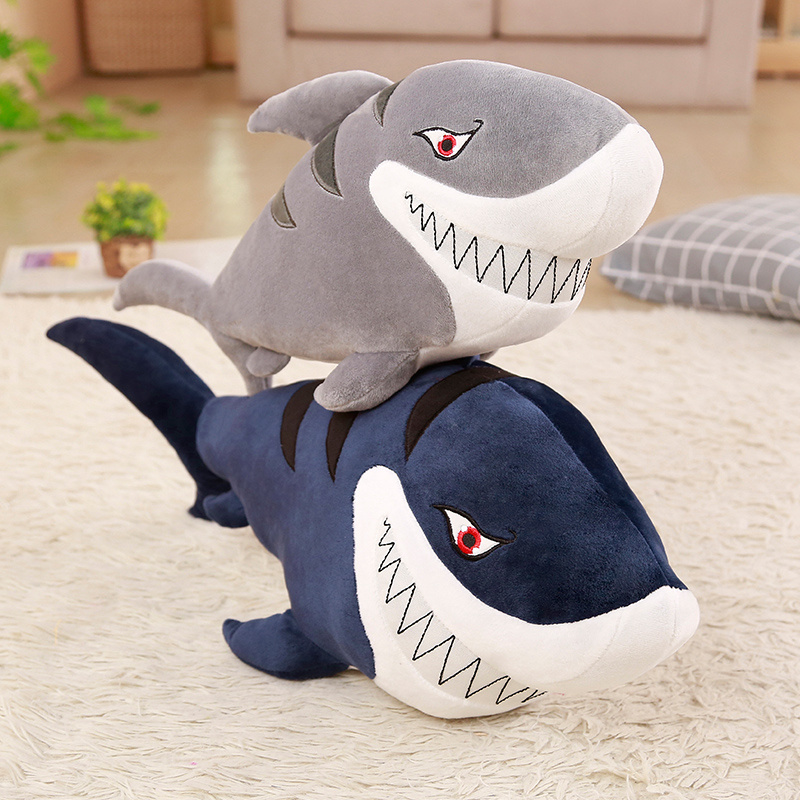
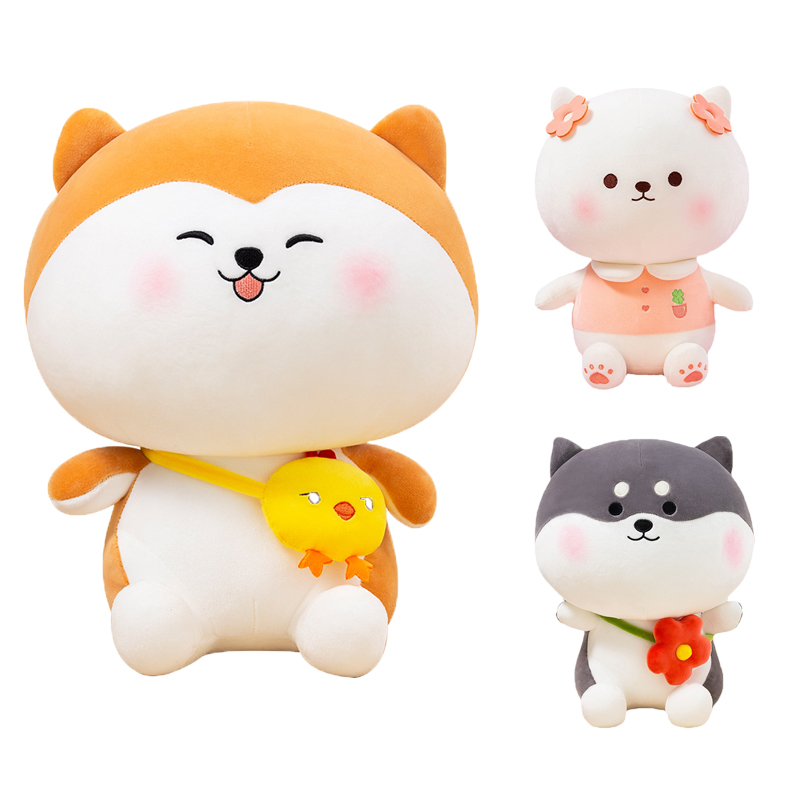
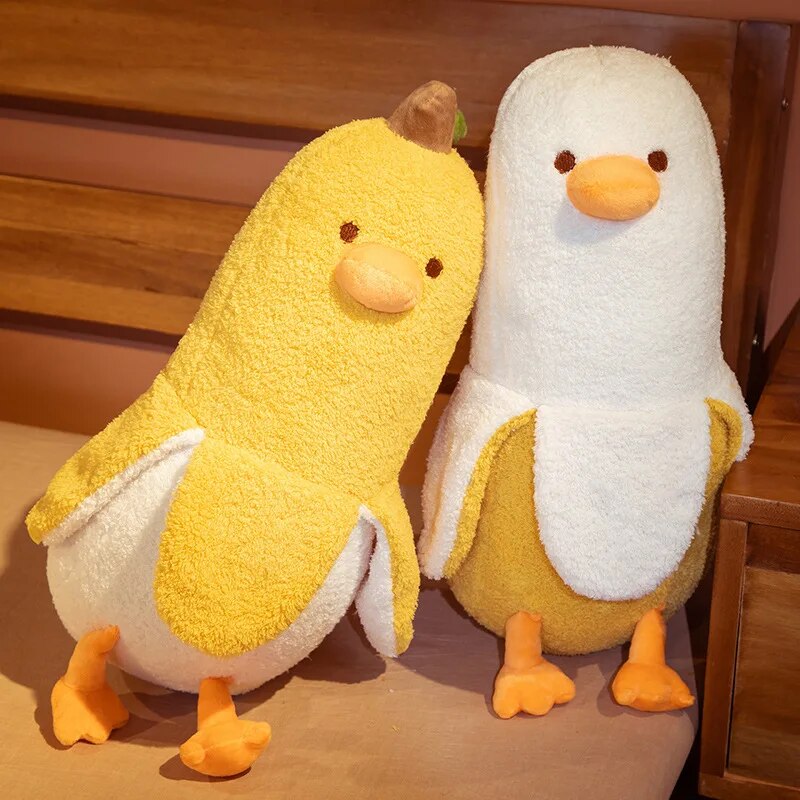
Gen Z is obsessed with plushies because they solve a real problem cheaply. A soft toy gives instant physical comfort, costs far less than most forms of self care, photographs beautifully, and carries no social penalty in a generation that has largely stopped treating cuteness as childish. That combination of comfort, affordability, and visibility is why plush ownership among adults in their teens and twenties keeps climbing.
The longer answer is more interesting, and it says a lot about how this generation handles stress, decorates a room, and signals who they are.
Comfort Became a Priority, Not a Luxury
Ask someone born after 1997 what they want from their bedroom and comfort usually comes before style. That is not laziness. It is a response to conditions. This is the first generation to reach adulthood with a phone that never stops, rent that outpaces wages, and a news cycle that arrives faster than anyone can process it.
Against that background, a soft object you can physically hold does something a screen cannot. It occupies your hands. It has weight. It asks nothing of you. Psychologists have written for decades about transitional objects and their role in soothing, and the research was never limited to children. What changed is that adults stopped pretending they had outgrown the need.
A plushie is also one of the cheapest comfort purchases available. Compare it to therapy, a weighted blanket, a weekend away, or almost any wellness product marketed at young adults. A soft companion costs a fraction of those and lasts for years. We wrote more about the adult side of this in our guide to the best stuffed animals for adults.
Emotional Regulation, Not Regression
The framing has shifted. Ten years ago, an adult admitting they slept with a stuffed animal would have softened it with a joke. Now the same person will say it plainly, and often explain why.
Part of that is language. Gen Z talks openly about anxiety, burnout, sensory overwhelm, and nervous system regulation in ways earlier generations did not. Once you have vocabulary for what a soft object does for you, keeping one stops feeling like something to hide. Holding something soft slows breathing and lowers the sense of alertness that makes it hard to settle. That is not a marketing claim, it is why the habit persists.
Weighted and textured plushies have grown quickly for exactly this reason. A heavier toy across the lap creates gentle pressure that many people find grounding, which is why our Sensory Plushies range has become one of the most searched parts of the shop. If you want the fuller picture, our article on whether stuffed animals can help with anxiety covers the evidence in more detail.
Social Media Made Cuteness Public
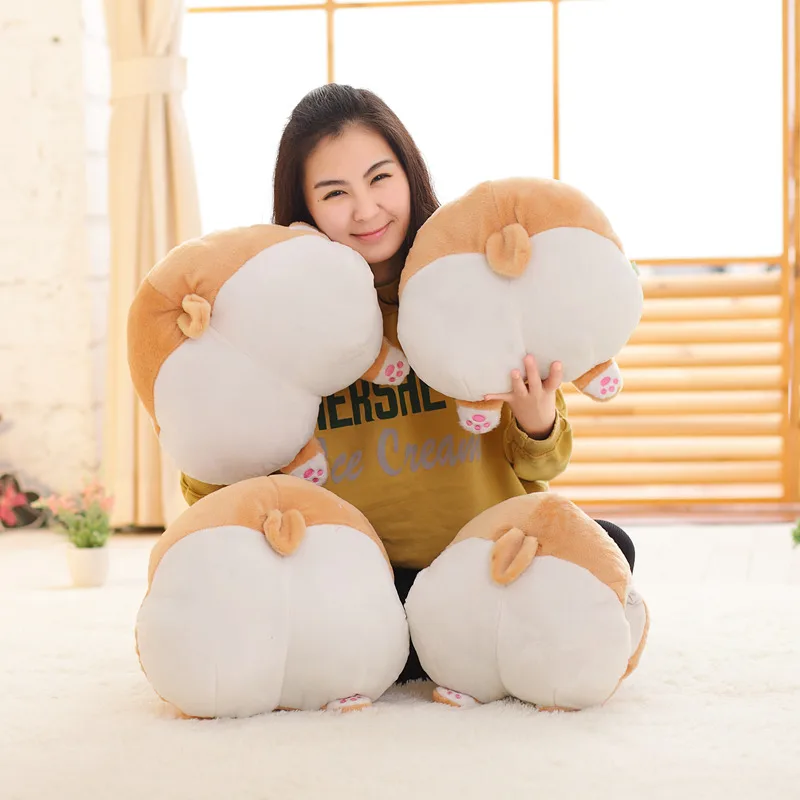
None of this would have scaled without the feed. Short video turned the bedroom into a stage, and plushies photograph extremely well. They are colourful, they hold a pose, they read instantly at thumbnail size, and they make an ordinary room look intentional.
Three formats did most of the work. Room tours, where a shelf of plush characters signals personality faster than any caption. Unboxing clips, where the reveal of a giant plush lands as a genuine moment. And collection videos, where the sheer scale of a wall of soft toys becomes the content itself.
The result is a feedback loop. Seeing other adults display plushies without embarrassment removes the last bit of hesitation for everyone watching. Cuteness stopped being a private taste and became a legible aesthetic, one that anyone can join by buying a single soft toy.
Collecting Is an Identity, Not a Habit
For a large part of this audience, one plushie is never the plan. Collecting gives structure to the interest, and it works the way collecting always has: a theme, a hunt, and a shelf that shows progress.
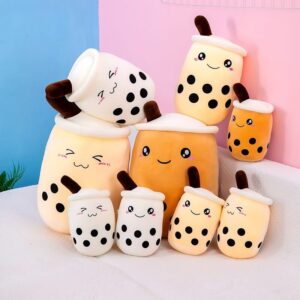
Themes vary widely. Some people collect by animal, building a whole shelf of cats or bunnies or frogs. Others collect by size, working up to a single oversized centrepiece. Others chase characters. What they share is that the collection becomes a form of self description. Someone can look at your shelf and learn something true about you in about four seconds.
Our Collectible Plushies range exists for this group specifically, and if you are building a shelf from scratch, our guide on how to start a plush animal toy collection is a practical place to begin.
Plushies Became Furniture
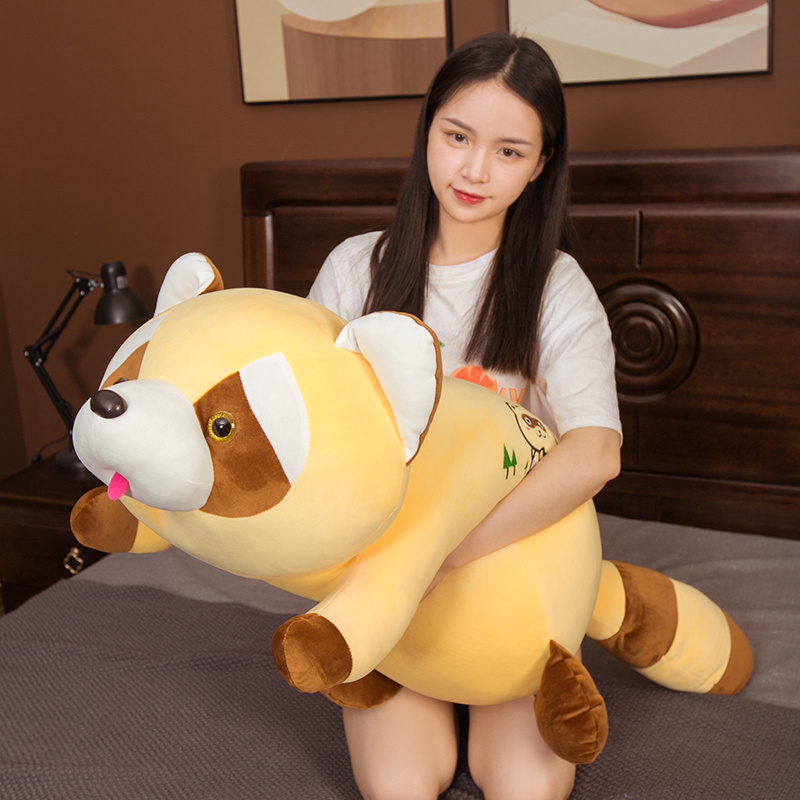
The other shift is spatial. Plushies are no longer kept on a bed and forgotten. They are placed, arranged, and treated as part of the room design.
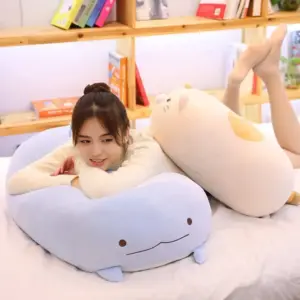
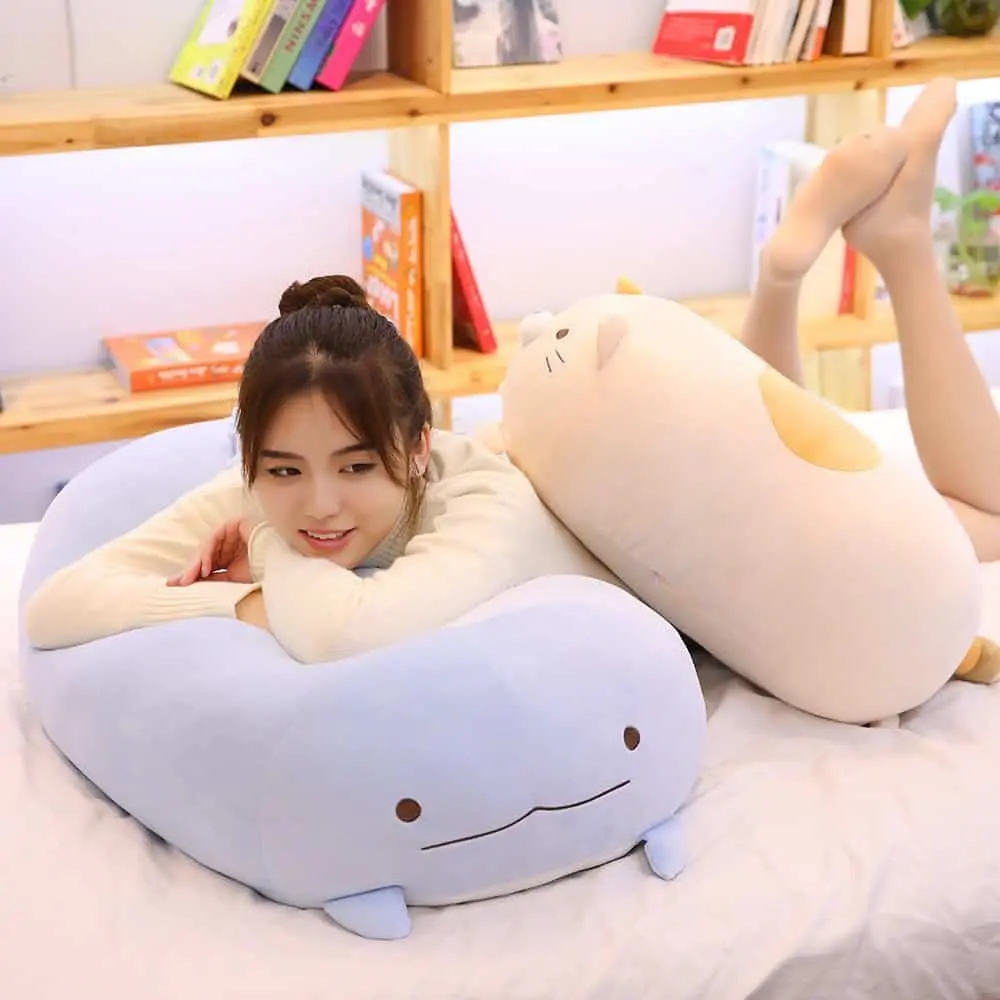
A giant plush in a corner works the way a beanbag does, filling space and softening a hard room. A row of matching characters along a shelf reads as deliberate rather than cluttered. A body pillow doubles as seating. For anyone renting a small flat with white walls and a no drilling rule, soft objects are one of the few ways to make a space feel personal without touching the structure.
This is why Jumbo Plushies and Body Pillows sell so consistently to the same audience buying small collectibles. They serve different jobs in the same room. Our plush room decor guide and the Kawaii Room page go deeper on layout if that is the part you care about.

The Sleep Connection
A quieter reason sits underneath all of this. A lot of people in this age group sleep badly, and a plushie is part of how they cope.
Holding something while falling asleep gives the body a fixed point. It stops the restless arm shifting, it provides a consistent cue that the day has ended, and for people who sleep alone for the first time after moving out, it fills a genuine absence. Anyone who has moved to a new city knows how loud an unfamiliar room sounds on the first night.
That routine element matters more than the object itself. The brain responds well to repeated signals, and a soft toy that only appears at bedtime becomes one. We covered this in more depth in reasons plushies should be part of your sleeping routine.
Why Nobody Is Giving Them Up
The usual assumption is that this is a phase, and that people will quietly stop once they hit thirty. The evidence points the other way. Adults are keeping their plushies, buying more of them, and passing the habit sideways to friends rather than growing out of it.
Three things make it durable. The cost stays low, so there is no financial reason to stop. The stigma has largely gone, so there is no social reason to stop. And the function is real, so there is no practical reason to stop. Habits that survive on all three tend to last. Our post on why it is fine to have a stuffed animal as an adult makes the fuller case.
How to Start if You Are New to This
You do not need a shelf of forty to take part. A few practical suggestions:
- Buy one, not five. Pick a single plushie you genuinely like and live with it for a month before adding anything.
- Match size to purpose. Something small for a desk, something medium for sleeping, something oversized only if you have floor space.
- Check the fabric. Short pile fabric stays cleaner and holds shape. Long fluffy pile looks softer but mats faster.
- Think about washing before you buy. Anything that will be slept with needs to survive a gentle cycle.
- Start where the choice is widest. Our Kawaii Stuffed Animals range and Kawaii Gifts collection cover most starting points.
Frequently Asked Questions
Is it normal for adults to sleep with a plushie?
Yes. Surveys consistently find that a large share of adults keep a soft toy, and many sleep with one. It is common enough that it is no longer treated as unusual behaviour.
Why does Gen Z specifically like plushies so much?
Three reasons stack up: comfort is affordable, cuteness carries no stigma in this generation, and plushies perform well on social platforms. Older generations had the first reason only.
Are plushies actually good for anxiety?
They are not a treatment, but physical comfort objects genuinely help many people settle. Weighted and textured designs tend to work best for this.
What size plushie should I buy first?
Medium, roughly the size of a pillow. Small ones get lost on a bed, and oversized ones need floor space you may not have.
How do I keep a plushie clean?
Surface clean regularly with a damp cloth, wash gently inside a laundry bag when needed, and always air dry. Heat is what ruins plush fabric.
Do plushies hold their value?
Some character and limited run plushies do, but most are bought to be used rather than resold. Condition and original tags matter most if resale is a consideration.
Final Thoughts
Calling this an obsession undersells what is actually happening. Gen Z worked out that a soft object is a cheap, effective, socially acceptable way to feel better, and then decided there was no reason to be embarrassed about it. That is less a trend than a correction.
If you are curious where to begin, browse Kawaii Stuffed Animals or the Cuddle Buddies range at My Heart Teddy and pick the one you keep coming back to.
Looking for a specific recommendation? See what the cutest plushie ever is.
Also worth reading: how to build a boba themed room.