

What Is Kawaii Fashion?
Kawaii fashion is a clothing aesthetic rooted in the Japanese concept of cuteness — kawaii (可愛い) — translated into every element of an outfit, from colour choice and garment silhouette to accessories, makeup, and the overall emotional impression a look creates. At its heart, kawaii fashion is a conscious decision to dress for joy rather than status, to choose softness over severity, and to communicate through clothing that the world is a better, brighter, more delightful place. It is wearable optimism in the truest sense.
The visual language of kawaii fashion is built on a set of recognisable elements that work together to create an aesthetic that feels simultaneously nostalgic, playful, and sophisticated. Pastel colour palettes — powder pink, soft lavender, mint green, baby blue, peach, and cream — form the foundational backdrop. Over this palette, kawaii fashion layers motifs drawn from childhood imagination: strawberries, sleeping animals, clouds, stars, bows, mushrooms, rainbows, and an endless cast of adorable original characters. The silhouettes are intentionally comfortable and unrestrictive — oversized hoodies, flowing skirts, relaxed dresses, and layered coordinates that prioritise freedom of movement alongside visual delight.
Kawaii fashion is not age-restricted, gender-specific, or available only to people of a particular body type. The global kawaii community is one of the most inclusive in the world of alternative fashion: people of all ages wear it, all genders embrace it, and all body types are celebrated within it. The unifying philosophy is not conformity to any particular body ideal but rather authenticity — the commitment to dressing in a way that genuinely reflects your love of cuteness, joy, and creative self-expression.
The psychological dimension of kawaii dressing is increasingly well documented. Research in Japan has shown that engaging with kawaii imagery — and by extension, wearing kawaii clothing — activates the brain's reward systems in ways similar to interacting with cute animals or young children. The act of choosing a kawaii outfit each morning is, for many wearers, a daily ritual of positive emotional priming: you are literally dressing for happiness. In a culture that often demands seriousness and conformity in dress, kawaii fashion is a gentle, persistent act of joyful resistance.
The hashtag #kawaiifashion has generated over 3 billion views on TikTok alone, making kawaii one of the most-searched aesthetic categories on the platform. The Japanese government has even designated kawaii culture as a major soft-power export, with official "kawaii ambassadors" representing Japanese creative industries internationally.
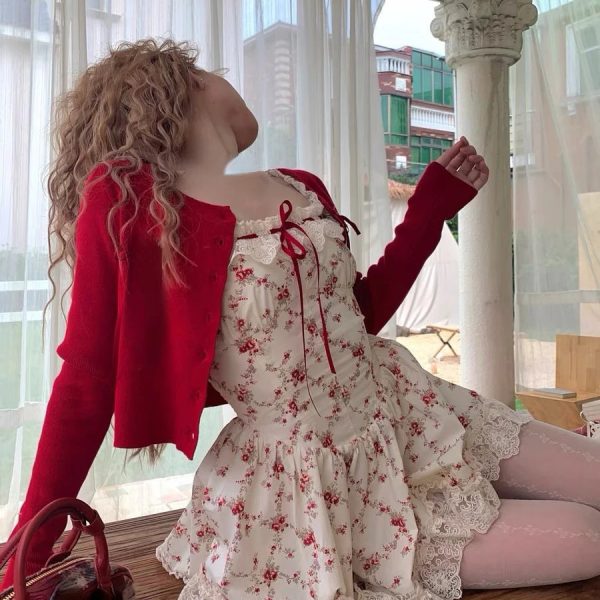
Kawaii fashion exists on a broad spectrum. At the casual end, it manifests as a graphic tee featuring a sleeping cat, a pastel hoodie with bunny ear details, or a floral mini dress in soft pink. At the elaborate end, it becomes a full Sweet Lolita coordinate with a JSK (jumper skirt), petticoat, lace-trimmed blouse, elaborate headdress, tea party shoes, and carefully matched accessories — a wearable artwork that requires hours of preparation and genuine craft knowledge to assemble correctly. Most kawaii fashion sits comfortably between these poles: wearable, expressive, personal, and joyfully, unapologetically cute.
Fairy Kei
Pastel rainbow dreamscapes inspired by 80s toys and cartoon nostalgia. Tulle skirts, vinyl accessories, cloud motifs.
Sweet Lolita
Victorian porcelain doll aesthetic — petticoats, bows, strawberry prints, lace, pastel coordinates.
Gothic Lolita
Dark elegance meets kawaii — black lace, crosses, deep florals, platforms, intricate ruffles.
Pastel Goth
Lavender and skulls, pink and bats — where softness and darkness create something entirely new.
Maid Fashion
Apron dresses, lace headdresses, ruffled socks — the aesthetic of Akihabara's iconic maid cafés.
Harajuku Decora
Maximalist layering of accessories, toys, clips, and brightly coloured basics. More is more, always.
This guide covers the six substyles in depth. For a broader overview, see our breakdown of all 20 kawaii substyles.
Harajuku & The Origins of Kawaii Street Style
The story of kawaii fashion begins in the late 1970s in Harajuku, a district of Tokyo centred around Takeshita Street — a narrow, vibrant shopping lane that became the spiritual home of Japanese youth culture and alternative fashion. In this period, young Japanese women began to reject the conservative, status-oriented fashion codes that dominated mainstream Japanese society. Rather than dressing in ways that signalled professional achievement or social conformity, they chose to dress in ways that expressed personal joy, childhood nostalgia, and a refusal to be defined by adult expectations. They wore oversized bows, lacy blouses, pastel accessories, cartoon character motifs, and silhouettes inspired by children's wear — and in doing so, they created something entirely new in the history of fashion.
This was not merely an aesthetic choice but a cultural and political one. In post-war Japan, the drive for economic productivity and social conformity placed enormous pressure on young people — particularly young women — to dress, behave, and aspire in narrowly prescribed ways. The kawaii movement was a direct rejection of those pressures. By dressing in ways society deemed childlike or unserious, these young Harajuku women were asserting their right to define themselves on their own terms. The word kawaii itself carries this dual charge: on the surface, it simply means "cute," but in the context of the movement, it signalled a radical commitment to self-directed joy over socially imposed seriousness.
International awareness of Harajuku street fashion grew dramatically in 1997 when photographer and journalist Shoichi Aoki launched FRUiTS magazine — a monthly publication dedicated exclusively to documenting the extraordinary outfits of Harajuku youth. FRUiTS reached fashion editors, photographers, designers, and youth culture observers worldwide, providing the first sustained, high-quality documentation of kawaii street style as a serious creative phenomenon. The imagery shocked and delighted Western audiences: these were not professionally styled models in controlled environments but real young people who had spent hours, days, or weeks designing and assembling their outfits with the same dedication and creativity as any professional designer. FRUiTS ran until 2017, and its archive remains one of the most important documents of Japanese youth fashion history.
Young women in Harajuku begin developing kawaii fashion as a counter-cultural statement, rejecting social conformity through childlike, expressive dress.
FRUiTS magazine launches, documenting Harajuku street style and bringing kawaii fashion to international attention for the first time.
J-pop and K-pop idols adopt kawaii fashion aesthetics. Anime culture explodes globally. Western brands begin incorporating kawaii motifs into mainstream collections.
Instagram and Pinterest fuel a global kawaii aesthetic community. Lolita, fairy kei, and pastel goth gain dedicated international followings and online communities.
TikTok ignites a kawaii renaissance. #KawaiiFashion generates billions of views. Kawaii aesthetics enter luxury fashion runways. The style is fully, globally mainstream.
The 2000s brought a powerful new amplifier to kawaii fashion's global reach: the worldwide explosion of J-pop and K-pop. Japanese idol groups like Morning Musume and AKB48 popularised sweet, hyper-feminine kawaii aesthetics, while Korean groups introduced a sleeker, urban take on the style. Anime and manga — already global phenomena — deepened the association between Japanese visual culture and kawaii aesthetics in the imaginations of young people worldwide. By the end of the decade, kawaii fashion had moved from a subcultural interest to a genuine global aesthetic movement with dedicated communities on every continent.
The 2020s delivered the final transformation: TikTok's short-form video format proved to be the perfect medium for kawaii fashion content. Outfit reveals, haul videos, coord tutorials, and aesthetic compilation videos brought kawaii fashion to audiences of billions who had never previously engaged with Japanese street style. The hashtag #kawaiifashion routinely trends globally, and creators who style themselves in kawaii aesthetics routinely attract audiences in the millions. Today, kawaii fashion is not a niche interest — it is one of the dominant global aesthetic movements of the twenty-first century.
Fairy Kei — Dreamy Pastel Wonderland
Fairy kei is one of the most enchanting and distinctive substyles within kawaii fashion. Emerging from the Harajuku district in the late 2000s — with iconic shop Spank! as its spiritual home — fairy kei draws its visual language entirely from the pastel-coloured world of 1980s Western childhood: Care Bears, My Little Pony, Rainbow Brite, Strawberry Shortcake, and the kaleidoscopic world of 80s cartoon animation. Where other kawaii substyles might reference Japanese popular culture, fairy kei looks westward to a particular moment of nostalgic innocence, recreating the colours and characters of that era in clothing form.
The fairy kei colour palette is the most distinctive element of this substyle, and it is one of the most visually distinctive palettes in all of kawaii fashion. Rather than the clean, single-colour pastel approach of, say, minimalist kawaii, fairy kei embraces a full rainbow of pastels used simultaneously: powder blue sits beside lavender beside baby pink beside mint green beside soft peach beside star-yellow. The result should feel dreamy and fantastical — like stepping into a waking dream of cotton candy clouds and soft summer mornings. Nothing clashes; everything harmonises through the shared quality of softness.

The Art of Pastel Layering
The key to perfect fairy kei is layering within the pastel rainbow. A tulle tutu skirt in lavender pairs beautifully with an oversized pastel pink top, pearl accessories, and platform sneakers in white or baby blue. Each layer adds dimension while maintaining the dreamlike quality that defines the style.
Fairy kei accessories are as important as the garments themselves. Look for star-shaped clips, cloud-shaped bags, pastel bead necklaces, vintage toy keychains, and holographic stickers. The more whimsical and nostalgic the accessory, the more authentically fairy kei the overall look.
Shop Fairy Kei CollectionKey garments in fairy kei include oversized pastel sweatshirts and t-shirts (often featuring 80s cartoon characters or original kawaii graphics), tutu skirts and tulle midi skirts in multiple pastel layers, leg warmers, slouchy socks, and platform sneakers or Mary Jane shoes in white, cream, or pastel shades. The silhouette should be relaxed and voluminous — nothing fitted or structured. Fairy kei is a style of abundance: abundant colour, abundant layering, abundant joy.
Accessories are the heart of any fairy kei outfit and the category where the style's personality shines most brightly. Statement pieces include oversized star-shaped earrings, multiple layered bead necklaces in pastel colours, vinyl handbags shaped like clouds or stars, barrettes and hair clips featuring toys, food characters, and animals, and layered rings on multiple fingers. Fairy kei enthusiasts often incorporate actual vintage toys — small figures, clip-on toys, or miniature accessories from the 80s and 90s — as part of their look, worn as brooches, bag charms, or hair accessories.
Beginning a fairy kei wardrobe is more approachable than it might appear. Start with one statement pastel skirt or oversized graphic top and build around it. The key principle is: if it is soft in colour and playful in spirit, it probably works in fairy kei. Our Fairy Kei collection includes dresses, skirts, and accessories designed specifically to help you achieve that dreamy, layered look. Complement any fairy kei outfit with one of our kawaii stuffed animals as a bag charm or accessory — nothing completes a fairy kei look quite like a plush companion.
Sweet Lolita & Gothic Lolita — Elegant Kawaii at Its Finest
Lolita fashion is perhaps the most structurally sophisticated and community-defined substyle within kawaii fashion. Emerging in Japan in the 1980s and developing into a richly detailed aesthetic movement through the 1990s and 2000s, lolita fashion draws inspiration from Victorian and Edwardian children's clothing, Rococo ornamentation, and the romanticised vision of feminine childhood innocence — filtered entirely through a Japanese kawaii sensibility. The result is a style of extraordinary intricacy, quality-consciousness, and creative dedication that has attracted a passionate global community of wearers, designers, and collectors.
Sweet Lolita — The Candy-Coloured Coordinate
Sweet lolita is the most immediately recognisable lolita substyle for those new to the aesthetic — the one most often associated with the broader kawaii world in international popular culture. The sweet lolita colour palette centres on pastel pink, white, and soft blue, with frequent use of lavender, mint, and warm cream. The motifs are unambiguously candy-coded: strawberries, cherries, ice cream cones, cupcakes, bunny rabbits, teddy bears, and ornate floral prints. Every element is designed to evoke sweetness, abundance, and an idealised childhood world of endless treats and gentle pleasures.
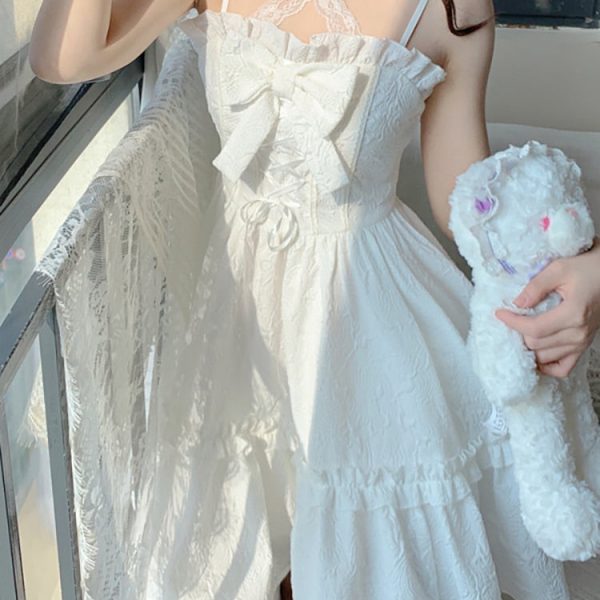
A complete sweet lolita "coordinate" — the term lolita fashion enthusiasts use for a full outfit — is built around a main piece, typically a JSK (Jumper Skirt, a sleeveless pinafore-style dress) or OP (One Piece dress) in a pastel print. Over this goes a lace-trimmed blouse, usually in white or cream with a Peter Pan collar and puffed sleeves. Beneath the main piece is the petticoat — a structured underskirt of organza or tulle that gives the lolita silhouette its characteristic bell-shaped volume. The coordinate is completed with a headdress or hair bow, knee-high socks or tights with lace trim, and Mary Jane or T-strap shoes in a coordinating colour. This level of completeness and coordination is fundamental to the lolita aesthetic — each element should harmonise with the others to create a unified visual impression.
Gothic Lolita — Where Darkness Meets Kawaii Elegance
Dark Elegance, Kawaii Soul
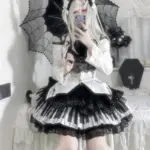
Gothic lolita replaces the sweet substyle's pastel palette with a dramatic combination of black, white, and deep jewel tones. The silhouette remains the same — bell-shaped skirt, lace-trimmed blouse, Mary Janes — but the motifs shift from strawberries and bunnies to crosses, bats, Victorian mourning florals, and intricate geometric lace patterns. The result is not frightening but profoundly elegant: kawaii sensibility applied to a darker visual vocabulary.
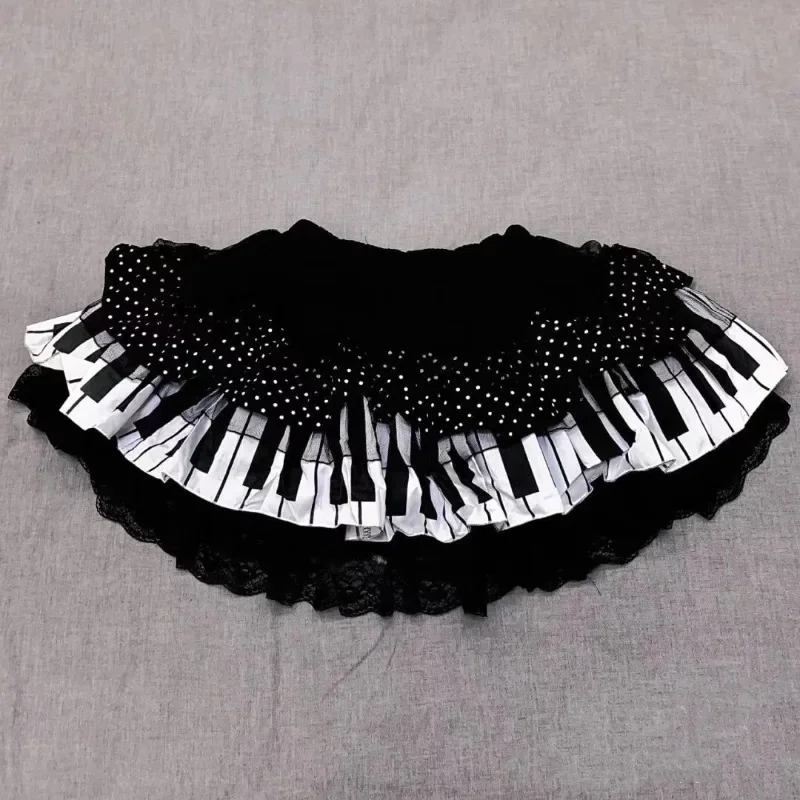
Our Gothic Lolita Piano Key Wave Dot Lace Skirt is a perfect example of goth lolita craftsmanship — intricate lace patterning, piano-key wave details, and a silhouette that layers beautifully with a white blouse and platform shoes.
View Gothic Lolita SkirtGothic lolita emerged in parallel with sweet lolita but drew from a different set of inspirations: Victorian mourning dress, the visual language of Western goth subculture, and the elaborate black-and-white aesthetic of manga and gothic anime. The colour palette is anchored in black and white, with occasional use of deep wine red, forest green, or navy. Motifs include crosses, cathedral windows, bats, spiders, roses in various states of bloom and decay, and ornate Victorian botanical illustrations. The overall impression is one of refined, aristocratic darkness — not horror or shock, but the serious beauty of a Victorian funeral in its most formal, ceremonial expression.
The lolita fashion community has a proud tradition of handmade garments and independent design. Major Japanese lolita brands — Baby, The Stars Shine Bright; Angelic Pretty; Metamorphose temps de fille; Moitié — have cultivated dedicated global customer bases for decades. Secondhand lolita fashion markets (particularly the Lolita Fashion Sales community) allow enthusiasts to buy, sell, and trade garments with remarkable resale value. A well-cared-for lolita garment retains its value for years; some limited-edition pieces appreciate significantly. Our kawaii dress collection includes sweet lolita-inspired pieces and gothic lolita skirts designed to meet the quality standards that lolita enthusiasts expect.
Pastel Goth — Where Kawaii Meets Darkness
Pastel goth is one of the most creative and visually distinctive substyles in the entire kawaii fashion landscape. Where gothic lolita creates darkness within an established, formal fashion framework, pastel goth is a more freeform, streetwear-influenced aesthetic that mixes the soft pastel palette of kawaii fashion with the iconography and sensibility of goth subculture. The result is a style of striking visual tension: soft lavender beside skull motifs, candy pink beside occult symbolism, mint green beside torn fishnet stockings. Pastel goth does not try to resolve this tension — it celebrates it as the defining feature of the aesthetic.
The pastel goth colour palette is anchored in lavender, light grey, pale pink, and white, with strategic use of black as an accent rather than a primary colour. This is what distinguishes pastel goth from pure goth — the darkness is always offset, always softened, always held in tension with something genuinely cute. Key motifs include cute skulls (skulls drawn with big round eyes and soft expressions), crescent moons, pentagram stars, bats with kawaii faces, ouija board elements rendered in soft pastels, and supernatural imagery stripped of its menace and rendered adorable.
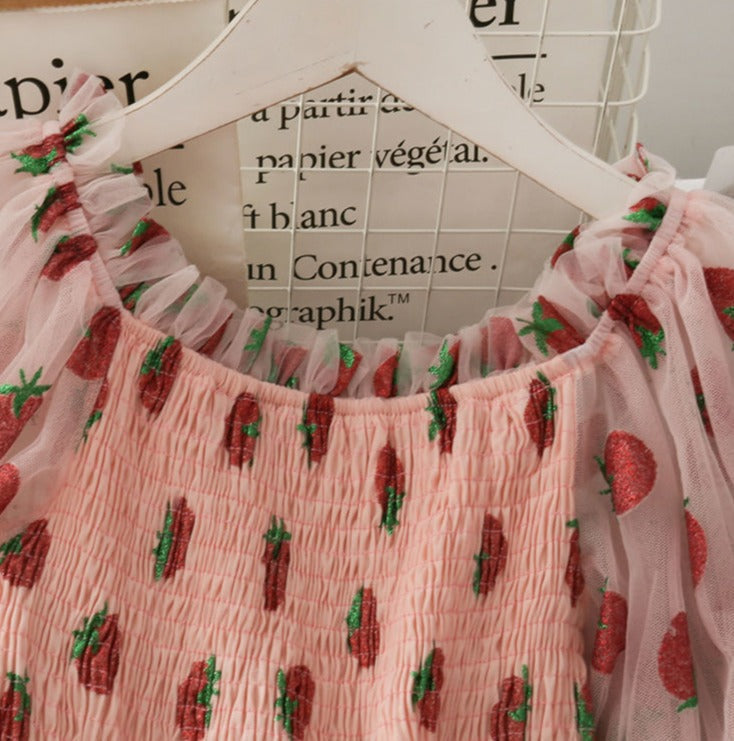 Chiffon Strawberry Puff Sleeve Dress
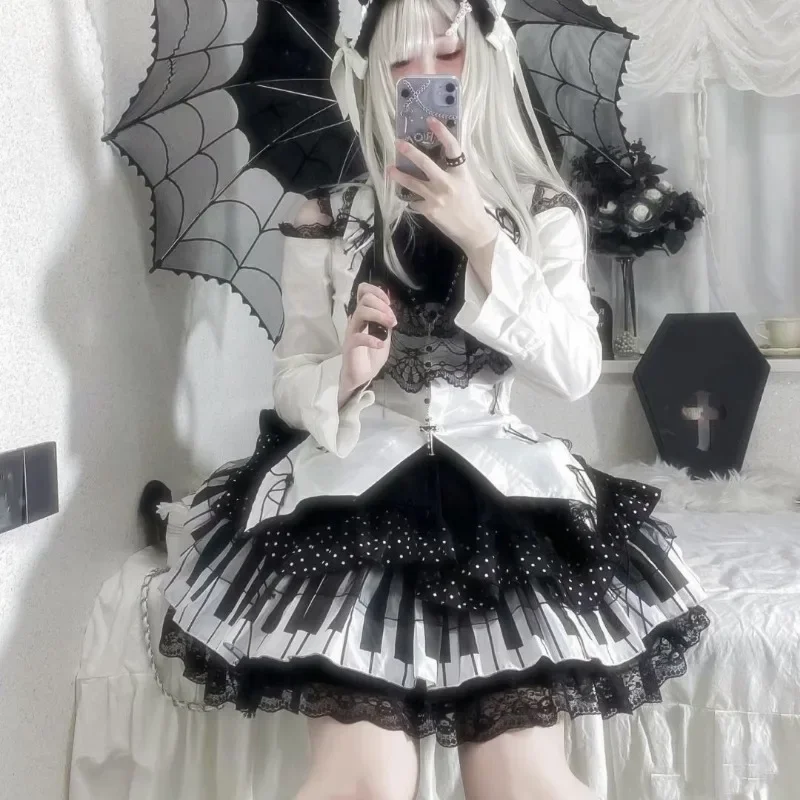 Gothic Lolita Wave Dot Lace Skirt
Key garments in pastel goth include oversized pastel t-shirts and sweatshirts featuring dark motifs, high-waisted skirts in pastel with black lace or mesh overlays, striped thigh-high stockings alternating pastel and black or white and grey, platform creeper shoes (the signature footwear of goth subcultures, rendered in pastel leather), and layered accessories including studded belts, choker necklaces, and ornate rings. Hair in pastel goth is often dyed — lavender, rose gold, pale blue, mint, or white — though a natural hair colour with pastel-coloured accessories achieves a similar effect.
The styling principle of pastel goth is sometimes described as the “70/30 rule”: approximately seventy percent of the outfit should be soft, pastel, and kawaii in quality, while thirty percent should reference goth aesthetics — whether through colour (black), motif (skulls, bats, moons), or texture (fishnet, lace, studs). Lean too far toward the pastel and the look becomes simply “soft kawaii”; lean too far toward the goth and you lose the kawaii tension that makes pastel goth unique. Our pastel goth collection is curated to help you find that perfect balance.
Maid Fashion & Harajuku Cosplay Culture
Maid fashion — also known as maid cosplay or maid café fashion — is one of the most iconic and internationally recognised expressions of kawaii culture. Its origins lie in Akihabara, Tokyo's famous electronics and anime district, where the world's first dedicated maid café opened in 2001. In these cafés, staff dressed in elaborate maid costumes — featuring the signature apron dress, lace headdress, white gloves, and petticoat — served customers while adopting a heightened, theatrical version of formal domestic service. The concept was an instant phenomenon, spreading rapidly throughout Japan and eventually internationally as a touchstone of otaku and kawaii culture.
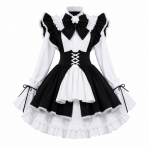
The maid outfit as a kawaii fashion garment is built around a core of recognisable elements: the A-line or bell-shaped black or dark-coloured main dress, the white apron overlay (which may be a full pinafore or a smaller waist apron), the lace headdress or cap, the white ruffled collar or Peter Pan collar, white lace-trimmed socks or stockings, and Mary Jane shoes. Within this basic framework, there is enormous variation — some maid styles incorporate elaborate Victorian detailing, Gothic flourishes, pastel colourways, or anime-inspired modifications. Our Maid Dress collection captures this range beautifully.
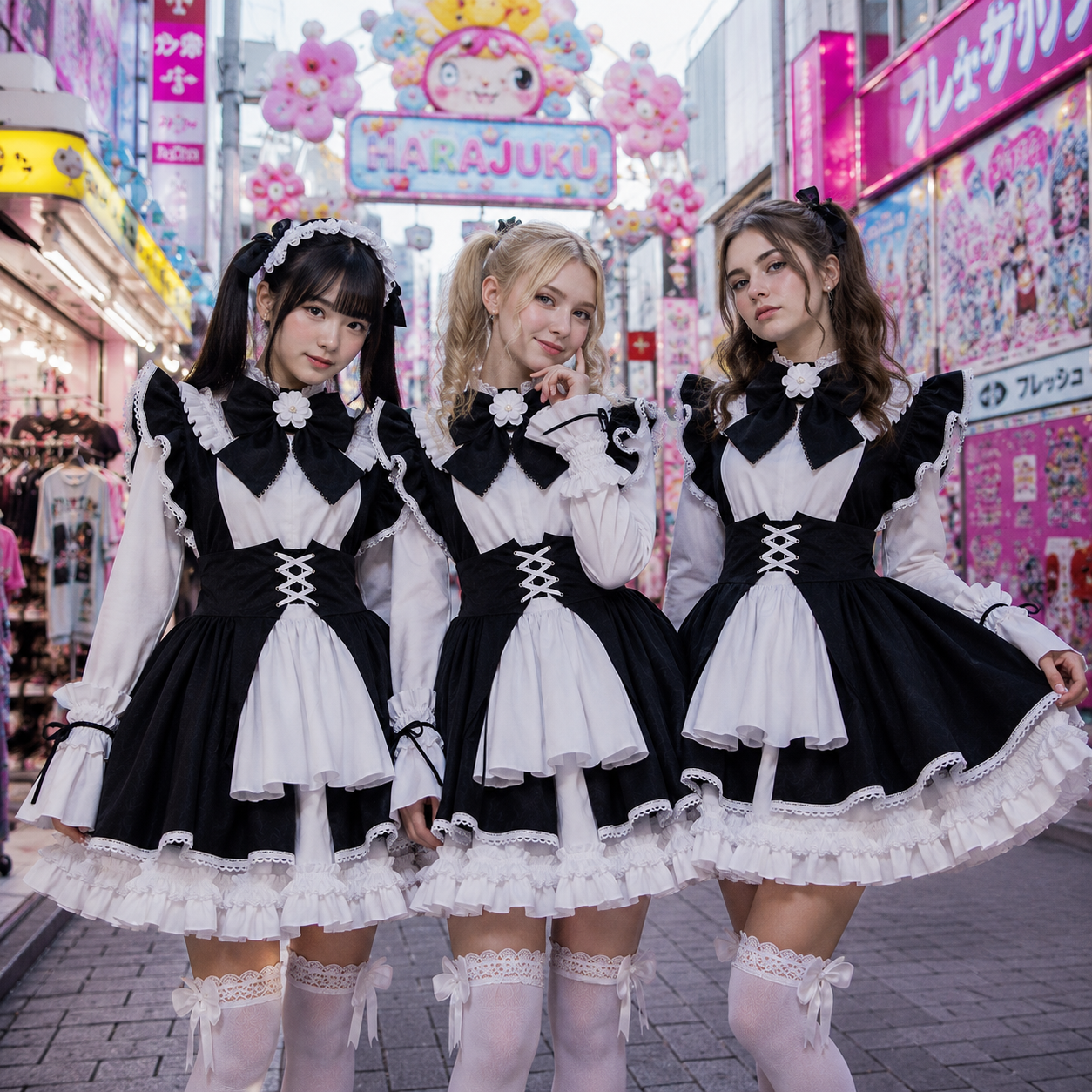 Group Coord
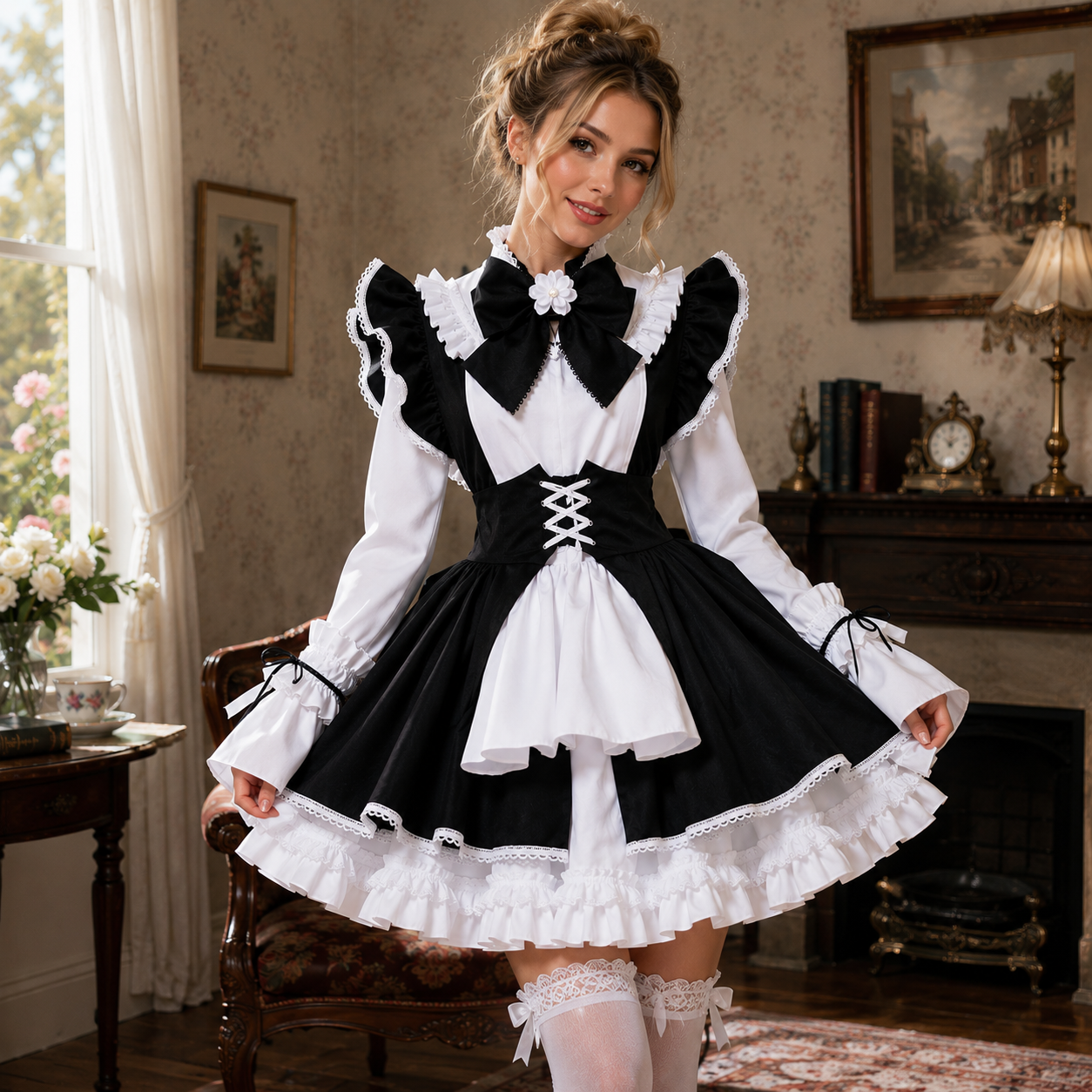 Classic Maid
 Maid Lifestyle
Harajuku Decora is a separate but related kawaii substyle that developed in parallel with maid fashion, and it represents the most maximalist expression of kawaii aesthetics. Decora — short for "decoration" — is defined by its commitment to layering as many accessories as physically possible onto an outfit: dozens of hair clips, multiple necklaces, stacked bracelets, clip-on toys, badges, bows, ribbons, and candy all applied to a brightly coloured basic outfit of a t-shirt, shorts, or mini skirt. The philosophy of Decora is radically democratic: there are no wrong choices, no incorrect combinations, and no limit to how much can be added. The only aesthetic crime in Decora is under-accessorising.
Both maid fashion and Harajuku street culture have had an enormous influence on mainstream fashion worldwide. The playful approach to accessories pioneered by Harajuku Decora shaped streetwear aesthetic across the globe. The maid aesthetic influenced costume design in anime, video games, and film. The commitment to pure creative expression without regard for "wearability" or "practicality" demonstrated by Harajuku youth opened the door for kawaii elements to appear in high-fashion collections by designers including Marc Jacobs, Versace, and Moschino. The ripple effects of Harajuku culture are visible in global fashion to this day.
How to Style Kawaii Fashion for Every Day
The most common question new kawaii fashion enthusiasts ask is: how do I actually wear this in my daily life without feeling like I am in costume? The answer is that kawaii fashion, at its heart, operates on exactly the same principles as any other aesthetic — it is about coherence, confidence, and personal expression, not performance or theatrical commitment. You do not need a full Sweet Lolita coordinate to participate in kawaii fashion. A single well-chosen kawaii piece worn with confidence among non-kawaii basics is a valid, beautiful, and entirely wearable kawaii look.
The most effective approach for integrating kawaii fashion into everyday dressing is the "one statement piece" method. Choose one kawaii item — a pastel hoodie with bunny ear details, a graphic tee featuring a sleeping cat, a pleated skirt in powder pink, or a pair of platform Mary Janes — and build your outfit around it using neutral basics. White or cream t-shirts, soft grey trousers, light-wash denim, and simple cardigans in neutral tones all work as a backdrop that lets the kawaii statement piece do the work. As your confidence grows and your wardrobe develops, you can gradually add more kawaii elements until the balance reflects exactly the aesthetic you want to project.
Start With One Statement Piece
Anchor your look with a single kawaii item — a hoodie, graphic tee, or statement skirt — and build neutral basics around it.
Work Within One Colour Family
Tonal dressing within the pastel family creates cohesion. Pair pink with lavender, or mint with baby blue, rather than mixing warm and cool tones.
Embrace Texture Layering
Mix textures as freely as colours — fleece, chiffon, velvet, lace, and cotton all coexist beautifully in kawaii fashion.
Accessories Multiply the Kawaii Effect
Hair clips, star earrings, layered necklaces, and a plush bag charm turn even a simple outfit into a complete kawaii look.
Adapt to the Season
Spring: cherry blossom pastels. Summer: chiffon dresses and sandals. Autumn: cosy hoodies and layered socks. Winter: chunky knits and dreamy velvet.
Dress for Yourself, Not Others
The most important rule in kawaii fashion: wear what makes you genuinely happy, not what you think you should wear. Joy is the only required accessory.
Kawaii at Work or School
Keep the kawaii subtle in formal contexts: a small star pin, a pastel scarf, a graphic tote bag, or kawaii socks visible at the ankle say everything without saying too much.
Find Your Personal Kawaii Mix
You do not have to choose one substyle and stay in it. Mix fairy kei softness with gothic lolita details, or casual kawaii basics with pastel goth accessories. Your style is your own.
Seasonal kawaii dressing is a joy unto itself. Spring calls for cherry blossom pastels, chiffon midi dresses, and delicate floral prints — the season aligns naturally with kawaii's soft palette and romantic spirit. Summer opens up to lightweight cotton graphics, sandals with kawaii charms, and the floaty, easy dressing that makes warm-weather kawaii a pleasure to wear. Autumn invites cosy kawaii dressing: oversized pastel hoodies, layered socks, and the warm, earthy corners of the kawaii palette — peach, soft amber, dusty rose. Winter is a season of maximum kawaii cosiness: chunky knit cardigans in cream or powder pink, velvet details, and the pleasure of wearing something dreamily soft against the cold.
Building Your Kawaii Wardrobe Essentials
Building a kawaii wardrobe does not require a complete overhaul of your existing clothing or a significant upfront investment. The most effective approach is to identify five to seven key kawaii pieces that work well with items you already own, and gradually expand from there as your aesthetic develops and your confidence in the style grows. Here is the kawaii wardrobe starting five — the essential categories that give you the most versatility and the most immediate kawaii impact.
The Kawaii Hoodie
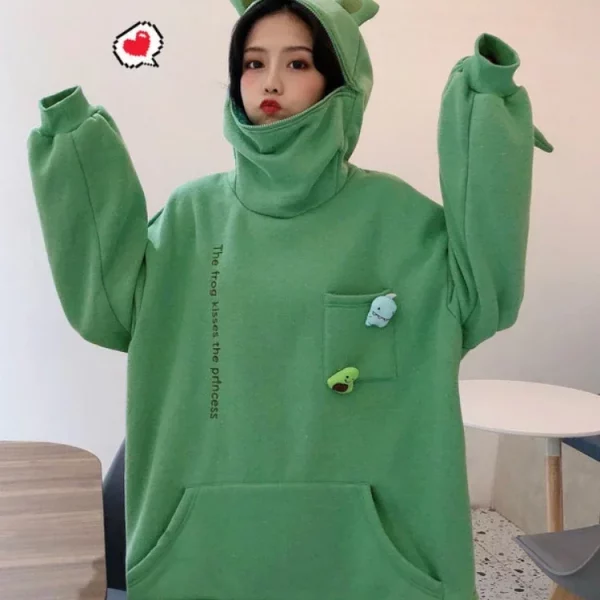
The most versatile kawaii piece. Bunny ears, frog 3D details, or pastel prints — wearable every day.
The Kawaii Dress
Chiffon puff sleeves, strawberry prints, or sweet maid styling. A dress transforms any occasion.
The Graphic Tee
A kawaii graphic tee pairs with anything — jeans, skirts, shorts — and is the easiest entry point into the style.
The Statement Skirt
A tulle midi skirt in lavender or pink, or a lolita-inspired bell skirt — the kawaii skirt defines the whole coord.
The Kawaii Kimono
A Japanese-inspired kimono cardigan adds cultural depth and elegant layering to any kawaii outfit.
The Kawaii Bag
Your bag is the most visible kawaii accessory. Choose a pastel backpack, character bag, or plush-adorned tote that speaks your aesthetic.
The Kawaii Hoodie: Your Most Versatile Investment

Bunny Hoodie — Kawaii's Most Beloved Essential
Our Bunny Hoodie comes in blush pink, pastel lavender, soft apricot, and classic black — each featuring the signature double-layered hood with floppy bunny ears, embroidered whisker detailing, and a generous front kangaroo pocket. The fleece lining makes it genuinely cosy for autumn and winter wear, while the lighter cotton blend options are perfect for spring and early summer.
The bunny hoodie pairs beautifully with high-waisted jeans and white sneakers for a casual look, or with a pleated pastel skirt and Mary Janes for a more coordinated kawaii aesthetic. It is the kawaii wardrobe piece our customers wear the most and reach for first.
Shop Bunny HoodieCaring for kawaii garments properly ensures they maintain their colour, texture, and print quality for years. Pastel-coloured pieces should always be washed in cold water on a gentle cycle and turned inside out to protect prints and embroideries. Avoid tumble drying where possible — flat drying or gentle hang drying preserves the shape of garments far better, particularly for structured pieces like lolita skirts with built-in petticoats. Store delicate kawaii pieces in dust bags or wrapped in soft tissue paper, particularly vintage or brand-name lolita garments that may have significant resale value. Avoid direct sunlight storage for pastel pieces — UV exposure causes pastels to fade faster than deeper colours. With proper care, a good kawaii wardrobe will remain in excellent condition for many years.
Kawaii Accessories & The Power of Plush Styling
In kawaii fashion, accessories are not an afterthought — they are frequently the most personality-rich and visually impactful element of an outfit. The kawaii approach to accessories is generous and playful: more is more, and every accessory should tell a story about who you are and what you love. From hair clips to handbags, from socks to jewellery, each accessory category within kawaii fashion offers an enormous range of creative choices that can transform even the simplest basic outfit into something genuinely expressive and joyful.
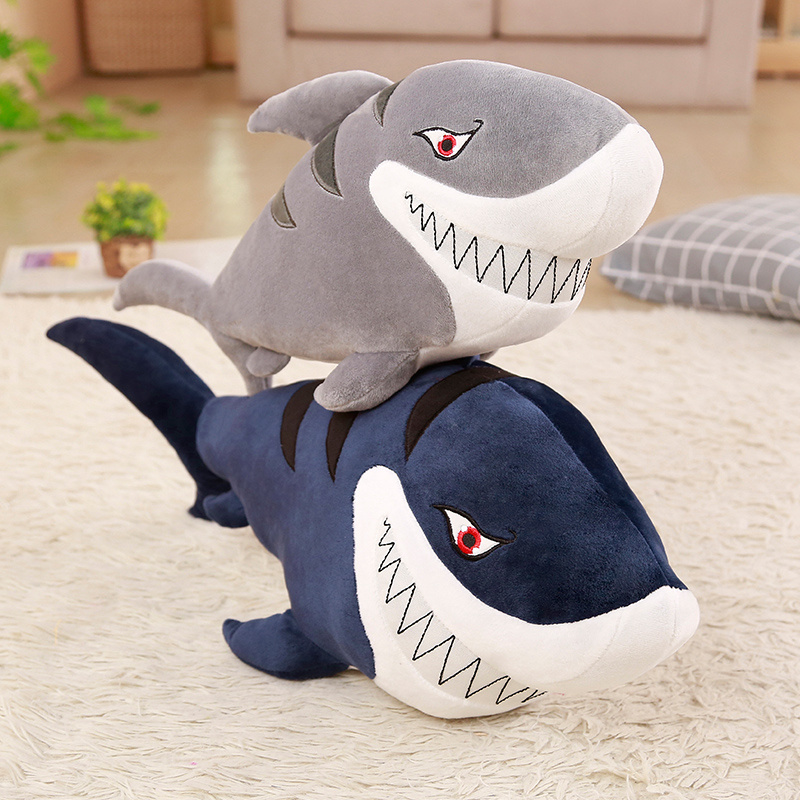
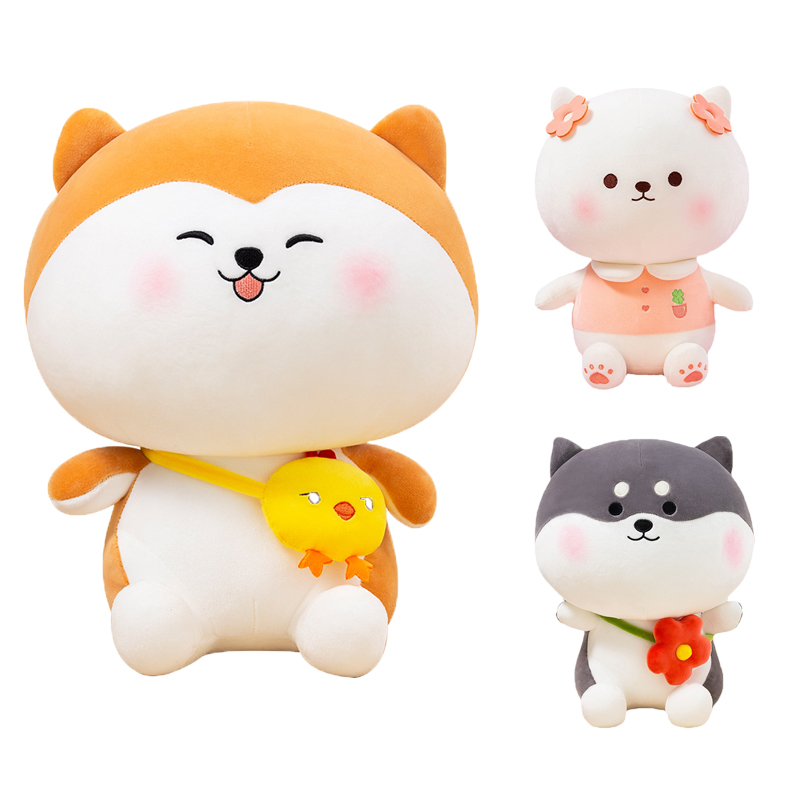
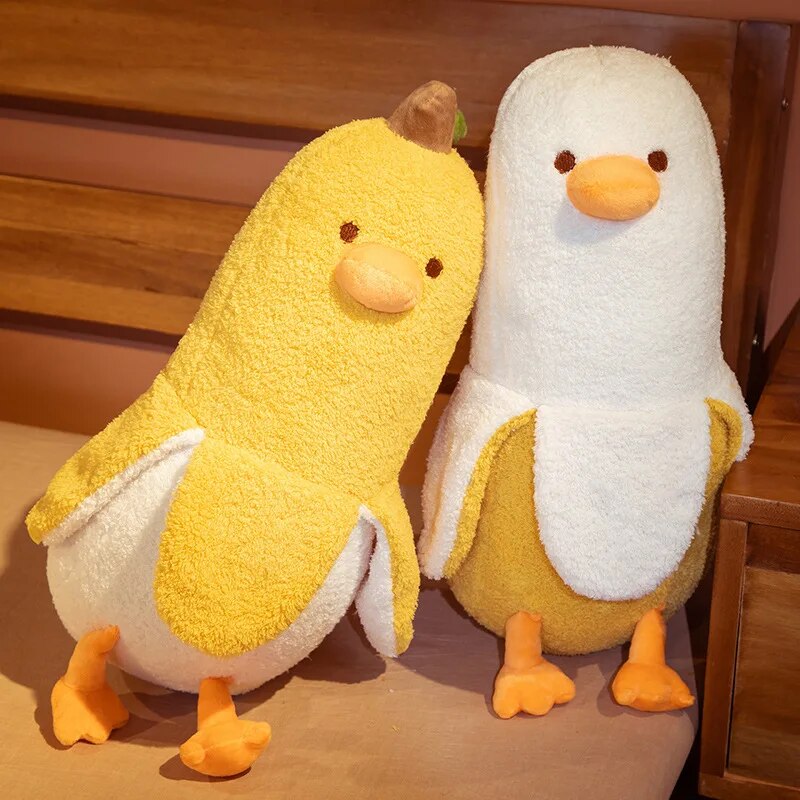
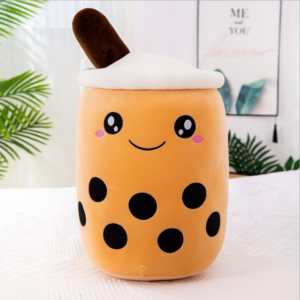
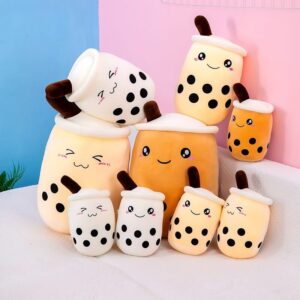
Among the most distinctive and beloved kawaii accessories is the plush companion — a stuffed animal carried as part of the outfit rather than left at home as a toy. This practice has deep roots in kawaii culture: carrying a favourite plush is both a practical accessory choice (plush animals make wonderful conversation pieces and instant friendship-makers) and a philosophical statement about the value of joy, play, and emotional openness. In fairy kei and Harajuku Decora communities in particular, carrying a plush animal is considered not only acceptable but actively encouraged — the cuter and more personality-rich the plush, the better.

Stuffed Animals as Kawaii Accessories
Our kawaii stuffed animals are designed to accompany you — not just sit on a shelf. Attach a mini plush as a bag charm, carry a mid-size teddy as a statement accessory, or photograph your kawaii outfits with a plush companion for that quintessential kawaii aesthetic that has defined the style since its Harajuku origins.
Matching your plush to your aesthetic adds a layer of coordination that photographers and content creators love: bunny plushies with fairy kei outfits, bear plushies with classic kawaii coordinates, gothic cat plushies with pastel goth looks. Our plush collection covers every kawaii aesthetic.
Explore Kawaii PlushiesKawaii hair accessories deserve special attention as one of the highest-impact and most affordable ways to transform an outfit. A simple all-black outfit becomes kawaii with the right hair accessories: star-shaped clips arranged across the crown, a pastel bow at the side, a rainbow of small flower pins, or a structured headband featuring cat ears or pom-poms. Hair accessories in kawaii fashion are typically layered — wearing one clip is a beginning, but wearing fifteen clips in coordinating colours is an aesthetic statement.
Kawaii bags and backpacks are another essential accessory category with enormous personality potential. Our kawaii backpack collection includes designs featuring characters, pastel prints, and plush elements that make the bag itself a kawaii statement piece. For fairy kei and Decora styling, a bag is never just a bag — it is a canvas for additional accessories, with straps loaded with bag charms, keychains, plush characters, and decorative clips. Our stuffed animals are frequently used as bag charms and plush bag pendants, adding the signature kawaii plush element to your every day carry.
Kawaii Wigs: The Complete Style & Colour Guide
Kawaii wigs are one of the most transformative and creatively liberating accessories in the entire kawaii fashion toolkit. While clothing defines the silhouette and accessories build the personality of an outfit, a wig can completely change who you appear to be — allowing you to slip into an entirely different aesthetic identity without touching your natural hair. In kawaii culture, where the ability to embody different characters, explore different substyles, and express different emotional registers through personal style is deeply valued, wigs occupy a special and beloved place. They are both a practical tool and a philosophical statement: the declaration that your appearance is a canvas, not a fixed identity.
The role of wigs in kawaii fashion spans every substyle and community. In cosplay — itself deeply intertwined with kawaii culture through anime, manga, and video game aesthetics — an accurate wig is often the most critical element of a successful character portrayal. No amount of perfectly constructed costume will fully land without the right hair: the exact shade of Hatsune Miku teal, the precise twin-tail architecture of a Sailor Moon cosplay, or the wild orange spikes of a Naruto Uzumaki recreation. In these contexts, a kawaii wig is not decoration — it is the defining element that brings a character to life.
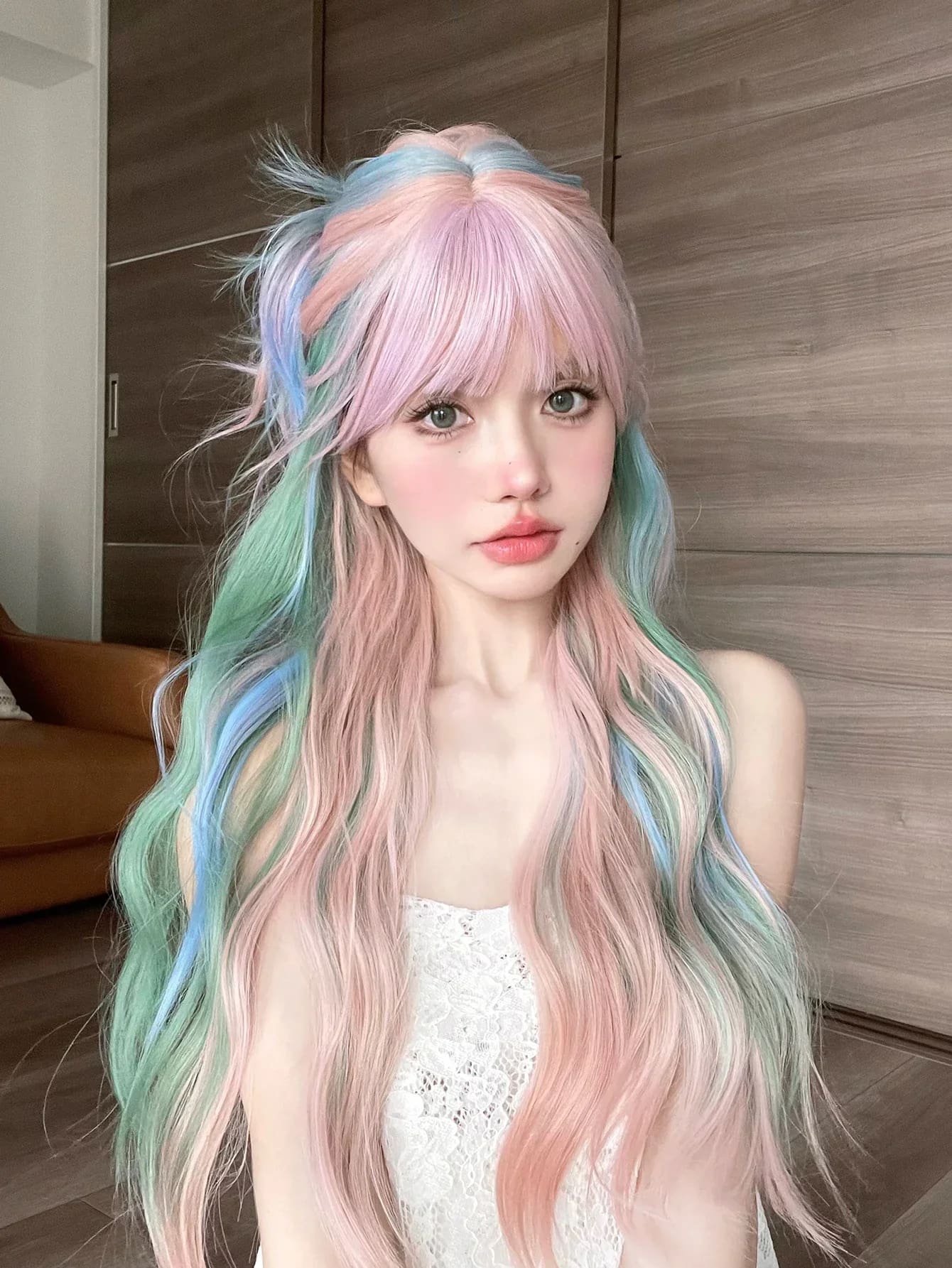
Choosing the Right Kawaii Wig for Your Aesthetic
Sweet Lolita coords call for soft, flowing wigs in pastel pink, cream, or lavender — long ringlet curls or voluminous straight styles that echo the Victorian porcelain-doll aesthetic the substyle is built on. Gothic Lolita, by contrast, suits deep black wigs with precise straight cuts, dramatic layering, or elegant curled styles that maintain the substyle's commitment to formal silhouette. Fairy kei thrives on rainbow and pastel ombre wigs — the more unexpected the colour combination, the more authentically fairy kei the result. Pastel goth unlocks the full spectrum of non-natural hair colours: lavender, rose gold, icy blue, and silver all serve the aesthetic, often in bold cut styles with sharp fringes.
For Harajuku Decora styling, the wig itself becomes an accessory canvas — the perfect foundation for the dozens of hair clips, bows, and decorative pins that define the substyle's maximalist approach. A pastel rainbow wig with dozens of layered clips in contrasting colours is the quintessential Decora hair look. For everyday casual kawaii styling, a pastel bob in soft pink or lilac is the single highest-impact choice: it reads as unmistakably kawaii across any context, complements a wide range of outfit colour palettes, and is short enough to be practical for daily wear.
Shop Kawaii WigsKawaii Wig Styles by Substyle
Pastel Bob
Soft pink, lilac, or mint — the everyday kawaii wig. Versatile, recognisable, and effortlessly cute.
Lolita Ringlets
Long, voluminous curls in cream, pink, or black — the signature hair of Sweet and Gothic Lolita coords.
Anime Character
Precise cuts and vivid colours matching iconic anime series characters for cosplay-accurate looks.
Pastel Ombre
Gradient rainbow or dual-tone wigs — the heart of fairy kei and Harajuku Decora hair styling.
Pastel Goth
Bold unnatural colours — lavender, silver, icy blue — with sharp fringes and layered cuts.
Princess Length
Floor-grazing fantasy wigs in soft pastels or pure white — the ultimate kawaii princess look.
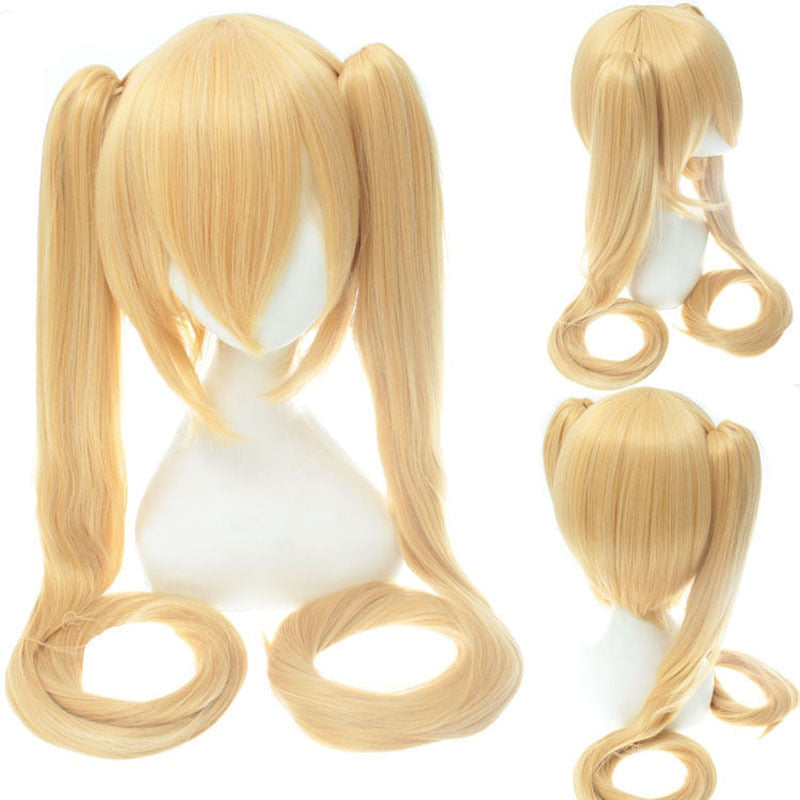 Anime Character Wig — Twin-Tails Style
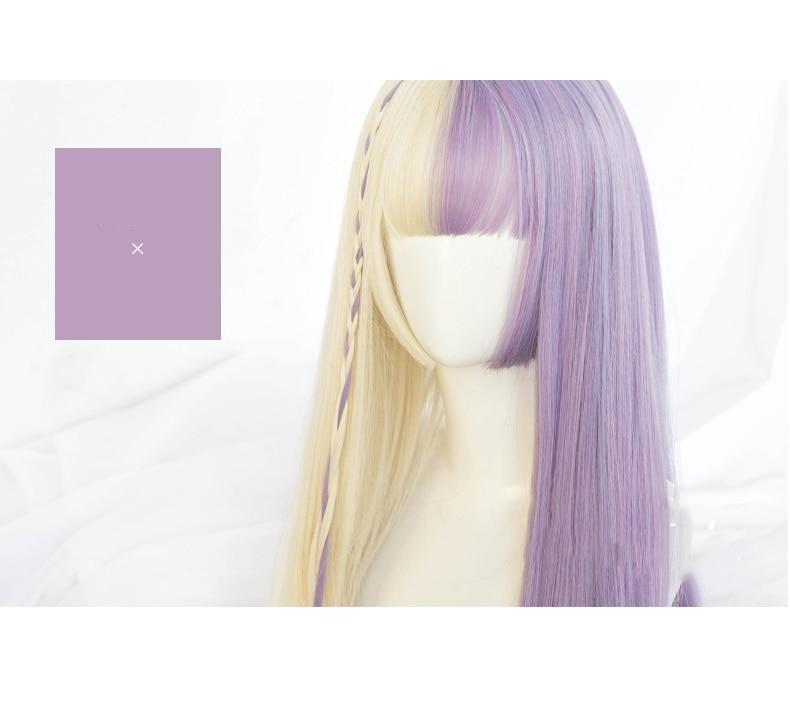 Split Lavender Fairy Kei Lolita Wig
How to Style and Care for Kawaii Wigs
Kawaii wigs — whether synthetic fibre or heat-resistant — require specific care to maintain their colour vibrancy and fibre quality. Synthetic wigs should never be heat-styled with regular hair tools unless explicitly rated as heat-resistant; excessive heat degrades synthetic fibres rapidly and permanently. For heat-resistant wigs, use a low to medium heat setting only, and always test on a small section before styling the full wig. Store wigs on a wig stand or mannequin head rather than folded in a bag — maintaining the shape of the cap and fibre prevents tangling and helps the style hold between wears.
Washing a kawaii wig should be done with cool water and wig-specific shampoo or a mild, sulphate-free shampoo. Never rub or scrub the fibre — gently work shampoo through with your fingers, rinse thoroughly, and press (never wring) water out with a soft towel before air drying flat. Regular detangling with a wide-tooth comb or wig brush, working from ends to roots, keeps synthetic fibres smooth and prevents the matting that can make an affordable wig look worn.
Layer your kawaii wig with matching hair accessories for the full kawaii look. A pastel pink bob becomes magical with a few coordinating star clips, a satin bow, or a structured bow headband layered on top. The wig is the canvas — the hair accessories are the details that make it personal. Our kawaii plushies and accessories are styled to coordinate with the most popular kawaii wig colours, making it easy to build a complete, coherent kawaii look from head to toe.
Kawaii Makeup: The Complete Beauty Guide
Kawaii makeup is the beauty language of kawaii culture — a philosophy of softness, luminosity, and calculated cuteness that is as distinct from Western beauty norms as the fashion it accompanies. Where mainstream makeup trends prioritise sculpted definition, editorial edge, or minimalist "no-makeup" neutrality, kawaii beauty celebrates something different: the wide-eyed, dewy-skinned, pastel-lipped aesthetic that reads as gentle, youthful, and unmistakably kawaii. It is, at its core, the art of looking like your favourite anime character has stepped into real life.
The foundations of kawaii makeup are rooted in Japanese and Korean beauty culture — the J-beauty philosophy of skin-first beauty, the K-beauty obsession with glass skin and gradient lips — combined with the specific kawaii cultural values of softness, roundness, and cute maximalism. The result is a makeup aesthetic that is both highly achievable as an everyday look and endlessly expandable for cosplay, events, and fully realised substyle coords.
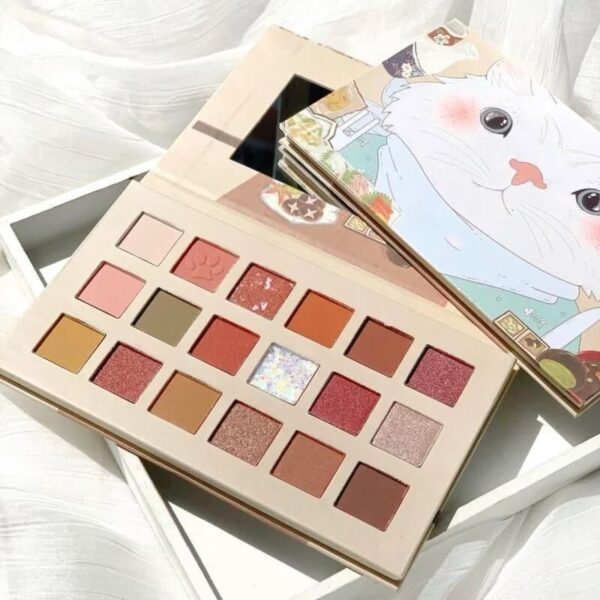
Building the Kawaii Base: Skin, Eyes & Lips
The kawaii skin base starts with luminosity: a dewy, glass-skin finish achieved through layered hydration and a light-diffusing primer or illuminating cushion foundation. The goal is skin that looks soft, healthy, and slightly lit from within — the porcelain doll effect that is central to Sweet Lolita and dolly aesthetics, or the fresh, natural glow that underlies everyday kawaii beauty. Blush placement in kawaii makeup is characteristically high — on the apples of the cheeks or blended upward toward the temples — creating the flushed, innocent look that distinguishes kawaii beauty from its Western counterparts.
Eyes are the defining feature of kawaii makeup. The goal is to make the eyes appear larger, rounder, and more luminous — achieved through lower lash line liner, white or nude waterline liner, soft shimmer on the inner corners, and lash-focused mascara or natural-look falsies. Eyeshadow in kawaii beauty leans soft: matte pastels and satin finishes for day looks, buildable glitter and duochrome toppers for events. The kawaii lip is almost always a gradient — darker at the centre, feathered outward — or a high-shine jelly gloss that catches light with every movement.
Shop Kawaii MakeupKawaii Makeup by Substyle
Sweet Lolita
Porcelain skin, soft pink eyeshadow, subtle lashes, and a sheer berry or pink lip — delicate and coord-complementing.
Cosplay
Character-accurate eye shapes, vivid colour, and theatrical effects. Pair with a matching <a href="https://myheartteddy.com/product-category/kawaii-wigs/">kawaii wig</a> for the full look.
Pastel Goth
Pale base, dark-lined eyes, and unexpected lavender or silver pops — the beautiful contradiction at the heart of pastel goth beauty.
Fairy Kei
Rainbow glitter lids, exaggerated blush, and pastel-coloured mascara — joyful, maximalist, and effortlessly playful.
Everyday Kawaii
Dewy skin, soft blush, enhanced lashes, and a jelly gloss lip — the effortlessly cute daily look that works anywhere.
Kawaii Nails
Press-on nails with pastel prints, anime motifs, and gem embellishments — the easiest kawaii beauty upgrade.
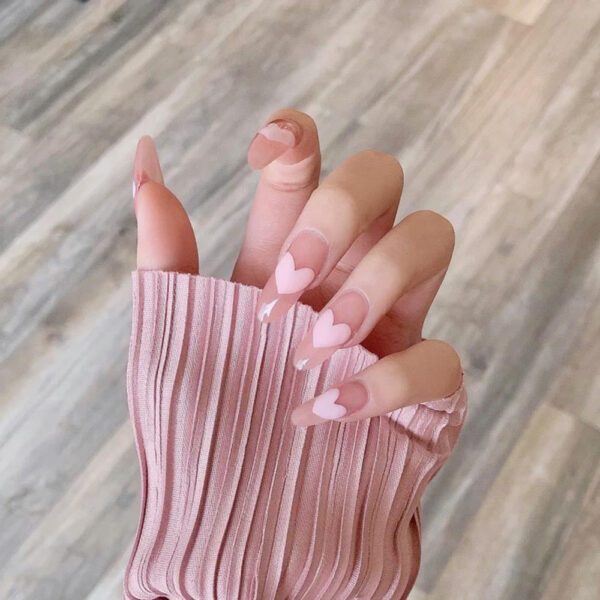 Dolly Press-On Nails — Bows & Butterfly Gems
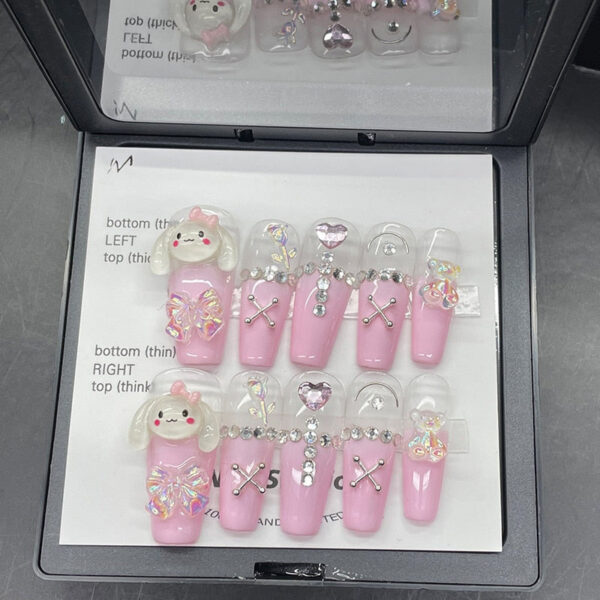 Pink Cinnamoroll Press-On Nails
Kawaii Press-On Nails: The Easiest Beauty Upgrade
Among all kawaii makeup products, press-on nails have become one of the most beloved and fastest-growing categories. They represent the perfect intersection of kawaii values — creativity, self-expression, and the transformation of everyday objects into art — with practical accessibility. A set of press-on nails with pastel prints, anime motifs, or hand-painted floral designs can be applied in minutes and transforms the look of your hands completely. For kawaii fashion enthusiasts who want to coordinate their nails to their outfit, press-ons offer unlimited flexibility without the commitment or cost of salon acrylics.
For the most cohesive kawaii look, coordinate your makeup colours to your outfit palette. Wearing a pink Sweet Lolita coord? Match your blush and lip shade to the dominant pink. Dressed in fairy kei pastels? Layer pastel glitter eyeshadow and coloured mascara in a matching hue. The kawaii aesthetic rewards coordination — the more intentional the colour story, the more complete and polished the look. Finish with a matching set of press-on nails for the full head-to-toe kawaii transformation.
Why Kawaii Fashion Matters in 2025
In 2025, kawaii fashion matters for reasons that go well beyond aesthetics. As the world navigates increasing complexity, anxiety, and the challenges of an accelerated digital culture, kawaii fashion offers something increasingly rare and valuable: a daily, embodied practice of choosing joy. The decision to wear a pastel hoodie, to carry a plush companion, to put on a fairy kei coord or a sweet lolita dress is not a retreat from the world — it is an active, confident assertion of the right to exist joyfully within it. Kawaii fashion practitioners are not naive; they are, in many cases, deeply aware of the world's difficulties and choosing to dress in a way that celebrates beauty and softness precisely because those qualities are worth defending.
The mental health dimensions of kawaii fashion are increasingly well documented and widely discussed within the community. Wearing clothing that makes you feel genuinely happy — that reflects your authentic self rather than social expectations — has measurable effects on mood, self-confidence, and emotional resilience. Many kawaii fashion enthusiasts describe the daily practice of assembling a kawaii outfit as a form of creative meditation: a ritual of colour, texture, and personal expression that sets a positive emotional tone for the day ahead. The community aspect of kawaii fashion amplifies this effect: the global kawaii fashion community is characterised by its warmth, creativity, and genuine enthusiasm for celebrating each other's personal style.
Kawaii fashion's commitment to inclusivity is one of its most admirable and genuinely distinctive features. Where many fashion movements — including many alternative fashion movements — have historically had complex relationships with body image, gender norms, and accessibility, kawaii fashion has consistently been more open, more welcoming, and more genuinely inclusive. The kawaii community's emphasis on comfort and personal expression over body-display or gender conformity means that people of all sizes, genders, ages, and abilities can find a place within it. The growing "plus-size kawaii" community, the widespread normalisation of gender-non-conforming kawaii dressing, and the increasing representation of older kawaii enthusiasts all demonstrate a fashion movement that genuinely practices what it preaches about joy and inclusion.
At My Heart Teddy, we believe kawaii fashion is for everyone. Our clothing collection spans casual hoodies and graphic tees to fairy kei-inspired pieces and gothic lolita skirts — all designed to help you wear joy every single day. Explore our full collection and find your perfect kawaii piece.
The future of kawaii fashion is bright and continues to evolve. AI-generated kawaii print designs are opening new creative possibilities, allowing independent designers to create entirely original motif families with unprecedented efficiency. 3D-printed kawaii accessories are becoming more mainstream, with prints in pastel resin and flexible materials offering new jewellery and accessory possibilities. Virtual kawaii fashion — digital outfits worn in online spaces, gaming environments, and virtual reality — is a growing creative frontier. And the global kawaii fashion community continues to grow, welcome new members, and generate new aesthetic innovations that will define the style for the decades ahead. If you are reading this guide, you are part of that story.
Kawaii Fashion: Frequently Asked Questions
Kawaii fashion is a broad aesthetic movement rooted in the Japanese concept of kawaii (可愛い), meaning "cute." It applies the qualities of cuteness — pastel colours, soft silhouettes, playful motifs, and joyful self-expression — to clothing, accessories, and overall personal style. It originated in Tokyo's Harajuku district in the 1970s as a counter-cultural movement among young Japanese women and has since grown into a global phenomenon with dozens of distinct substyles including fairy kei, lolita fashion, pastel goth, maid fashion, and Harajuku Decora.
Absolutely not. Kawaii fashion is embraced by people of all genders, ages, and backgrounds. Many of the most celebrated kawaii fashion creators and community leaders are male, non-binary, or older adults. The kawaii community is one of the most genuinely inclusive in the fashion world, with a long-standing commitment to celebrating everyone who chooses to dress with joy and creativity, regardless of gender, age, or body type.
Both are substyles of kawaii fashion, but they are visually and philosophically distinct. Fairy kei is a streetwear-influenced style drawing from 80s Western toy and cartoon nostalgia — it is casual, layered, and accessory-heavy, with a pastel rainbow palette and an emphasis on personal whimsy. Lolita fashion is a more formal, structured aesthetic drawing from Victorian and Rococo dress — it requires specific garment types (JSK, petticoat, blouse, headdress) and a "complete coordinate" approach, and has a strong community tradition of craftsmanship and quality. Sweet lolita uses pastels and cute motifs; gothic lolita uses black and white with dark aesthetic elements.
Begin with one kawaii statement piece and wear it with neutral basics you already own. A pastel hoodie with jeans and white trainers, a graphic tee with a denim skirt, or a pastel midi skirt with a plain white blouse are all casual, wearable kawaii outfits that feel natural rather than theatrical. Confidence builds quickly — once you have worn a kawaii piece a few times and felt the positive response it generates (both internally and from others), you will naturally want to incorporate more kawaii elements into your wardrobe.
Yes, with some thoughtful adaptation. In creative workplaces and schools with relaxed dress codes, kawaii fashion elements can be incorporated freely. In more formal environments, the key is subtlety: kawaii socks visible at the ankle, a small star or bunny pin on a lapel, a pastel scarf or hair accessory, or a kawaii tote bag as your work bag. These small touches allow you to express your kawaii personality without conflicting with professional dress expectations. Many kawaii fashion enthusiasts describe this as "kawaii stealth" — expressing the aesthetic through small, considered details rather than complete coords.
Shoe choices vary by kawaii substyle. For casual kawaii and fairy kei, platform sneakers in white or pastel colours, Mary Jane flats, and chunky-soled trainers are ideal. For lolita fashion, Mary Jane or T-strap shoes with a small heel in white, black, or a matching pastel colour are traditional choices. For pastel goth, platform creeper shoes or chunky-soled boots in white, black, or lavender create the right balance between cute and dark. For maid fashion, classic black or white Mary Janes with a modest heel are the most authentic choice. White trainers with kawaii-printed socks work with almost every kawaii substyle.
Stuffed animals have been part of kawaii fashion since the movement's earliest days. They are used as bag charms (small plush attached to backpack zippers or bag handles), as carried companions (particularly in fairy kei and Harajuku Decora outfits where carrying a plush is a standard aesthetic choice), and as photographic props for kawaii content creation. Our kawaii stuffed animals — from bunny plushies to teddy bears to kawaii cats — are designed to accompany you in life rather than just sit on a shelf. Choose a plush that matches your aesthetic: soft bunnies for fairy kei, bears for classic kawaii, gothic cats for pastel goth.
For kawaii wig beginners, a pastel pink or lavender bob is the single best starting point. It is immediately recognisable as kawaii, pairs with almost every pastel outfit, and is short enough to be comfortable for daily wear. Pastel wigs are also the most versatile for across substyles — a soft pink bob works equally well for casual kawaii, sweet lolita, fairy kei, and everyday kawaii street style. If you want something more dramatic for cosplay or events, choose a character wig from your favourite anime series — the bold, distinctive cuts mean you don't need to do anything extra for the look to land.
Our kawaii store at My Heart Teddy carries a curated selection of kawaii fashion pieces across all key categories — hoodies, dresses, skirts, kimonos, fairy kei pieces, pastel goth items, kawaii wigs, kawaii makeup, and kawaii accessories. Browse our full kawaii clothing collection, explore specific substyle categories, shop our kawaii wigs and kawaii makeup collections, or find the perfect plush companion for your outfit. We ship worldwide and offer a growing selection of exclusive designs you will not find anywhere else.