Giant stuffed animals present a cleaning challenge that standard advice for small toys simply does not address. A 60 cm teddy bear behaves fundamentally differently from a 15 cm one when wet: it weighs several times more, takes three times as long to dry, and carries a fill density that can trap moisture at the core for days while the surface feels perfectly dry. This mismatch between what parents can see and what's actually happening inside the plush is the most common cause of mold, mildew odors, and permanently clumped fill.
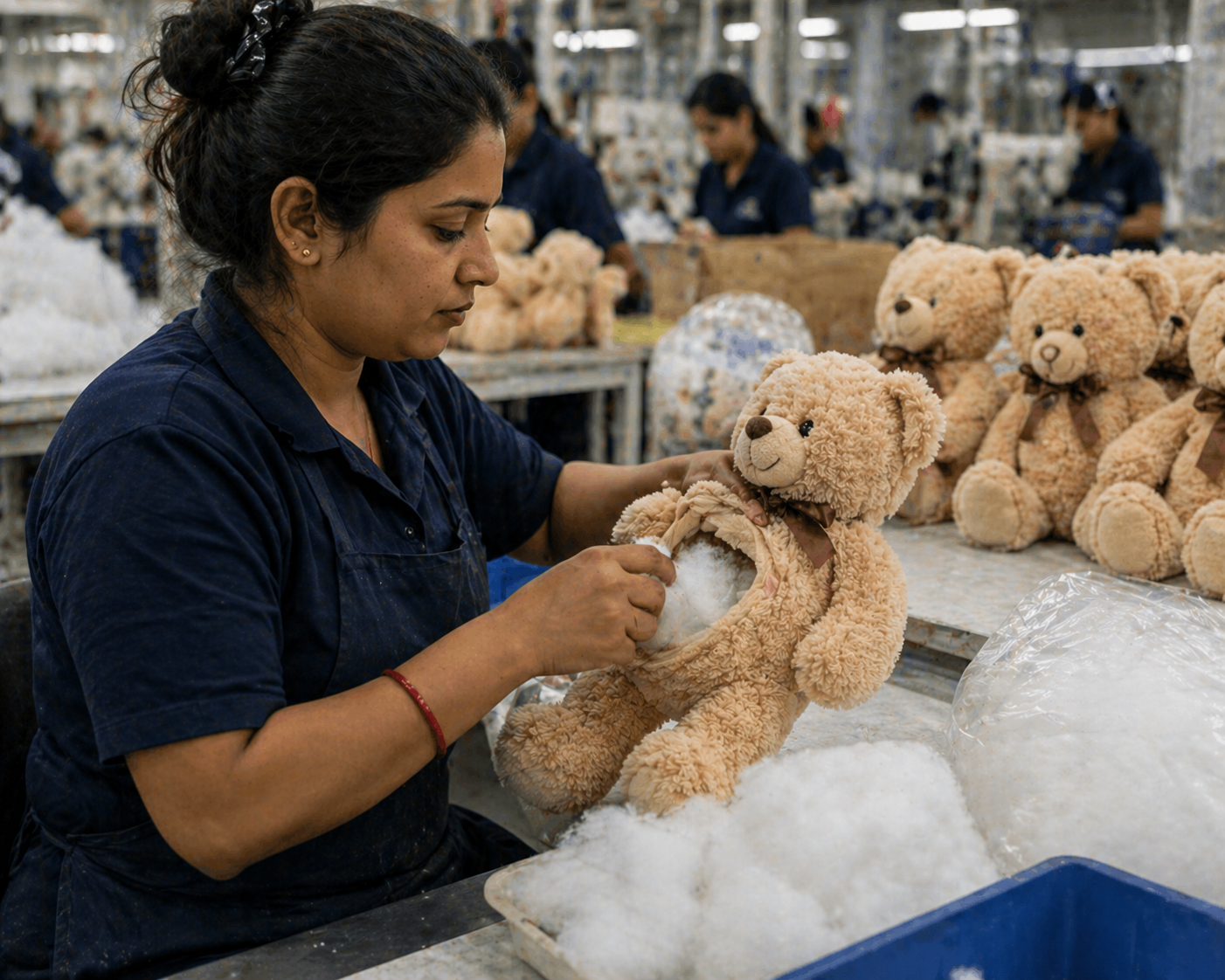
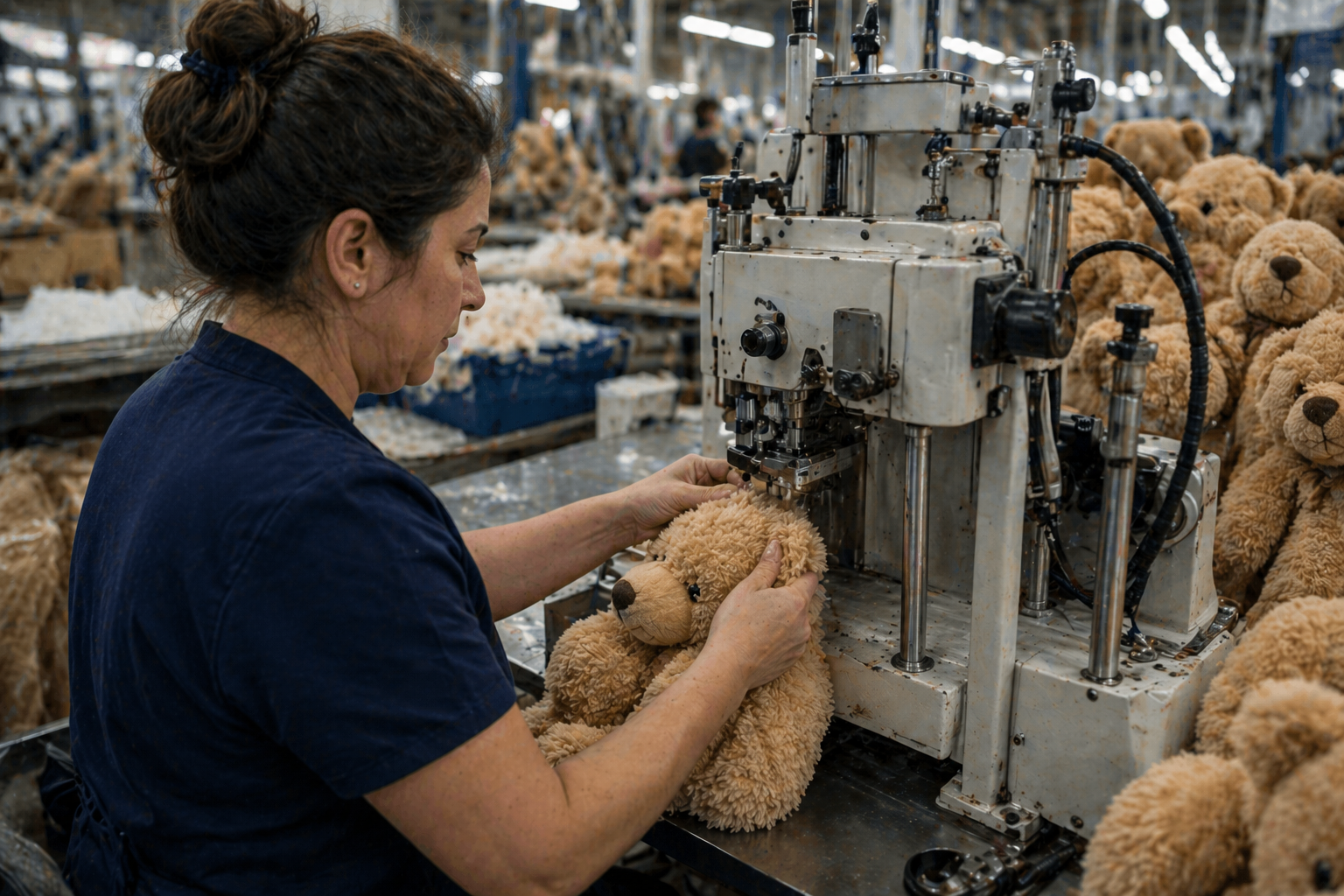
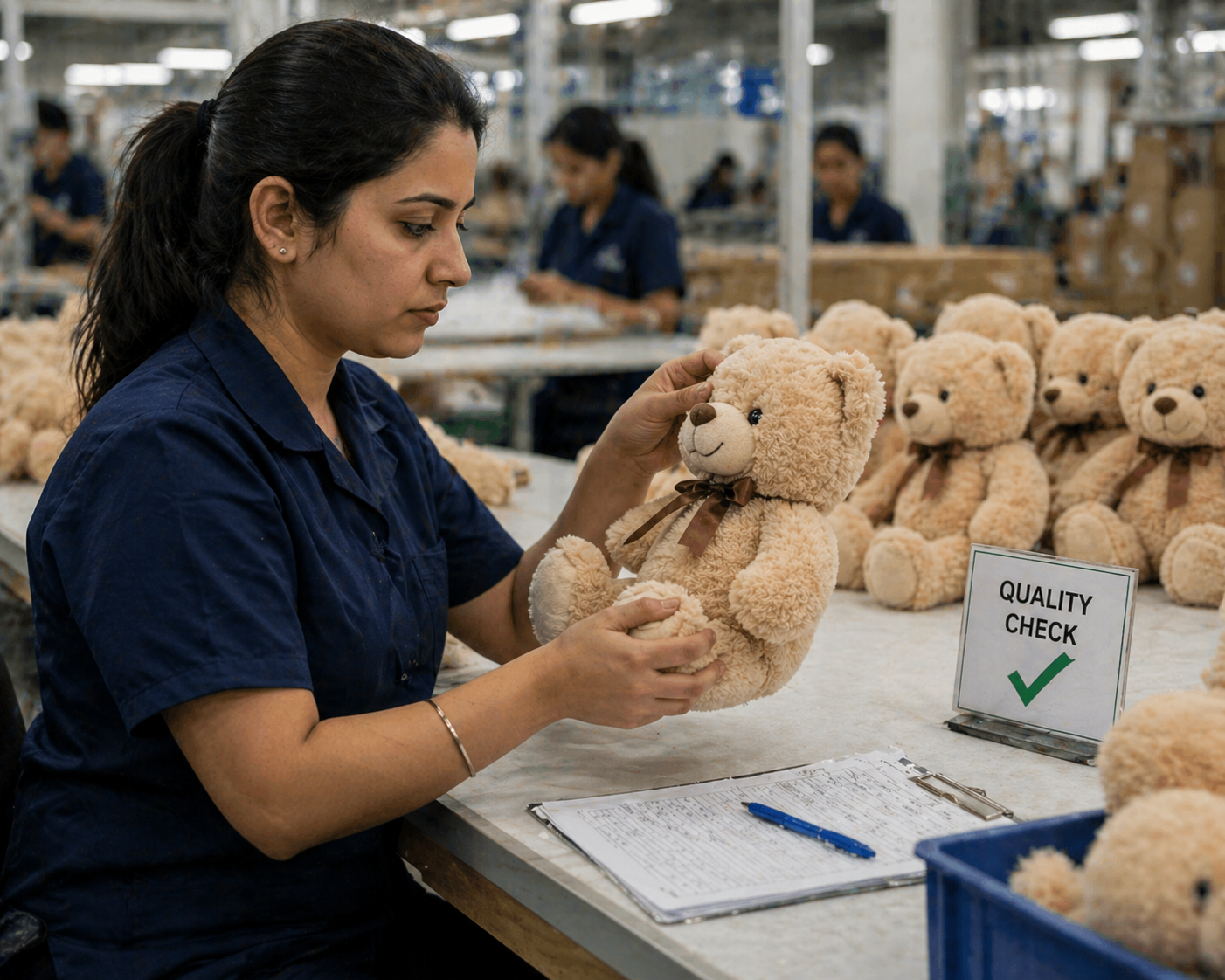
At My Heart Teddy, we've been making large kawaii stuffed animals for years, and we know exactly how our PP cotton fill and EN71-certified plush fabric behave under washing conditions. This guide applies that material knowledge to give you specific, testable advice — not the generic "hand wash and air dry" you'll find everywhere else, but step-by-step guidance that addresses what actually goes wrong when cleaning large plush toys and how to prevent it.
Can You Wash Giant Stuffed Animals in a Washing Machine?
For giant stuffed animals — typically 50 cm and above — the answer is no for most home machines, and the reason is specific to fill behavior, not machine size.
PP cotton fill (the premium hypoallergenic fill used in quality plush) absorbs water at roughly 8–10 times its dry weight. A 70 cm stuffed animal that weighs 600 g dry may weigh over 5 kg wet. Standard home washing machines balance loads by spinning weight evenly; a soaked giant plush creates a single heavy mass that throws the drum off balance, triggering error codes or — in older machines — damaging the bearings. Even if the machine completes the cycle, the agitation causes the fill to shift and clump in ways that persist after drying, creating hard lumps inside the toy that cannot be reversed without opening the seams.
When machine washing is acceptable: Stuffed animals under 40 cm with light fill, placed inside a mesh laundry bag, on a cold gentle cycle with minimal spin. This applies to small plush toys, not giant ones.
When machine washing is never acceptable: Any plush with electronics or a sound box, specialty long-pile fabrics (Highland cow faux fur), very large plush above 50 cm, or any plush with visible loose seams.
Commercial laundromats with front-load machines sized for duvets and sleeping bags can handle large plush washing more safely than home machines. If you need to machine wash a giant stuffed animal, this is the correct equipment to use — cold gentle cycle, mesh bag, minimal spin.
🧸 My Heart Teddy — Easy-Care Giant Plush
Our Giant Stuffed Animals Are Built for Real Life
PP cotton fill, EN71-certified fabric, double-stitched seams — every design machine-washable at 30°C in a mesh bag (under 40 cm), or hand-cleanable following this guide for larger sizes. Hypoallergenic & child-safe from 3 months.
Before You Start — Inspection Checklist
Taking five minutes to inspect the plush before cleaning prevents two of the most common outcomes: a damaged toy and a toy that has to be cleaned again immediately. Work through this checklist before adding any moisture.
- Remove all accessories. Ribbons, clothing, sewn-on badges, and decorative accessories all behave differently when wet. Remove anything removable.
- Check for electronics. Shake the plush gently near your ear. A rattle or click indicates an internal mechanism. Check the care label for any electronics warning. If present, use dry-clean methods only — no water at any stage.
- Inspect seams at stress points. The underarms, where limbs join the body, and the base of the neck are the first seams to weaken. If any seam shows fraying or a visible gap, repair it with a needle and matching thread before cleaning. A wet plush is heavy; weak seams fail under wet weight.
- Do a color bleed test. Dampen a small area of white cloth and press firmly against a hidden part of the fabric (usually the sole of a foot or the inside of an ear). If color transfers, treat the plush as a dry-clean-only item and use the baking soda and vacuum method only.
- Read the care label. Even if faded, care labels specify wash temperature, drying method, and whether dry-cleaning is required. A crossed-out tub icon means no water immersion.
The 7-Step Deep Cleaning Process
This process is designed for giant stuffed animals that have passed the inspection above and do not contain electronics. Follow the steps in order — skipping the deodorizing and vacuuming steps before wet cleaning misses 40–60% of the particulate matter that causes odor and allergen buildup.
Complete the pre-cleaning checklist above. Remove all detachable accessories. If the plush has a zippered fill access (some larger designs do), partially unzip to allow interior airflow during drying — but do not remove the fill. This single step cuts drying time by 20–30% on larger plush.
Place the stuffed animal in a large plastic bag with ½ cup of baking soda (increase to 1 cup for plush over 80 cm). Seal and shake vigorously to coat the entire fabric surface. Leave for a minimum of 1–2 hours; for deeply embedded odors (tobacco smoke, prolonged pet contact), leave overnight up to 24 hours. Baking soda (sodium bicarbonate) works by chemically neutralizing acidic odor compounds on contact — it does not just mask smells. After treatment, remove from the bag and shake off excess before vacuuming.
Using a vacuum with a soft brush attachment (not a hard plastic suction head), vacuum the entire surface. Work against the pile first to lift embedded debris, then with the pile to smooth the fibers. Spend extra time on creases — the fold behind the ears, the underarm area, between the legs — where dust, dead skin cells, and pet hair accumulate most densely. HEPA-filtered vacuums trap allergen particles; standard vacuums release some back into the air. For allergy-prone households, the HEPA step matters.
Mix a small amount of mild dish soap or baby shampoo with cold water until lightly sudsy. For stubborn stains, a 1:2 white vinegar to water solution works on most organic stains (food, saliva, mild bodily fluids). Test on a hidden area first. Apply to the stain with a damp cloth — always dab with a pressing motion, never rub. Rubbing pushes the stain deeper into the fiber and causes pilling on synthetic plush. Work from the outer edge of the stain inward to prevent spreading. Rinse by dabbing with a clean damp cloth until no soap residue remains.
Reserve this step for plush toys that are heavily soiled throughout, not just surface-dirty. Fill a bathtub with lukewarm water (below 30°C) and add a small amount of baby shampoo or Woolite. Submerge the plush and gently press and knead the water through the fill — don't agitate forcefully. When finished, the critical mistake to avoid: do not lift the plush by a limb or the head when it is saturated with water. Wet fill concentrates weight dramatically and seams at attachment points tear under wet load. Always support the full body weight from beneath when moving a wet giant plush.
Drain the bathtub and gently press the plush against the tub wall to push out bulk water — do not wring or twist. Lay the plush on a stack of dry towels and gently press (not rub) with another towel to absorb surface water. Roll the plush inside a large dry towel and apply steady, even pressure for 2–3 minutes. Reshape the toy immediately while still damp — this is the critical window. Once the fill dries in a deformed position, it holds that shape. Restore ears, limbs, and body form now, before any heat or extended airflow sets the shape.
Place the plush in a well-ventilated room with a fan directed at (not blasting directly into) it. Flip the plush every 4–6 hours to prevent flat spots on the side that rests on the surface. The exterior will feel dry in 6–12 hours; the interior fill takes 48–72 hours to dry fully. Test for complete dryness by squeezing the center of the body firmly — if you feel any cool, slightly compressed sensation, the fill is still damp. Do not put the plush away until this test is completely clear. Mold and mildew begin developing within 24–48 hours in damp, enclosed conditions.
Never use a hair dryer directly on a giant stuffed animal, even on a cool setting. The concentrated airflow causes localized fabric stress and can harden the surface pile in the area of contact. A room fan at distance is always the correct tool. The drying step requires patience — 72 hours is not unusual for giant plush.
Understanding Plush Fabrics & Fill Types
The correct cleaning method depends on the specific fabric and fill combination in your plush. Different materials fail at different points under washing conditions.
🧸 My Heart Teddy — Trusted by 2,400+ Families
Looking for a Plush That's Easy to Care For?
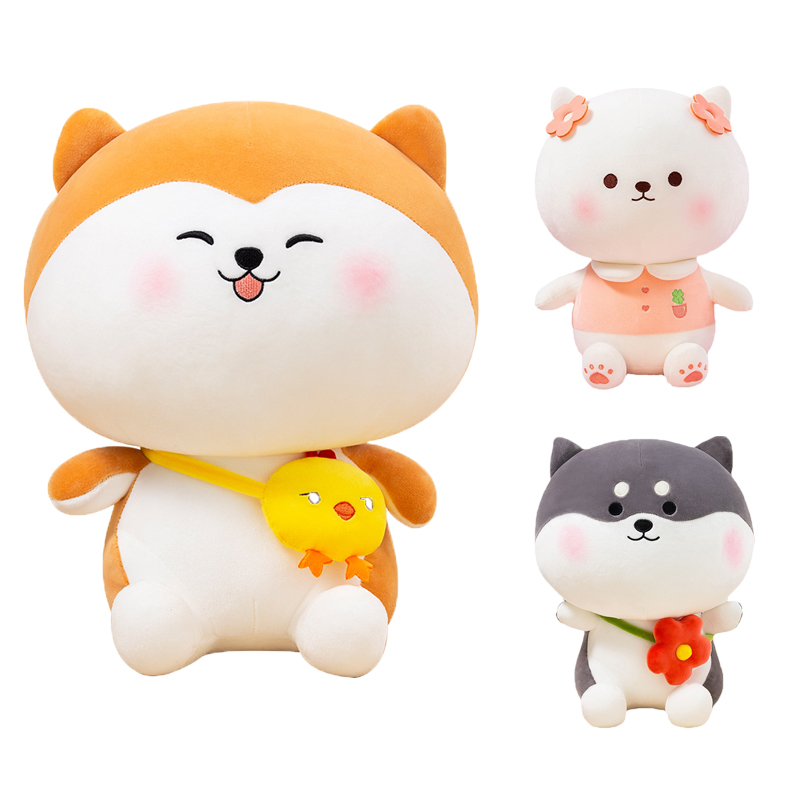
Our kawaii grey teddy bear and large teddy bear use premium PP cotton fill and EN71-certified polyester plush — the easiest combination to clean and the safest for children with sensitivities. Machine-washable at 30°C (under 40 cm sizes). Free shipping over $50.
Health & Allergen Prevention
Giant stuffed animals used during sleep are among the highest-allergen objects in a child's bedroom. Dust mites — the primary trigger for soft toy allergies — thrive in the warm, humid microclimate created by body heat near a plush toy during sleep. They feed on the dead skin cells that accumulate in the fabric and fill, and reproduce every 3 weeks under optimal conditions (20–25°C, 75%+ relative humidity).
Standard washing at 30°C does not kill dust mites — they require temperatures above 60°C to die, which is the same temperature that permanently damages synthetic plush fabric. This creates a genuine dilemma for allergy-conscious parents. The most practical heat-free solution is the freezer method:
- Seal the plush in a large airtight plastic bag (this prevents freezer moisture condensing on the fabric)
- Freeze for 48 hours at standard freezer temperature (approximately -18°C to -20°C)
- Remove from the freezer and vacuum immediately while still cold, before the mites thaw and become harder to remove
- The cold kills the mites; the vacuum removes the bodies and allergen debris
Repeat this cycle every 6 weeks for plush toys used during sleep by allergy-prone children. Combined with the regular cleaning routine below, this approach reduces allergen load without the heat exposure that would damage the toy.
Dust mites don't actually bite or burrow into skin — the allergic reaction is to their feces and shed exoskeletons, which become airborne when a stuffed animal is handled or moved. This is why vacuuming after the freezer treatment (rather than just shaking) is the more effective removal method.
Drying — The Most Critical and Most Underestimated Step
If there is one section of this guide to read twice, it is this one. More giant stuffed animals are damaged by improper drying than by improper washing. The reason is the gap between what parents can observe (surface texture) and what is actually happening (interior core moisture).
A 70 cm stuffed animal that has been bathtub-soaked will feel surface-dry within 6–8 hours of air drying. The interior fill at the center of the body may still be holding significant moisture 48 hours later. When that damp plush is stored in a cupboard, wardrobe, or toy box — an enclosed, often warm, low-airflow environment — mold begins to colonize the damp fill within 24–48 hours. The first symptom is a musty odor that parents often attribute to the cleaning process itself, when it is actually post-cleaning mold.
How to test complete dryness: Grip the plush firmly at the center of its thickest body mass and squeeze with both hands for 3–5 seconds. If you feel any cool, slightly yielding sensation that differs from how the toy feels when bone dry, the fill is still damp. Continue drying.
If musty smell develops after drying: Spray the exterior lightly with a 50/50 hydrogen peroxide and water solution, work into the fabric surface gently with a cloth, and allow to fully air dry for another 48–72 hours with fan assistance. Hydrogen peroxide kills surface mold spores without bleaching most synthetic plush (test on a hidden area first).
Positioning during drying: Change the position of the plush every 4–6 hours. Resting on one surface for extended periods compresses the fill on that side and can cause permanent flat spots. Where possible, hang by a limb from a washing line or airer — this allows airflow on all sides simultaneously and reduces drying time significantly.
What NOT To Do When Cleaning Giant Stuffed Animals
The Maintenance Schedule — Keep It Clean Between Deep Washes
A regular light maintenance routine dramatically extends the time between necessary deep cleans and keeps allergen levels manageable without repeated full soaking.
- Spot-wipe high-contact surfaces with damp cloth
- Straighten and fluff by hand
- Remove from sleeping area & air out
- Full vacuum with brush attachment
- Baking soda deodorize treatment
- Inspect seams & repair if needed
- Freezer treatment (allergy households)
- Post-freeze vacuum
- Check for odor; spot treat if present
- Full 7-step deep clean
- 48–72 hour dry cycle
- Reshape & brush fabric
- Assess for wear & structural damage
- Rotate if multiple plush in collection
- Air out in fresh breeze (shade)
- Immediate spot clean after spills
- Odor treatment after illness
- Seam repair before washing
Our Giant Stuffed Animals — Built to Be Cleaned and Loved for Years
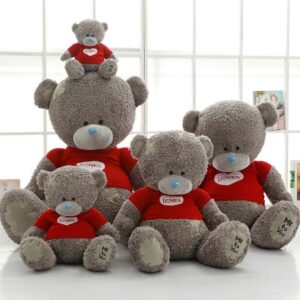
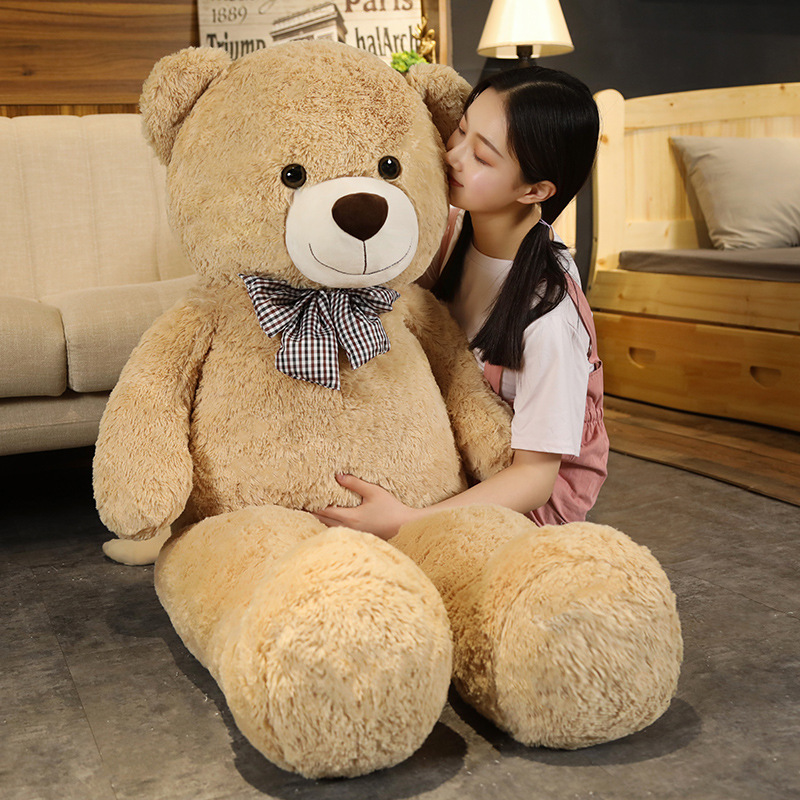
Every plush at My Heart Teddy is designed with care in mind: PP cotton fill, EN71-certified polyester plush fabric, double-stitched seams, and embroidered features only. No glued parts that detach in water. No fill that clumps under gentle hand-washing. If you're buying a giant stuffed animal and care is part of your decision — these are the designs we'd recommend.

Frequently Asked Questions
Q: How often should you clean a giant stuffed animal?
For plush used daily during sleep, vacuum monthly and deep clean every 2–3 months. For allergy-prone children, add a freezer allergen treatment every 6 weeks. For display-only plush, a quarterly vacuum and annual deep clean is sufficient. The frequency depends primarily on how much direct contact the child has with the plush and whether they have respiratory sensitivities.
Q: Can you put a giant stuffed animal in the dryer?
No. A tumble dryer causes two types of permanent damage: the heat hardens and felts synthetic plush fibers (the surface becomes stiff and rough), and the tumbling action clumps the fill into dense lumps that cannot be restored without opening and replacing the fill. Always air dry with a room fan for airflow. The drying process takes 48–72 hours for giant plush — this cannot be safely accelerated with heat.
Q: How do you get the smell out of a giant stuffed animal?
Baking soda is the most effective first step — seal the plush in a bag with ½ to 1 cup of baking soda, shake to coat, and leave overnight before vacuuming. For musty smells caused by interior dampness or mold, spray the exterior with a 50/50 hydrogen peroxide and water solution, work into the surface, and air dry for 48–72 hours with fan assistance. Hydrogen peroxide kills mold spores without bleaching most synthetic plush (test in a hidden area first). Avoid perfumed fabric sprays — they mask odor without addressing the cause.
Q: How long does a giant stuffed animal take to dry after washing?
Surface drying: 6–12 hours. Interior fill (center of body): 48–72 hours. The most damaging mistake parents make is storing a plush that feels surface-dry but is still damp at the core. Always test by squeezing the center of the body firmly — if you feel any coolness or slight compression different from a completely dry plush, continue drying. Mold develops in 24–48 hours in damp, enclosed conditions.
Q: Can you freeze a stuffed animal to kill dust mites?
Yes — the freezer method is the most effective heat-free allergen treatment for giant stuffed animals. Seal the plush in an airtight plastic bag to prevent freezer condensation on the fabric. Freeze for 48 hours at standard freezer temperature (approximately -18°C to -20°C). Remove and vacuum immediately while still cold to remove dead mites and allergen debris before they thaw. Repeat every 6 weeks for plush used during sleep by allergy-prone children.
Q: How do you clean a stuffed animal that cannot be washed?
Use dry-only methods: vacuum thoroughly with a brush attachment, baking soda deodorizing (leave overnight then vacuum), and surface spot cleaning with a barely damp cloth and minimal mild soap — allow the spot to fully air dry before any contact with enclosed storage. For allergen control without moisture, use the freezer method (sealed bag, 48 hours). For plush with electronics, check the manufacturer's instructions — most allow external surface cleaning with a barely damp cloth as long as water does not enter the battery compartment.