
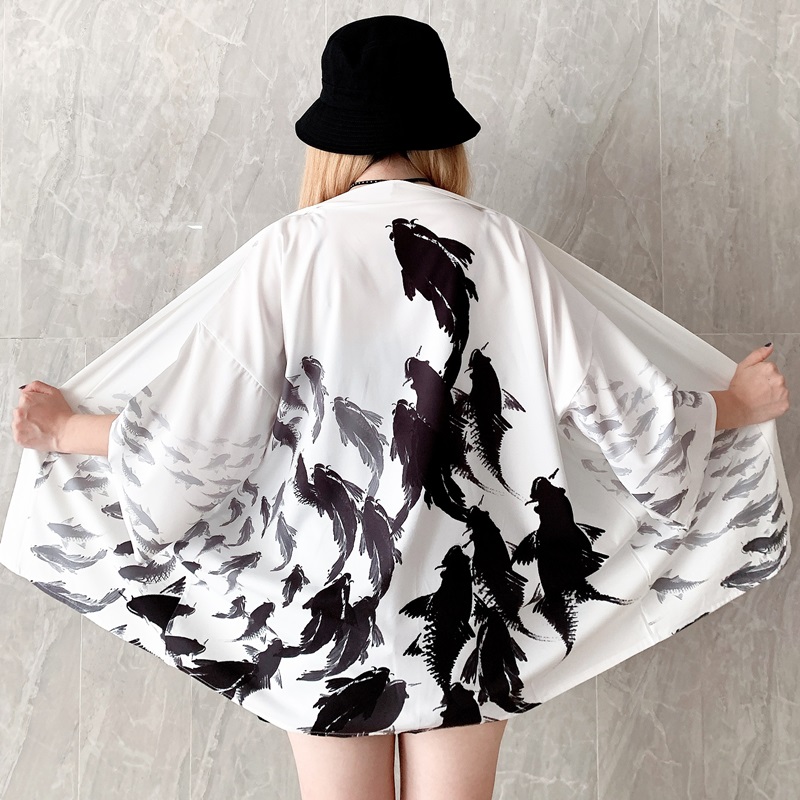
Japanese style clothing covers two things: traditional garments such as the kimono, yukata, haori and hakama, and the modern street fashion they inspired. The easiest way to wear the look day to day is a kimono-style jacket over simple basics, because it borrows the straight sleeves and open front of the traditional haori.
Japanese clothing has a long history and a clear set of rules, from how a kimono wraps to which garment suits which season. Once you know the basic pieces, it is much easier to spot them in modern fashion and wear them with confidence. This guide explains the main traditional garments, the accessories that go with them, and how Japanese style clothing shows up in today’s kawaii and streetwear looks. For the wider culture behind it all, see our guide to Japanese culture and kawaii.
Key Takeaways
- Wafuku means traditional Japanese clothing. Western-style clothing is called yōfuku.
- A kimono literally means a thing to wear. It is a straight-cut, T-shaped robe tied with an obi sash.
- A yukata is a light cotton summer kimono, while a haori is an open jacket worn over the top.
- Always wrap left over right. Right over left is reserved for dressing the dead.
- Kimono jackets and cardigans are the simplest way to wear Japanese style clothing every day.
What Is Japanese Style Clothing?
Japanese style clothing is any garment based on the cuts, fabrics and details of traditional Japanese dress. In Japan, traditional clothing is called wafuku (和服), and Western-style clothing such as shirts, jeans and dresses is called yōfuku (洋服). Today most people in Japan wear yōfuku every day and save wafuku for festivals, weddings, graduations and other special occasions.
The best-known piece of wafuku is the kimono. The word comes from ki (to wear) and mono (thing), so it simply means a thing to wear. A kimono is made from straight panels of fabric, which gives it the famous T-shape, wide sleeves and wrapped front.
What Are the Main Types of Traditional Japanese Clothing?
These are the traditional garments you are most likely to see, and the modern pieces they inspired:
| Garment | What it is | When it is worn | Modern take |
|---|---|---|---|
| Kimono | Full-length wrapped robe tied with an obi | Weddings, tea ceremonies, formal events | Kimono dresses and wrap tops |
| Yukata | Unlined cotton kimono | Summer festivals, fireworks, hot-spring inns | Light summer wrap dresses |
| Haori | Hip- or thigh-length jacket worn open | Over a kimono for warmth or formality | Kimono cardigans and jackets |
| Hakama | Wide pleated trousers or skirt | Graduations, kendo, aikido, archery | Wide-leg pleated trousers |
| Jinbei | Short-sleeved top and shorts set | Summer loungewear | Matching lounge sets |
| Happi | Straight-sleeved festival coat | Festivals and shop uniforms | Printed festival jackets |
What Is the Difference Between a Kimono and a Yukata?
A kimono is usually made of silk or a silk-like fabric, is often lined, and is worn with several layers and a formal obi. A yukata is made of cotton or another light fabric, is unlined and is worn with a simpler, narrower obi. The name yukata comes from bathing robes worn after a bath, and it is still the robe guests are given at many Japanese hot-spring inns.
In short, a yukata is the relaxed summer version of the kimono. You will see crowds of people wearing yukata at summer festivals and fireworks displays across Japan, while silk kimono are kept for formal events.
What Is a Haori?
A haori is a jacket worn over a kimono. It has the same straight sleeves as a kimono but it does not wrap closed. Instead, it hangs open at the front and is fastened loosely with short cords. That relaxed, open shape is exactly why haori are the most wearable piece of Japanese style clothing outside Japan.
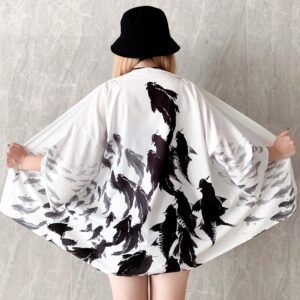
The kimono cardigans and kimono jackets sold today are modern takes on the haori. You can throw one over a T-shirt and jeans, a slip dress or a hoodie without needing to learn any wrapping rules.

Which Way Should a Kimono Wrap?
A kimono, yukata or any wrapped Japanese top should close left over right. That means the right side goes against your body first and the left side lies on top. If you are looking at someone wearing it, the collar forms a lowercase letter y.
Wrapping right over left is only done when dressing a body for a funeral, so it is the one mistake worth avoiding. The rule is the same for men and women.
What Do the Different Kimono Styles Mean?
Kimono are grouped by how formal they are. A few names you may come across:
- Furisode has long, swinging sleeves and is the most formal kimono for young unmarried women. Many wear one on Coming of Age Day, held on the second Monday of January.
- Tomesode is a formal kimono with a pattern only below the waist, traditionally worn by married women at weddings.
- Hōmongi means visiting wear. Its pattern flows across the seams and suits parties and formal visits.
- Komon has a small repeating pattern all over and is the casual, everyday kimono.
What Accessories and Shoes Go With Japanese Clothing?
Traditional outfits are finished with a few key accessories:
- Obi: the wide sash that holds a kimono closed and is tied in a decorative knot at the back.
- Geta: raised wooden sandals, usually worn with a yukata.
- Zōri: flat thonged sandals worn with formal kimono.
- Tabi: split-toe socks worn with zōri or geta.
- Kanzashi: decorative hair ornaments, often shaped like flowers.
- Folding fans: a classic summer accessory with a yukata.
How Does Japanese Style Clothing Appear in Modern Fashion?
Japanese clothing has influenced fashion around the world. In 1970 Kenzo Takada opened his first shop in Paris, and in 1981 Rei Kawakubo of Comme des Garçons and Yohji Yamamoto showed their collections in Paris, bringing Japanese ideas about loose shapes and layering to the international runway.
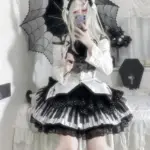
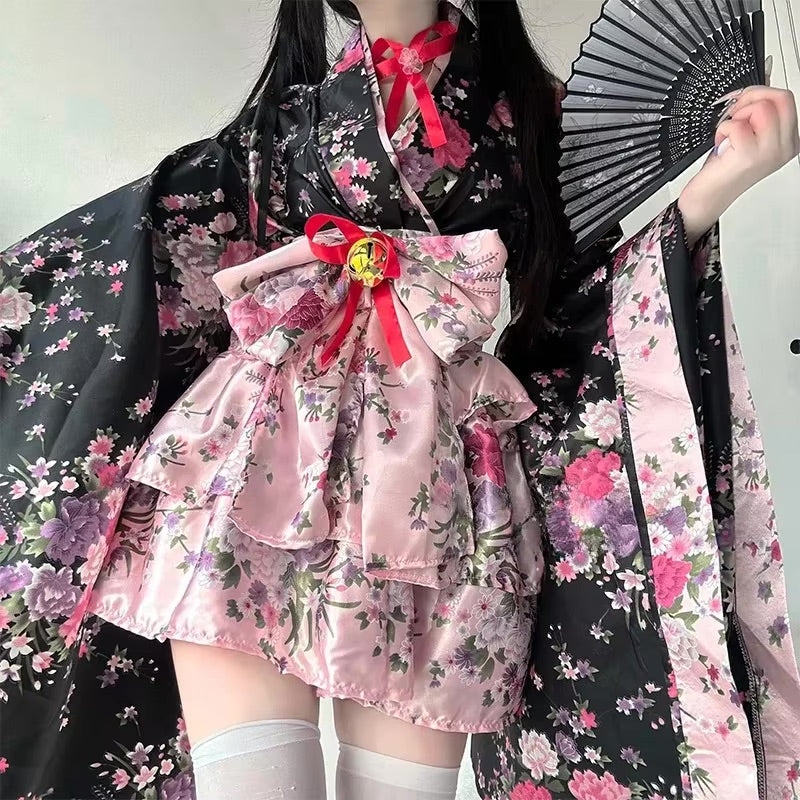
On the streets of Tokyo, young people mix traditional pieces with modern ones. Our guide to Harajuku fashion covers how the area became famous for this kind of mixing. One popular example is wa-lolita, which combines kimono sleeves and an obi with a petticoat skirt. You can read more about it in our history of Lolita fashion.
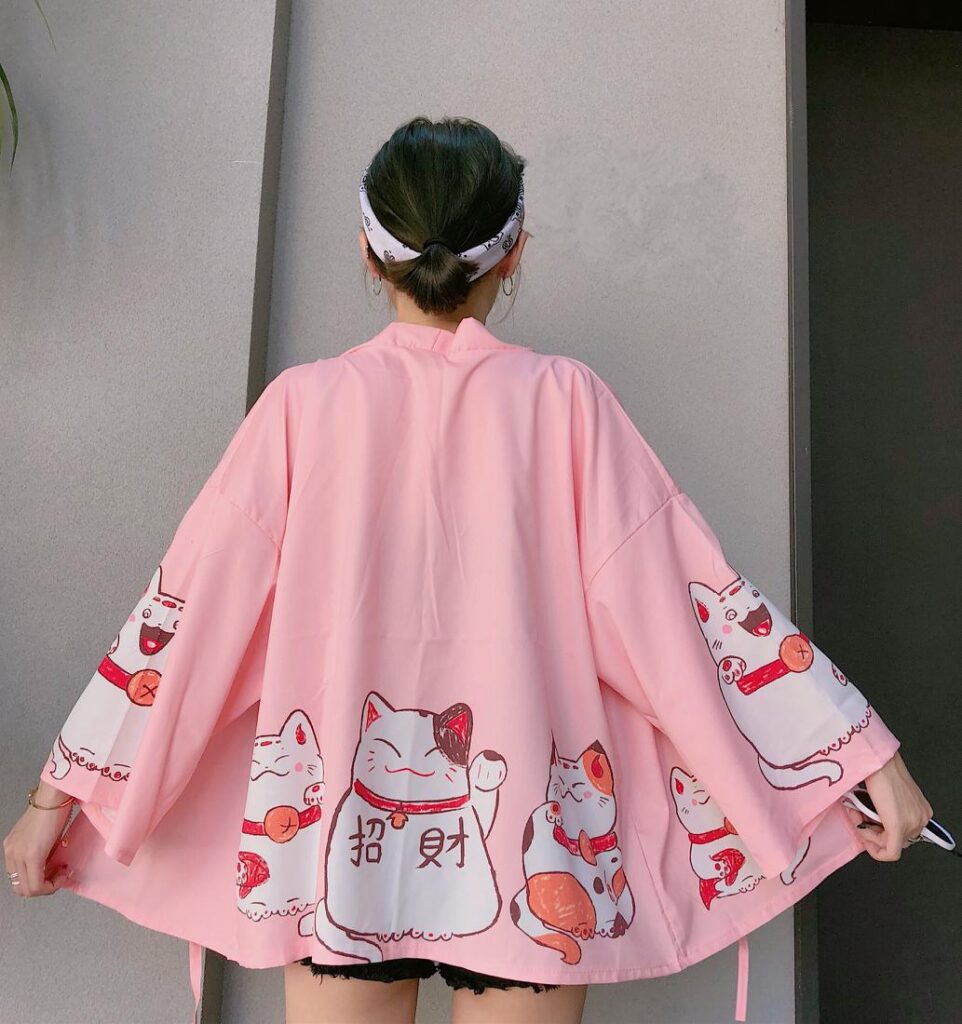
Cute Japanese motifs are another big part of modern Japanese style clothing. The maneki-neko, or beckoning cat, is a traditional Japanese lucky charm and a favourite print on kimono jackets, alongside koi fish, cherry blossoms and Shiba Inu dogs.
How Do You Wear Japanese Style Clothing Every Day?
You do not need a full kimono to enjoy Japanese style. Try these easy outfit ideas:
- Kimono jacket and jeans: wear a printed kimono jacket open over a plain white T-shirt and straight-leg jeans.
- Layer over a dress: put a light kimono cardigan over a slip dress or a summer dress for a breezy look.
- Belt it: add a wide fabric belt over a kimono jacket to suggest an obi.
- Graphic tees: choose tops with Japanese characters, like the Japanese Bear T-shirt or the Strawberry Milk Box Hoodie.
- Keep it simple: let one Japanese-inspired piece be the star and keep the rest of the outfit plain.
Want more ideas? Our kawaii outfit ideas and kawaii clothing guide show how to build full looks. Browse every style in our Kawaii Kimono collection.
Can You Match a Japanese Outfit With a Plushie?
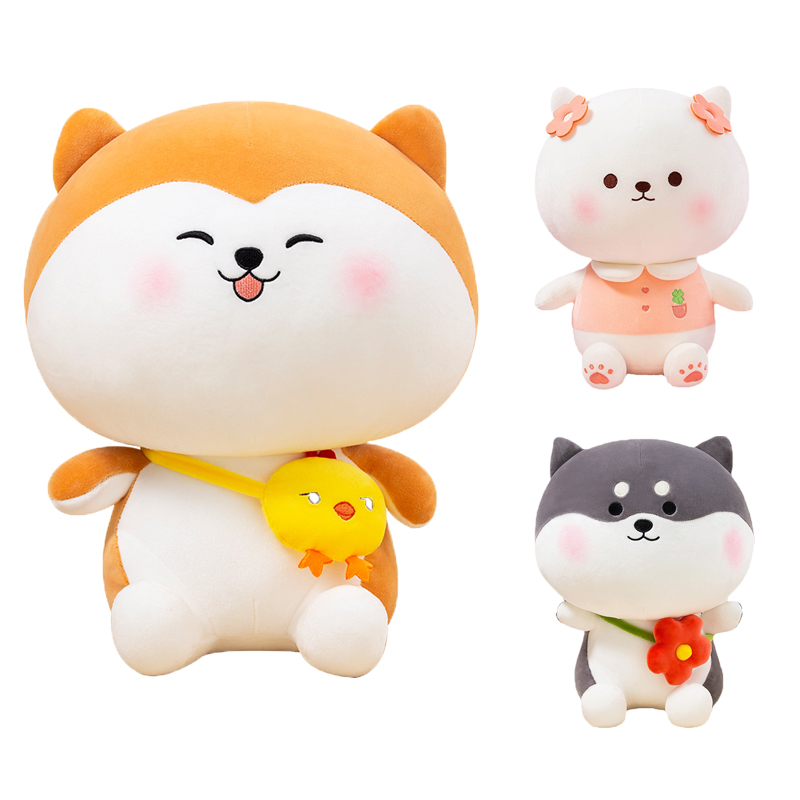
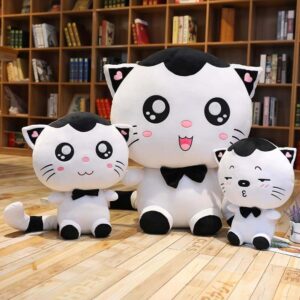
Yes, and it makes a cute theme for photos, conventions or gifts. Match the print on your jacket to a plush friend. The Shiba Inu kimono pairs well with the Kawaii Shiba Inu Stuffed Animal ($19.99) and the Indoor Kawaii Shiba Inu Slippers. For a food theme, the Kawaii Japanese Sushi Plush Pillow (40cm) is a fun extra. You can find more ideas in our kawaii stuffed animals collection.
How Do You Care for Kimono-Style Clothing?
Traditional silk kimono are usually sent to specialist cleaners. Modern kimono-style pieces are easier. The kimono jackets above are made of polyester, so follow the label and these tips:
- Wash cold and inside out to protect prints.
- Hang to dry so wide sleeves keep their shape.
- Steam or iron on a low setting to remove creases.
- Store on a wide hanger or folded flat.
Before you order, check the size chart in the product photos, since sizes can differ from US, UK and EU labels. Delivery and return details are on our shipping page and return policy.
Frequently Asked Questions
Is it okay to wear Japanese style clothing if I am not Japanese?
Yes. Kimono rental shops in places like Kyoto and Tokyo’s Asakusa district welcome visitors from all over the world. Wear it with care, learn the left-over-right rule, and treat formal garments with respect.
What is a kimono jacket called?
The traditional jacket worn over a kimono is called a haori. Modern versions are often sold as kimono jackets or kimono cardigans.
What do you wear under a kimono?
A traditional kimono is worn over a thin under-robe called a nagajuban. A modern kimono jacket is simply worn over everyday clothes such as a T-shirt, dress or tank top.
What is the difference between a yukata and a haori?
A yukata is a full-length cotton robe that wraps closed and is tied with an obi. A haori is a shorter jacket that is worn open over other clothes.
Where can I buy Japanese style clothing?
You can shop kimono jackets, kimono dresses and Japanese-inspired tops in our kawaii clothing collection.
Final Thoughts
Japanese style clothing is easier to wear than it looks. Learn the basic garments, remember to wrap left over right, and start with one easy piece such as a kimono jacket. From there you can explore wa-lolita, Harajuku layering and cute Japanese prints at your own pace. Find more cosy and cute pieces on the My Heart Teddy homepage.