What Is Lolita Fashion?
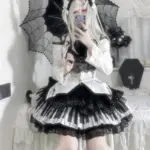
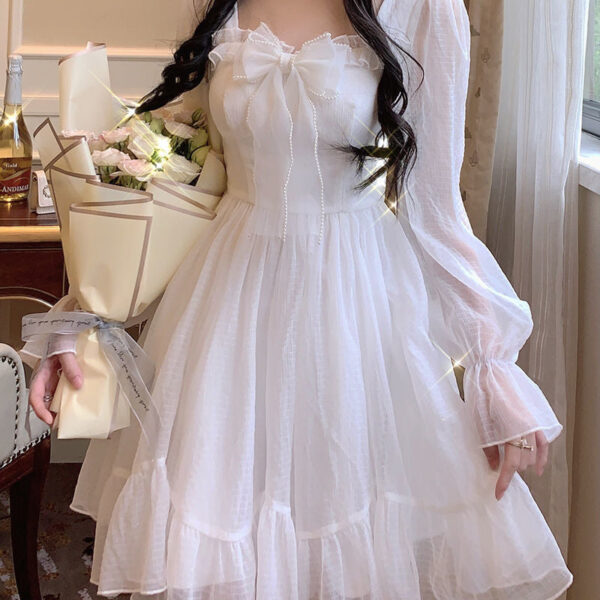
Lolita fashion is a Japanese street style built around modesty, volume, and elaborate detail. A typical outfit pairs a knee-length bell-shaped skirt supported by a petticoat with a blouse, and finishes with coordinated legwear, footwear, and headwear. The silhouette draws on Victorian and Rococo dress, but Lolita is not historical costume and it is not cosplay. It is a contemporary fashion movement with its own rules, vocabulary, and community.
The defining feature is the shape. Where most modern clothing follows the body, Lolita deliberately creates a cupcake or A-line volume at the waist, keeps hemlines at or below the knee, and covers the shoulders and chest. That combination of coverage and exaggerated volume is what makes a coordinate instantly recognisable as Lolita rather than simply “frilly.”
This guide covers where the style came from, how it spread, the elements every coordinate shares, and the major substyles you will encounter — plus practical advice for building and caring for a wardrobe of your own.
The Origins of Lolita Fashion in 1970s and 1980s Japan
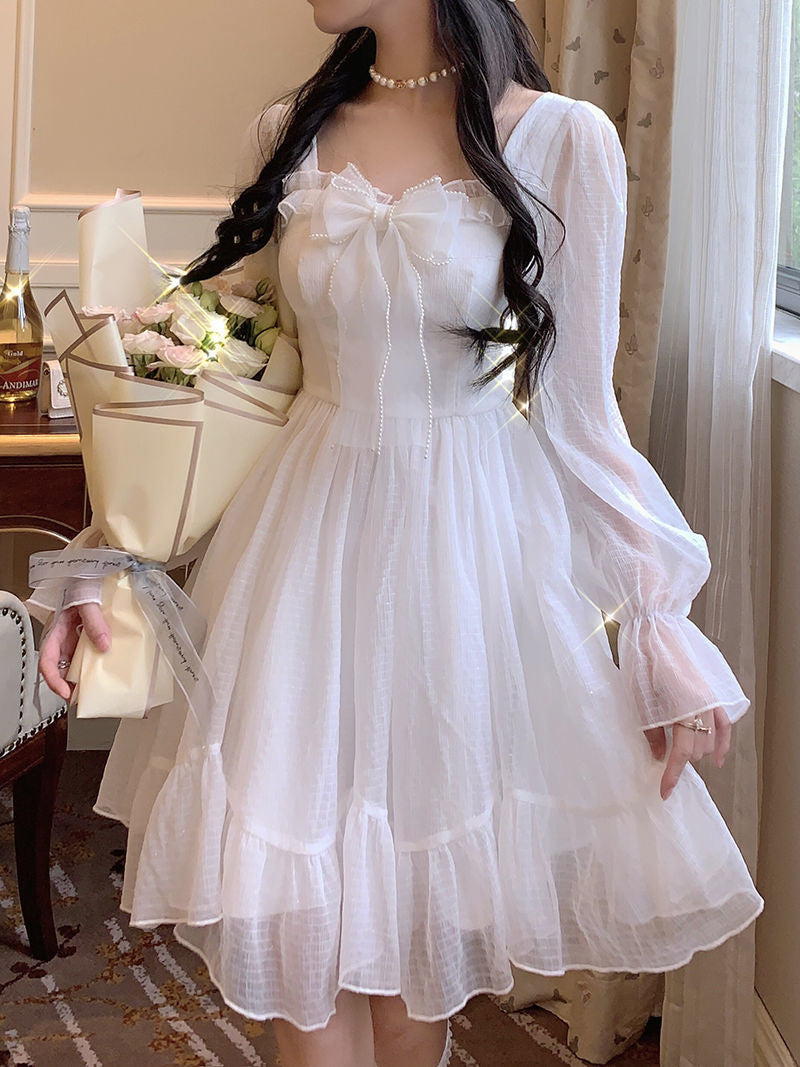
Lolita fashion grew out of Japan’s postwar boom in youth-driven street style. Through the 1970s, a wave of Japanese labels began producing romantic, girlish clothing with pintucks, lace trim, and high necklines — a deliberate turn away from the body-conscious Western fashion of the era. This softer look was often described at the time as “doll-like,” and it gave young women a way to dress that was expressive without being revealing.
The 1980s pushed the look further. Japan’s economic surge funded an explosion of independent boutiques and youth magazines, and districts such as Harajuku in Tokyo became open-air laboratories for personal style. Musicians in the visual kei scene — known for theatrical androgyny and dramatic stage costume — brought lace, ruffles, and Victorian tailoring to a mass audience. Fans adapted those stage looks into wearable street outfits, and a distinct silhouette began to settle into place.
By the end of the decade the core formula had emerged: a fitted bodice, a skirt held out by a petticoat, a modest neckline, and coordinated accessories from head to shoe. The name “Lolita” attached itself to the style during this period. Within the community it refers strictly to the silhouette and its emphasis on modesty and childlike whimsy — it carries no connection to the novel of the same name, and members of the subculture are consistently clear on that point.
The 1990s Boom and the Move Overseas
The 1990s turned a regional look into a movement. Dedicated Japanese street-fashion magazines began documenting Harajuku outfits in detail, and readers across the country could finally see how a full coordinate was assembled. Specialist brands opened, style guidebooks circulated, and an informal set of conventions hardened into something closer to a shared rulebook.
Two things carried Lolita abroad. The first was the internet: forums, image boards, and later social platforms let enthusiasts outside Japan study coordinates, ask questions, and trade secondhand pieces. The second was anime and manga fandom, which introduced Western audiences to Japanese street style and gave them a reason to seek it out. Local communities formed, organising meetups, tea parties, and conventions.
Today Lolita is genuinely global. Regional communities have developed their own preferences — some lean heavily sweet, others toward the darker or more restrained ends of the spectrum — while the underlying silhouette has stayed remarkably stable for more than three decades. That consistency is unusual in fashion, and it is a large part of why the style has endured.
The Anatomy of a Lolita Coordinate
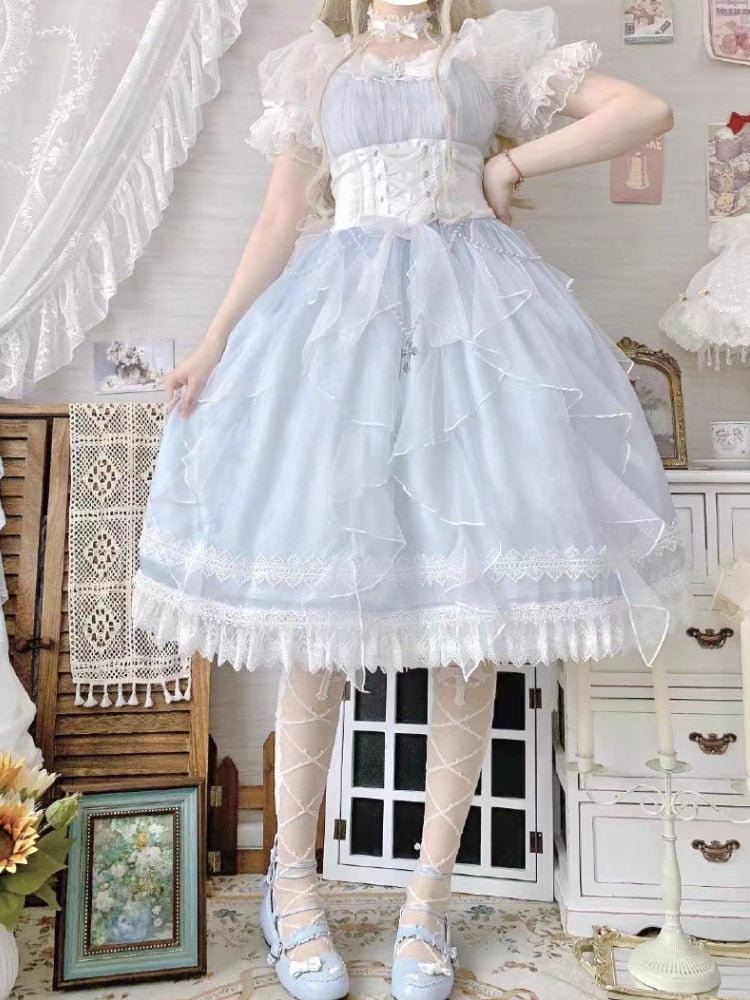
Lolita outfits are called “coordinates,” or “coords” for short, because every element is chosen to work with the others. A coordinate that is merely a nice dress will read as incomplete; the balance between pieces is the point.
- The main garment. Usually a one-piece dress, a jumperskirt worn over a blouse, or a separate skirt and blouse combination.
- The petticoat. The structural core of the look. Without it the skirt collapses and the silhouette disappears.
- The blouse. High-necked or Peter Pan collared, with puffed or bell sleeves.
- Legwear. Knee socks, over-the-knee socks, or tights, often patterned to echo the print of the dress.
- Footwear. Rounded-toe Mary Janes, tea party shoes, or platform boots depending on substyle.
- Headwear. A headbow, headdress, bonnet, or a simple ribbon.
- Accessories. Wrist cuffs, a small structured bag, and jewellery that matches the theme.
Colour discipline holds the whole thing together. Most coordinates work from two or three colours, with one dominant shade carried across several pieces so the eye reads the outfit as a single deliberate statement.
The Different Lolita Fashion Styles
Lolita is an umbrella term. Beneath it sit a number of substyles that share the silhouette but diverge sharply in mood, palette, and styling.
Sweet Lolita
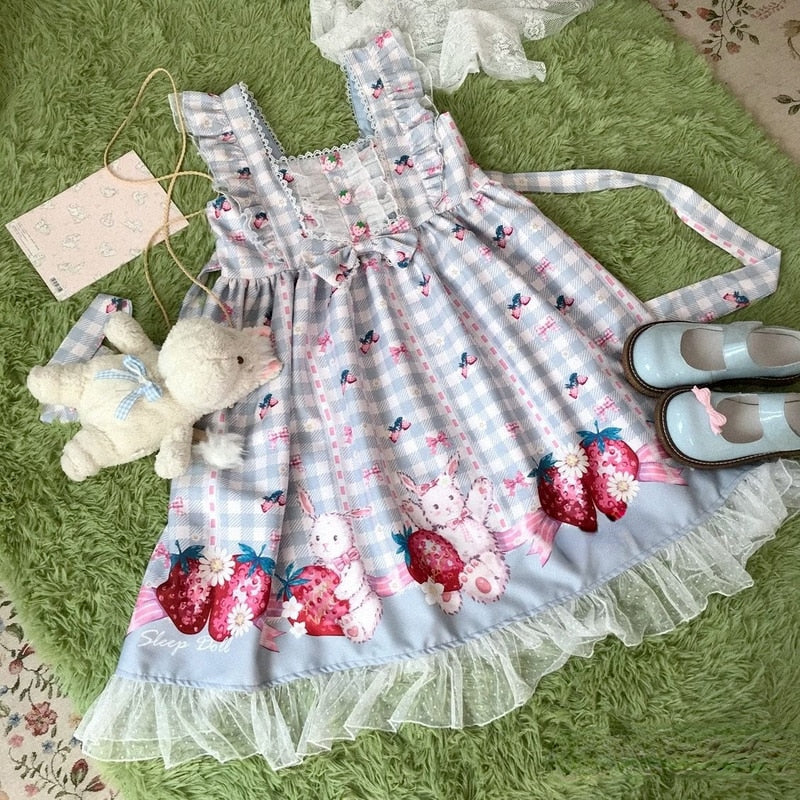
The most instantly recognisable substyle. Sweet Lolita leans into pastel pinks, mints, creams, and lavenders, with prints featuring sweets, fruit, bows, and small animals. Silhouettes are rounded and the styling is playful, often with pigtails or soft curls. Pieces such as the Plaid Strawberry Bunny Princess Dress and the Chiffon Strawberry Puff Sleeve Dress sit squarely in this territory.
Gothic Lolita
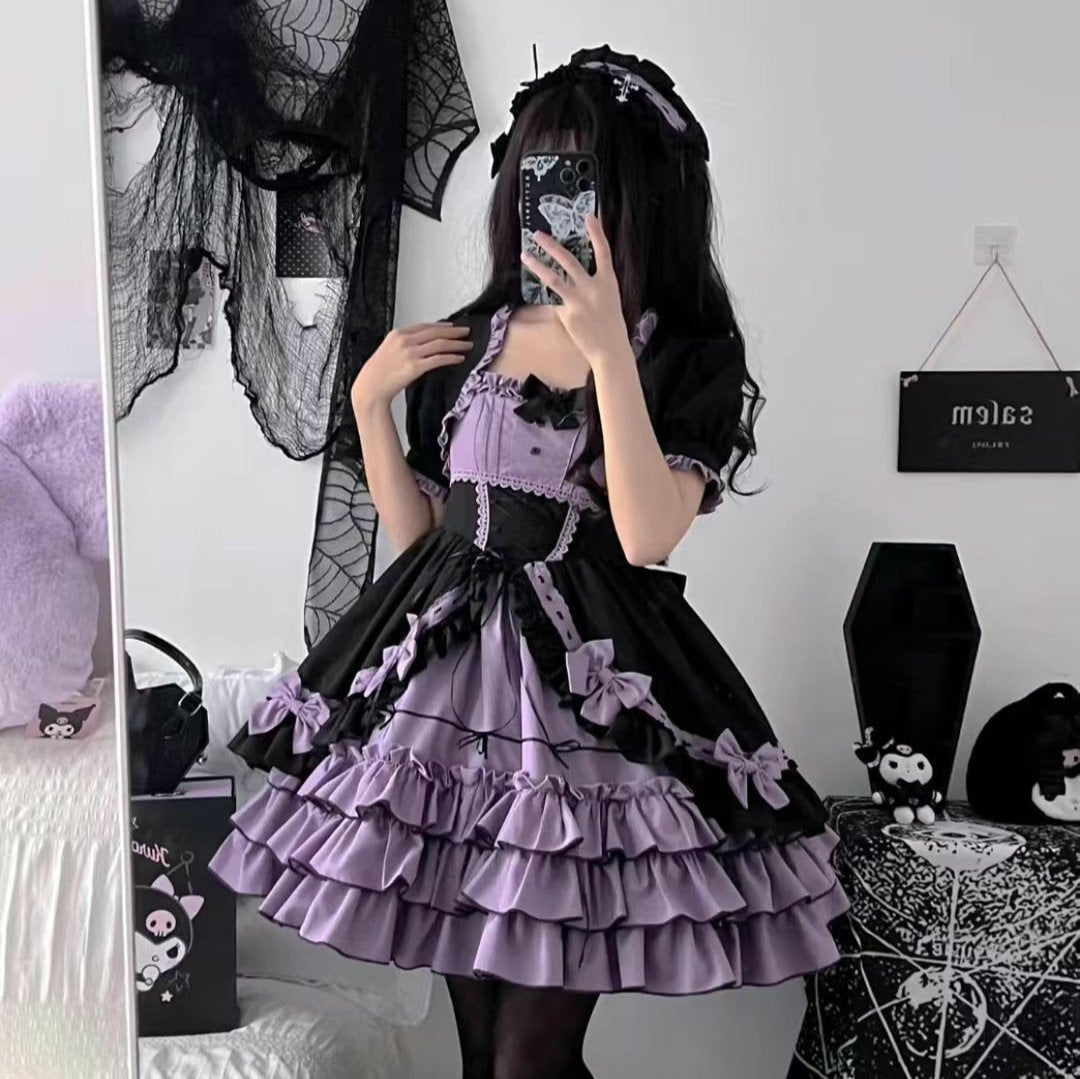
Gothic Lolita pairs the same silhouette with a dark palette — black, deep burgundy, midnight blue — and motifs drawn from Victorian mourning dress: crosses, bats, coffins, ornate crucifix jewellery. Makeup is heavier, and lace is typically black rather than ivory. The Pastel Goth Maiden Dress and Dark Academia Black Dress show how the darker end of the spectrum still keeps the volume and modesty intact.
Classic Lolita
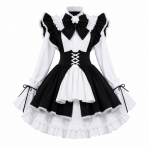
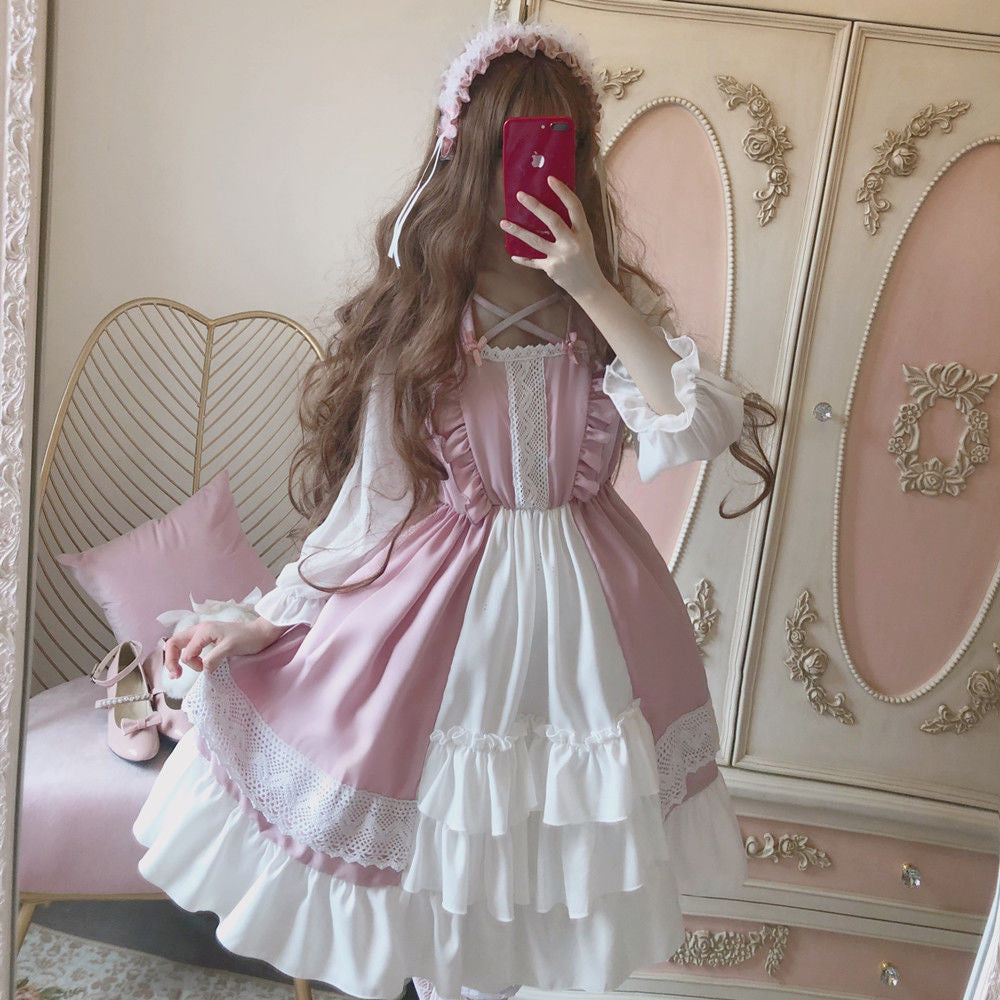
The most restrained and mature substyle. Classic Lolita uses muted tones — dusty rose, sage, wine, cream — and favours florals, small repeating patterns, and solid fabrics over novelty prints. Silhouettes often follow a softer A-line rather than a full bell. The Elegant Victorian Maid Dress reflects this quieter, more historically grounded direction.
Wa Lolita
Wa Lolita fuses the silhouette with traditional Japanese dress, adapting kimono sleeves, obi-style waist sashes, and wafuku prints into a bell-shaped skirt. The Traditional Japanese Pink & Black Kimono Dress is a clear example of this crossover.
Punk Lolita
Punk Lolita introduces plaid, safety pins, chains, deconstructed hems, and chunky boots. Skirts may be asymmetric and the palette often runs to red, black, and tartan. It is the most rebellious reading of the silhouette while still respecting its proportions.
Country Lolita
A lighter, pastoral variation built on gingham, straw hats, wicker baskets, fruit prints, and soft cotton fabrics. Country Lolita reads as a picnic-ready take on the Sweet palette.
Guro Lolita
A theatrical, avant-garde substyle sometimes described as “broken doll.” Guro coordinates use mostly white garments with staged bandages and prop details to create a deliberately unsettling contrast against the innocence of the silhouette. It is worn largely for photography and events rather than daily wear.
Ouji
Ouji, or prince style, is the androgynous counterpart to Lolita. It swaps the skirt for tailored shorts or knickerbockers with waistcoats, blouses, and boots, keeping the same Victorian reference points. Ouji is frequently worn alongside Lolita within the same community.
Lolita Fashion Is Not Cosplay
This distinction matters to the community. Cosplay recreates a specific existing character; Lolita is personal fashion with no character attached. A Lolita wardrobe is assembled to the wearer’s own taste and worn out in ordinary life — to cafés, meetups, concerts, and errands. Treating it as costume misreads what the style is for.
How to Build Your First Lolita Coordinate
Starting a wardrobe is easier when you build in order rather than buying whatever appeals first.
- Choose a substyle first. Deciding between sweet, gothic, and classic narrows every later decision.
- Buy the petticoat early. It is the single piece that most determines whether a coordinate reads correctly.
- Start with a solid-colour main piece. Solids coordinate with far more than a bold print will.
- Check measurements, not dress size. Bust, waist, and shoulder width matter more than a general size label.
- Match your metals and your whites. Mixing silver with gold, or stark white with ivory, is the most common beginner slip.
- Add one statement accessory. A headbow or structured bag lifts a simple outfit considerably.
You can browse full outfits in the Kawaii Dress collection and coordinate blouses, knitwear, and separates from Kawaii Clothing at My Heart Teddy.
How to Care for Your Lolita Wardrobe
Lace, chiffon, and layered cotton need gentler handling than everyday clothing.
- Hand wash or use a cold delicate cycle inside a mesh laundry bag.
- Skip the tumble dryer — hang or lay flat to dry to protect the shape.
- Store petticoats hanging upside down so the tulle keeps its volume.
- Use padded hangers for heavy jumperskirts to prevent shoulder marks.
- Iron on low heat with a pressing cloth, and steam lace rather than pressing it flat.
Frequently Asked Questions About Lolita Fashion
Is Lolita fashion related to the novel of the same name?
No. The style takes its name independently and the community consistently rejects any association with the book. Lolita fashion is defined by modest coverage and a childlike, whimsical silhouette.
Can anyone wear Lolita fashion?
Yes. There is no age, gender, or body-type requirement. Substyles such as Classic and Gothic are popular with adult wearers, and Ouji offers an androgynous alternative.
Do I need a petticoat?
For an authentic silhouette, yes. The petticoat creates the volume that defines the look, and without one a coordinate will read as an ordinary dress.
What is the difference between a one-piece and a jumperskirt?
A one-piece is a complete dress worn on its own. A jumperskirt has no sleeves and is designed to be worn over a blouse, which makes it more adaptable across seasons.
How many pieces do I need to start?
A main garment, a petticoat, a blouse, legwear, shoes, and one head accessory will produce a complete first coordinate.
Is Lolita fashion still popular?
Yes. The community remains active worldwide, sustained by online groups, regional meetups, and a healthy secondhand market, and the core silhouette has changed very little in over thirty years.
Final Thoughts
Lolita fashion has lasted because it offers something most trends do not: a clear, deliberate silhouette that rewards care and personal expression rather than chasing seasonal turnover. From its beginnings in 1970s Japanese boutiques to a global community spanning dozens of countries, it has stayed recognisably itself while making room for sweet, gothic, classic, punk, and every reading in between.
Whether you are drawn to pastel prints, Victorian restraint, or something darker, the best way in is to pick one substyle, get the silhouette right, and build outward from there. Explore the Kawaii Dress and Kawaii Clothing collections at My Heart Teddy to start your first coordinate.
Curious how Lolita sits among the wider kawaii aesthetics? Explore all 20 kawaii substyles explained.