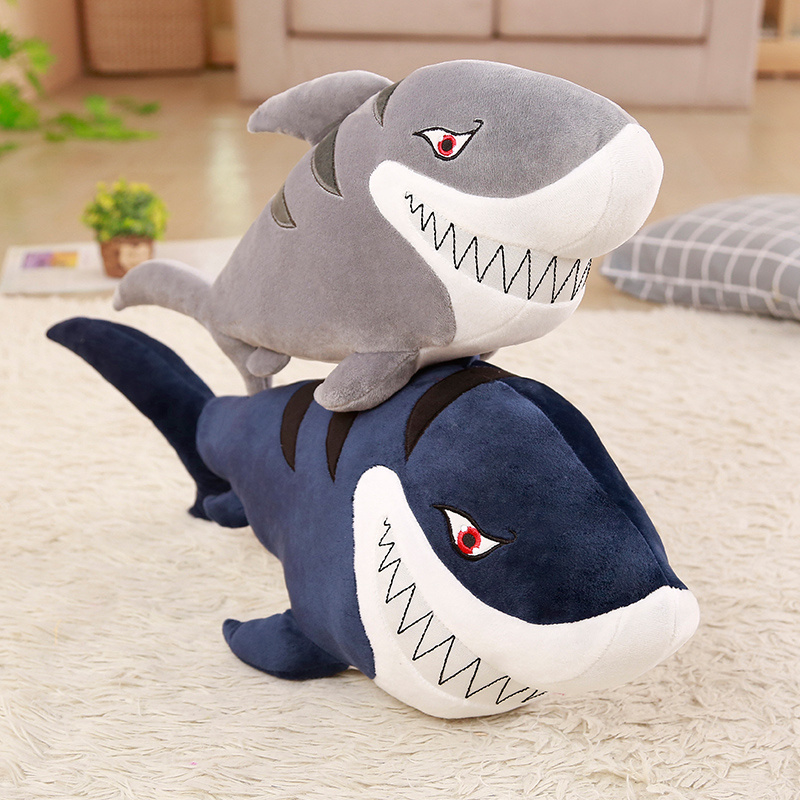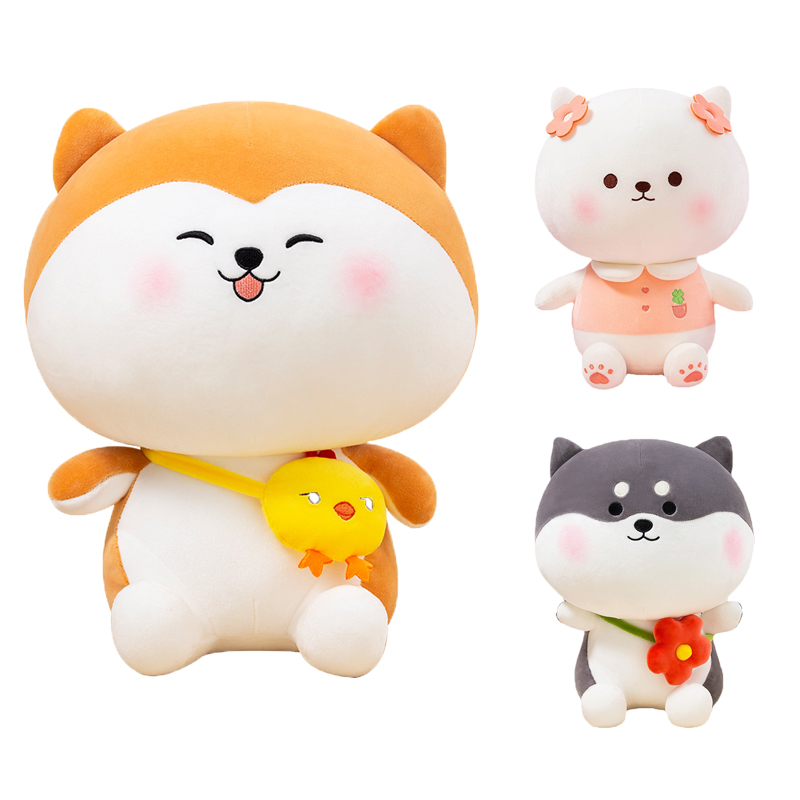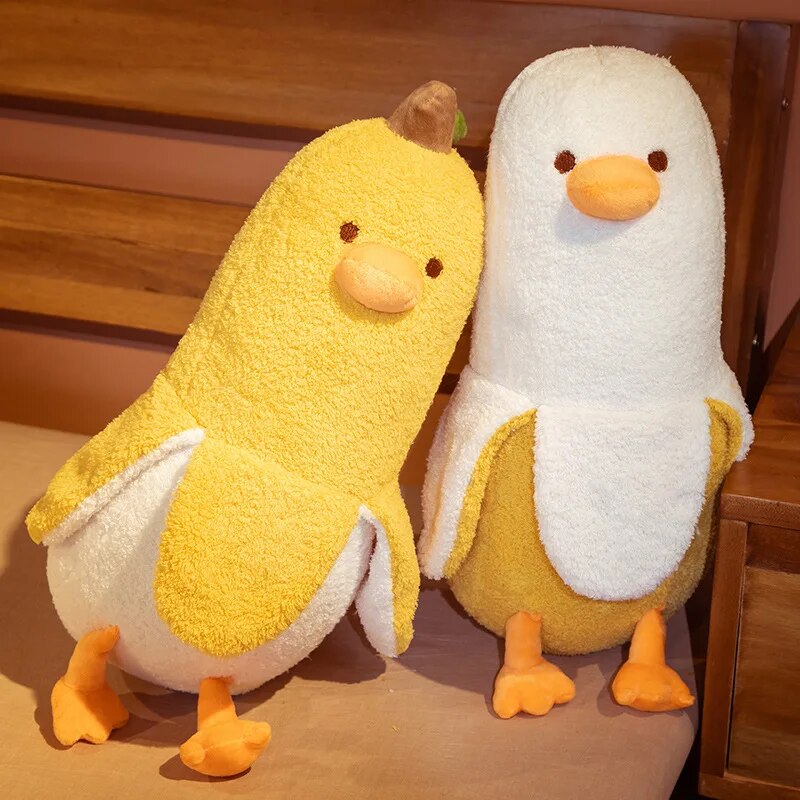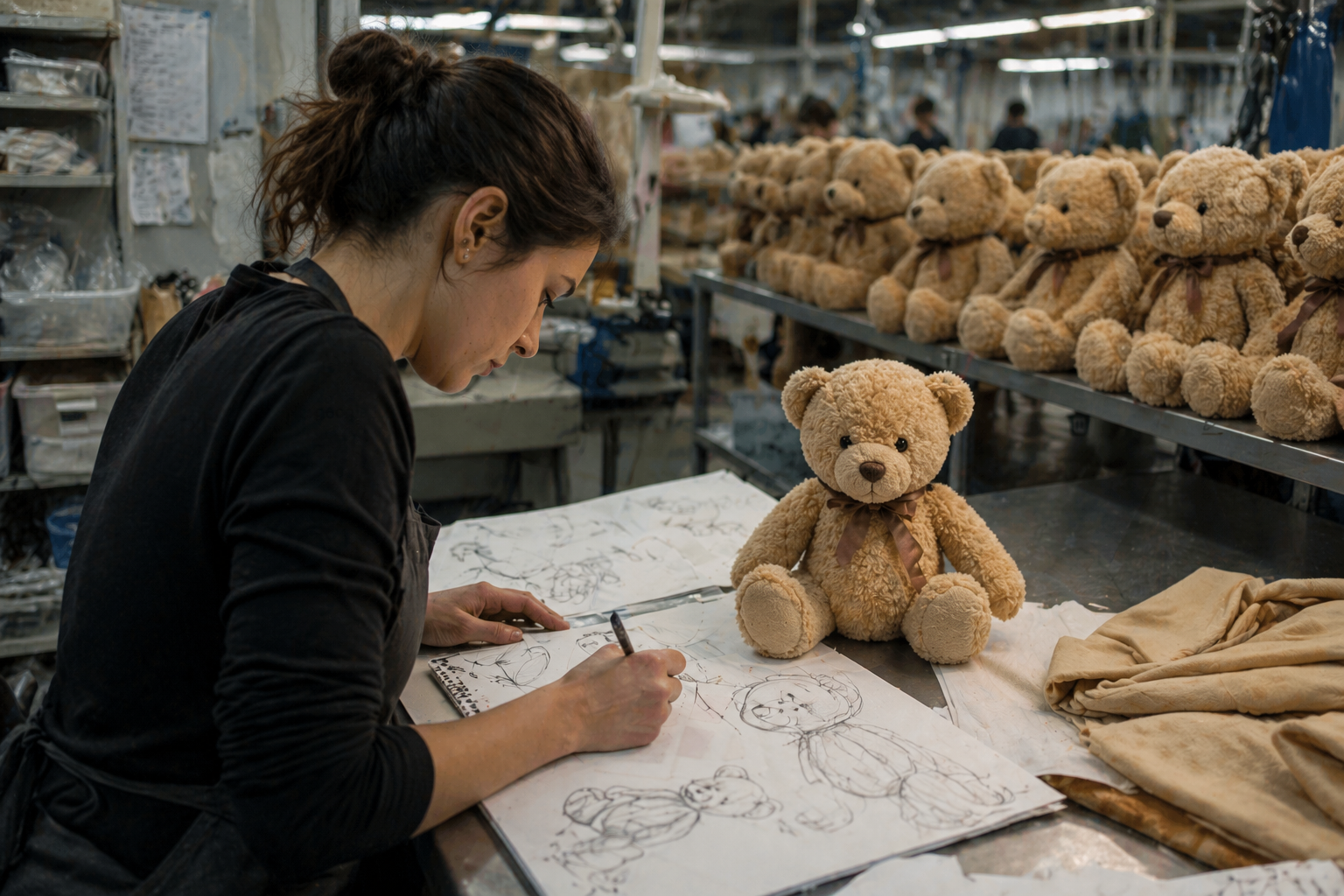

The history of stuffed animals as shop-bought toys begins in 1880, when German seamstress Margarete Steiff sewed a small felt elephant as a pincushion and discovered that children wanted it as a toy. Soft toys went global in 1902–1903, when the teddy bear appeared almost at the same moment in Germany and the United States and took its name from President Theodore “Teddy” Roosevelt. Since then, stuffed animals have moved from mohair and wood shavings to washable polyester, from nursery shelves to collectors’ cabinets, and from palm-sized bears to giant plush that adults happily buy for themselves. Here is the full story, from the earliest rag toys to today.
Key Takeaways
- Soft toys are ancient: rag dolls stuffed with linen survive from Roman-era Egypt.
- 1880 is the turning point: Margarete Steiff’s felt elephant became the first commercially successful stuffed animal.
- The teddy bear was born twice in 1902–1903: Richard Steiff’s jointed bear in Germany and Morris and Rose Michtom’s “Teddy’s bear” in Brooklyn.
- Materials changed everything: mohair, felt and wood wool gave way to synthetic plush and polyester filling after the Second World War.
- Crazes made plush collectible: Care Bears, Beanie Babies and Build-A-Bear Workshop shaped the 1980s and 1990s.
- Today plush is for every age, from giant cuddle companions to weighted and character plush.

Stuffed Animal History Timeline
| When | Milestone | Why it matters |
|---|---|---|
| Roman era (1st–5th century AD) | Rag dolls stuffed with linen are made in Egypt | Among the oldest surviving soft toys |
| 1800s | Wooden Noah’s ark sets and homemade cloth animals | Animal toys were common, but soft ones were mostly sewn at home |
| 1880 | Margarete Steiff sews a felt elephant | The first stuffed animal sold successfully as a toy |
| November 1902 | Roosevelt refuses to shoot a tied bear in Mississippi | The story that named the teddy bear |
| 1902–1903 | Richard Steiff’s jointed bear and the Michtoms’ “Teddy’s bear” | The birth of the teddy bear |
| 1904 | Steiff introduces its “Button in Ear” mark | One of the first ways to tell a genuine toy from a copy |
| 1926 | Winnie-the-Pooh is published | A storybook bear becomes a worldwide icon |
| 1958 | A Bear Called Paddington is published | Another bear joins popular culture |
| Post-war decades | Synthetic plush and polyester filling replace mohair and wood wool | Softer, lighter and washable toys |
| 1983 | Care Bears plush toys arrive | Character plush linked to cards and TV |
| 1985 | Teddy Ruxpin, the talking bear | Technology meets the teddy |
| 1993 | Ty launches Beanie Babies | A worldwide collecting craze |
| 1997 | Build-A-Bear Workshop opens in St. Louis | Making your own bear becomes an experience |
| 2010s–today | Giant, weighted and kawaii plush | Stuffed animals for adults, comfort and room decor |
When Were Stuffed Animals Invented?
Children have played with toy animals for thousands of years, but most early examples were carved from wood or shaped from clay. Soft toys are harder to trace because fabric rarely survives. One remarkable exception is a group of rag dolls from Roman-era Egypt, sewn from linen and stuffed with rags and papyrus; one is held in the British Museum.
For most of the 19th century, toy animals in Europe and America were still made from wood, tin or papier-mâché. Wooden Noah’s ark sets, with pairs of animals lined up behind the ark, were a favourite in Victorian homes. Soft animals existed, but parents and grandparents usually sewed them from fabric scraps. What was missing was a company that would make soft animals on purpose, in quantity, for children to buy. That changed in a small German town.
Who Made the First Stuffed Animal? Margarete Steiff’s Felt Elephant
Margarete Steiff was born in 1847 in Giengen an der Brenz, in southern Germany. Polio left her unable to walk as a small child, and she used a wheelchair for the rest of her life. She trained as a seamstress and built a business sewing felt clothing.
In 1880 she made a small felt elephant, intended as a pincushion. Children loved it, and it was soon sold as a toy. The Steiff company counts 1880 as its founding year, and other felt animals soon followed the elephant. Her guiding motto, still quoted by the company, was “Only the best is good enough for children.” Margarete Steiff died in 1909, by which time her workshop had grown into an internationally known toy maker.

How Did the Teddy Bear Get Its Name?
In November 1902, President Theodore Roosevelt joined a bear hunt in Mississippi at the invitation of Governor Andrew Longino. After days without success, the hunt’s guide, Holt Collier, and his companions cornered an exhausted black bear and tied it to a tree so the president could take the shot. Roosevelt refused, calling it unsportsmanlike.
The Washington Post cartoonist Clifford Berryman turned the moment into a cartoon titled “Drawing the Line in Mississippi,” published on 16 November 1902. Berryman kept drawing the little bear in later cartoons, and it became a friendly symbol of the president.
In Brooklyn, New York, Morris Michtom, who ran a small candy shop, saw an opportunity. His wife Rose sewed a plush bear, and the couple placed it in their window with the label “Teddy’s bear.” According to the Michtom family, Morris wrote to Roosevelt asking permission to use his name. The bears sold so well that the Michtoms went on to found the Ideal Novelty and Toy Company, which became one of America’s major toy makers.

Steiff or Michtom: Who Made the First Teddy Bear?
The honest answer is both. While the Michtoms were sewing bears in Brooklyn, Margarete Steiff’s nephew Richard Steiff designed a jointed bear made of mohair plush in 1902. Known by its catalogue code 55 PB (55 centimetres, Plüsch, beweglich: plush and movable), it was shown at the Leipzig Toy Fair in March 1903, where an American buyer ordered 3,000 of them.
The two bears were developed independently on opposite sides of the Atlantic, so historians generally credit both. By around 1906 the name “teddy bear” was in everyday use and a full teddy bear craze was under way. In 1907 alone, according to Steiff, the company made 974,000 bears. To protect its toys from imitations, Steiff had introduced its famous “Button in Ear” (Knopf im Ohr) mark in 1904, a small metal button fixed to the ear that collectors still look for today.
What Were Early Stuffed Animals Made Of?
Early teddy bears looked and felt very different from the plush on your bed. They were built to last, but they were firm, heavy and impossible to wash.
| Part | Early 1900s | Today |
|---|---|---|
| Fur | Mohair plush (from angora goats) or felt | Polyester plush, minky and other soft synthetics |
| Stuffing | Excelsior (wood wool), later kapok | Polyester fibrefill; glass or plastic beads in weighted plush |
| Eyes | Black boot buttons, later glass | Locking plastic safety eyes or embroidery |
| Joints | Card or wooden discs at the neck, arms and legs | Mostly sewn, unjointed bodies |
| Care | Brush and spot clean only | Many can be surface-washed or machine-washed (check the label) |
The shape changed too. The first teddies had long snouts, long curved arms and a hump on the back, much like a real bear. Over the 20th century their faces became rounder, with bigger foreheads and shorter noses. In 1985, researchers R. A. Hinde and L. A. Barden measured teddy bears made over several decades and confirmed this drift towards a more baby-like face, which people instinctively find cuter. If you own an older or oversized plush, our guide on how to clean giant stuffed animals explains how to care for it safely.
Famous Bears in Books
Stories turned teddy bears from toys into characters. Winnie-the-Pooh began as a real toy: A. A. Milne’s son, Christopher Robin, received a teddy bear from the London department store Harrods for his first birthday in 1921. The bear’s name came partly from Winnipeg, a black bear at London Zoo. Milne’s book Winnie-the-Pooh, illustrated by E. H. Shepard, was published in 1926. Christopher Robin’s original toys, including Pooh, Eeyore and Piglet, are now displayed at the New York Public Library.
Paddington Bear followed in 1958 with Michael Bond’s A Bear Called Paddington. Bond said the idea came from a lone teddy bear he spotted on a shop shelf near London’s Paddington station on Christmas Eve 1956 and bought as a present for his wife. Ten years later, Don Freeman’s picture book Corduroy (1968) told the story of a department-store bear waiting for a home. Naming a bear is still part of the fun; our teddy bear names guide has hundreds of ideas.
How Did Stuffed Animals Change After the Second World War?
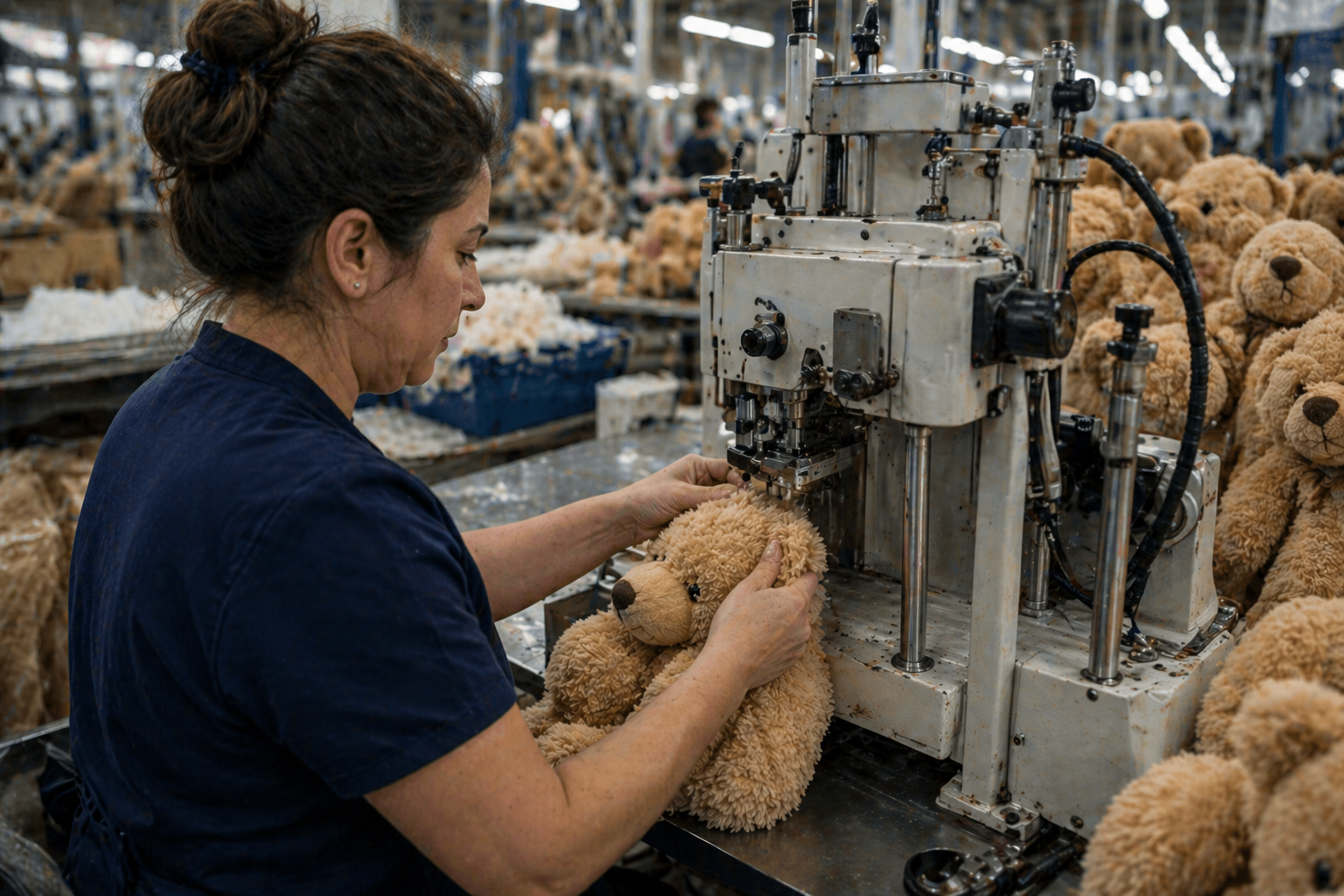
Toy production slowed sharply during the war as factories, materials and workers were redirected. When it recovered, new synthetic fibres changed the industry. Acrylic, nylon and later polyester plush replaced mohair for most toys, and soft polyester filling replaced wood wool. Stuffed animals became lighter, cheaper, cuddlier and, for the first time, washable.
Safety improved as well. Glass eyes and wire gave way to locking plastic safety eyes and embroidered features, and modern toy safety standards such as ASTM F963 in the United States and EN 71 in Europe set rules for small parts, seam strength and flammability. These changes are why today’s plush can be given to young children with far more confidence than the bears of 1903.
The Plush Crazes of the 1980s and 1990s
From the 1980s, stuffed animals became tied to characters, technology and collecting:
- Care Bears: created for American Greetings cards in 1981, they became plush toys in 1983 and soon had their own TV specials and films.
- Teddy Ruxpin (1985): a talking bear from Worlds of Wonder whose eyes and mouth moved as it played stories from a cassette.
- Beanie Babies (1993): Ty’s small bean-filled animals, each with a name and a tag, sparked a collecting frenzy when designs were “retired.”
- Tickle Me Elmo (1996): the giggling plush became one of the most sought-after toys of that holiday season.
- Build-A-Bear Workshop (1997): founded by Maxine Clark in St. Louis, it let children stuff their own bear and place a heart inside.
Collecting is still a big part of the hobby. Browse our collectible plushies if you love building a themed shelf.
The Japanese Kawaii Influence
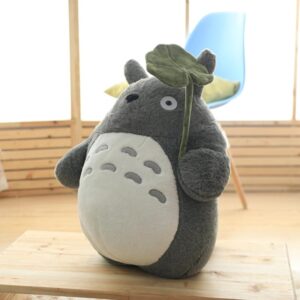
While Western bears dominated the early century, Japan reshaped what “cute” looks like. The kawaii culture that grew in the 1970s favoured round bodies, big heads, small faces and soft pastel colours. Sanrio introduced Hello Kitty in 1974, Studio Ghibli’s My Neighbor Totoro arrived in 1988, and character makers such as San-X followed with Rilakkuma (2003) and Sumikko Gurashi (2012). More recently, illustrator Nagano’s Chiikawa characters, first shared online in 2020, became plush favourites. Learn more in our kawaii stuffed animals guide and our story on who Totoro is.

Stuffed Animals Today: Giant, Weighted and Grown-Up
The biggest change of recent years is who buys stuffed animals. Market research firm Circana has reported adults, often called “kidults,” as a major source of growth in toy sales, and plush is a natural fit. Three trends stand out:
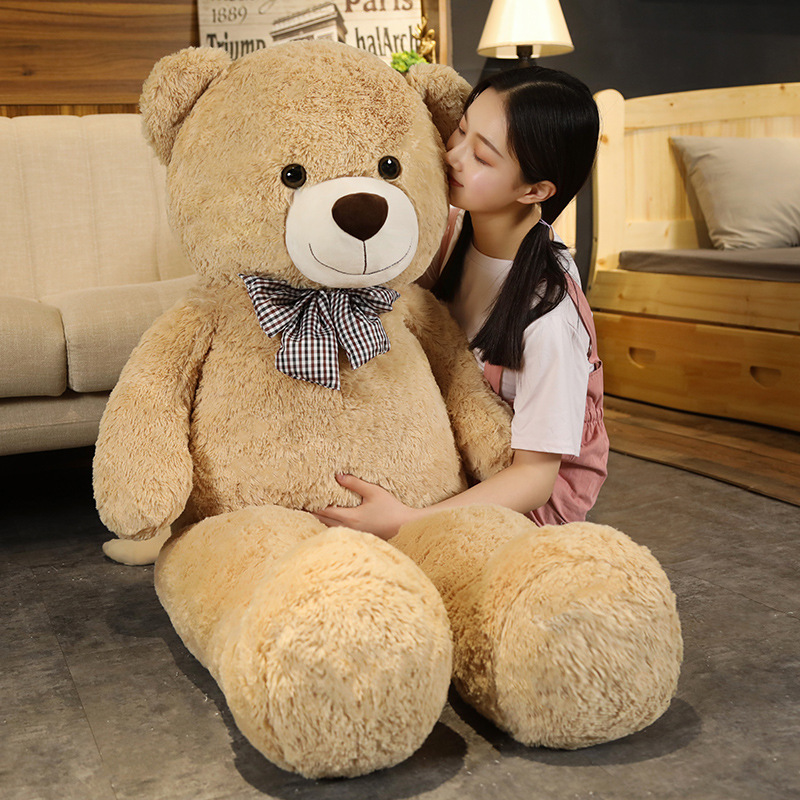
- Giant plush: oversized bears and animals double as room decor and body pillows. See our giant stuffed animals collection and the giant stuffed animal buying guide to choose the right size.
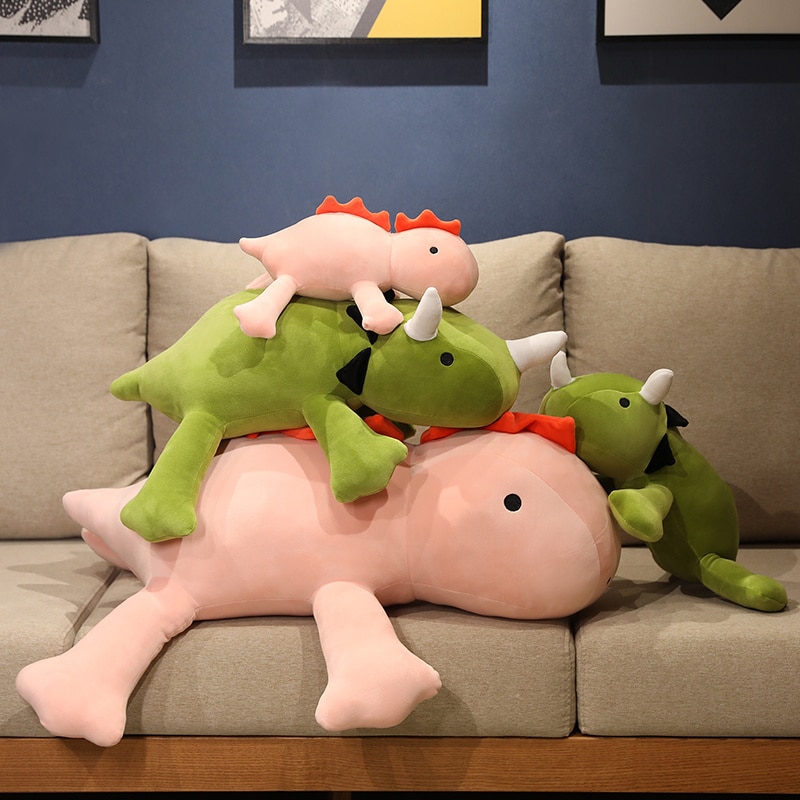
- Weighted plush: extra weight gives a calming, hug-like pressure. Our page on weighted stuffed animals explains how they work.
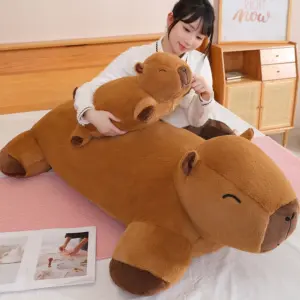
- Plush for adults: from capybaras to cows, grown-ups now buy plush for comfort and personality. Read more in the best stuffed animals for adults.
How to Spot an Antique Teddy Bear
If you have inherited an old bear, these features suggest it may be from the early 20th century:
- Long, curved arms and a humped back
- A long, pointed snout and felt paw pads
- Black boot-button or glass eyes
- Mohair fur, often worn thin
- Firm stuffing that crackles when squeezed (wood wool)
- Disc joints that let the head and limbs turn
- A metal button in the ear, the mark of a Steiff bear
Condition, maker and rarity decide value, and some early Steiff bears have sold for large sums at auction. For a reliable answer, ask a specialist toy auction house or museum.
Note: My Heart Teddy is not affiliated with the brands and characters mentioned in this article. They are named for historical reference only.
Frequently Asked Questions
Who invented the stuffed animal?
Homemade soft toys are ancient, but Margarete Steiff is credited with the first commercially successful stuffed animal: a felt elephant she made in Germany in 1880.
When was the first teddy bear made?
In 1902–1903. Morris and Rose Michtom sold “Teddy’s bear” in Brooklyn after the November 1902 Roosevelt hunt, and Richard Steiff’s jointed bear was shown at the Leipzig Toy Fair in March 1903.
Why is it called a teddy bear?
It is named after US President Theodore “Teddy” Roosevelt, who refused to shoot a tied black bear during a 1902 hunt in Mississippi, a story made famous by Clifford Berryman’s cartoon.
What is the oldest stuffed animal company?
Steiff, founded in 1880 in Giengen an der Brenz, Germany, is one of the oldest soft toy makers still in business.
When is National Teddy Bear Day?
In the United States, National Teddy Bear Day is celebrated on 9 September.
What were old stuffed animals filled with?
Early teddy bears were stuffed with excelsior (wood wool) and later kapok. Modern plush uses soft polyester fibrefill.
Bring Home a Piece of Plush History
From a felt elephant in 1880 to the giant bears and character plush of today, stuffed animals have always been about comfort, companionship and a little joy. Explore our teddy bears, kawaii teddy bears and the full range of kawaii stuffed animals, or find the perfect present in our gift guide.