Why Anime Plush Collections Get Out of Hand
Character plush is unusually easy to accumulate and unusually hard to display well. Each piece arrives with its own colour scheme, its own scale and its own personality, so a shelf of twenty looks like a pile rather than a collection.
The fix is not owning fewer. It is deciding on a structure before you buy, then letting the structure decide what comes next. This guide covers how to build an anime plush collection that still looks intentional at thirty pieces.

Pick a Collecting Rule Before You Pick Pieces
Collections that look good almost always follow one rule consistently. The rule itself matters less than having one.
By character
Everything from one series or one character. The most focused approach and the easiest to display, since the palette stays consistent by default.
By palette
Anything goes as long as it fits a colour range. This is the most flexible rule and the one that scales best past twenty pieces.
By size
All large, or all small. Uniform scale reads as deliberate even when the characters have nothing in common.
By feeling
Only pieces that are genuinely comforting to hold. Less tidy visually, but it is the rule that produces collections people actually use rather than only look at.
Start With an Anchor Piece
Every well arranged collection has one item noticeably larger than everything else. It gives the eye somewhere to rest and stops a shelf reading as clutter.
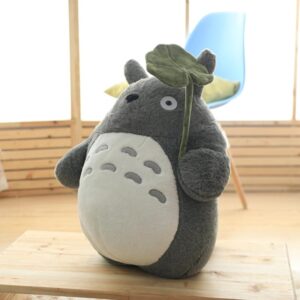
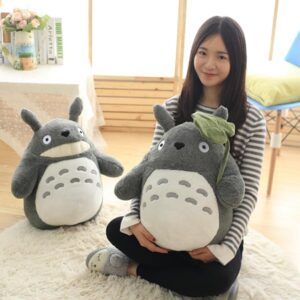
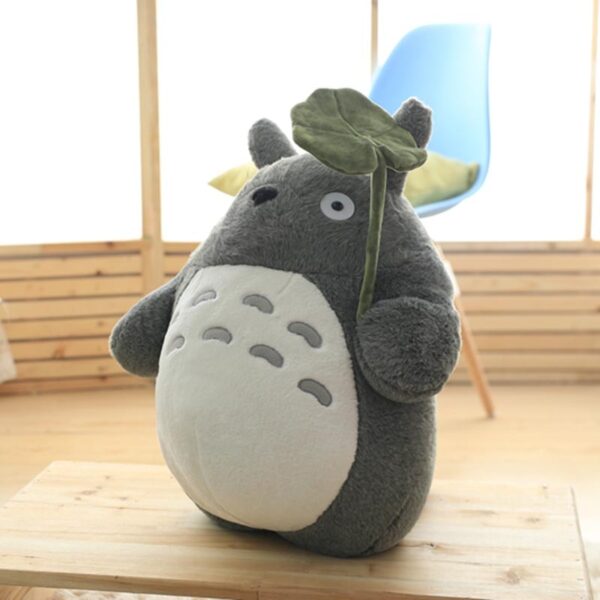
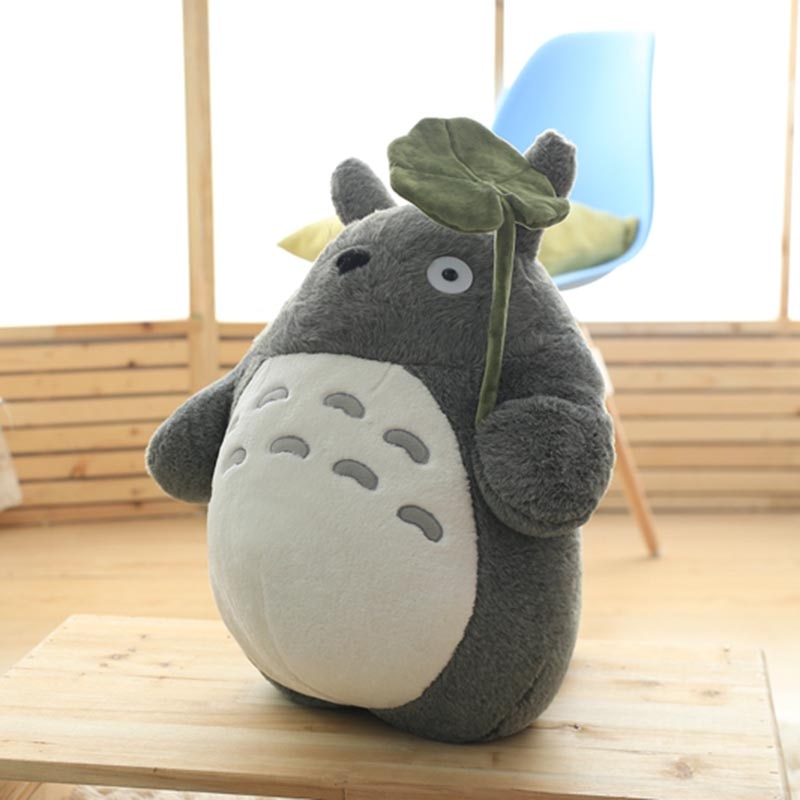
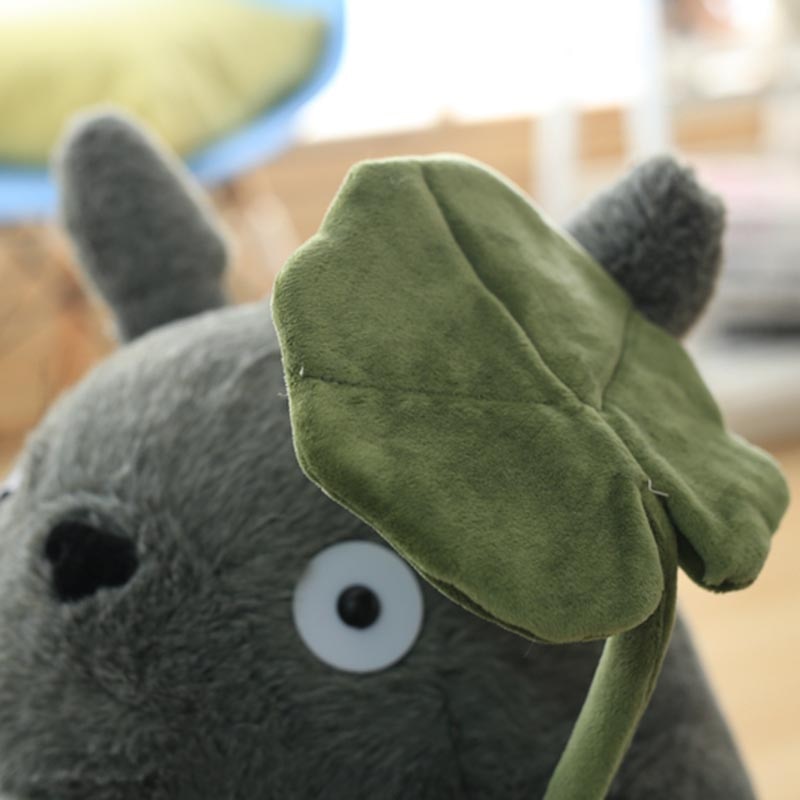
The anchor should be large, neutral in colour and simple in shape. Bright multicoloured characters make poor anchors because they compete with everything around them. A giant totoro plush works particularly well here: grey and cream, broad and rounded, and it sits upright without support.
Buy the anchor first if you can. Building outward from a large piece is far easier than trying to retrofit one into an established shelf.
The Arrangement Rules That Actually Matter
Four rules cover most of it, and they apply whether you have six pieces or sixty.
- Vary the height. Items at a uniform height read as storage. Stagger them and the same shelf reads as styled.
- Group in odd numbers. Threes and fives sit better than fours and sixes. This is the oldest rule in display and it holds.
- Leave deliberate gaps. Empty space is what separates a collection from a hoard. Aim for roughly a quarter of any shelf staying empty.
- Face them the same way. Mixed angles look accidental. Everything facing forward, or everything angled slightly inward, both work.
Depth helps too. Two rows with the taller pieces behind gives a shelf dimension that a single row never achieves.
Where to Put a Collection
Placement decides how long a collection stays looking good.
Open shelving
Best for display, worst for dust. Works well if you are willing to run a lint roller over everything weekly.
Closed glass fronted units
The right answer for anything you consider genuinely collectible. Visible, protected and needs cleaning perhaps twice a year.
Bed and sofa
Where the pieces you actually use should live. Keep this group small and rotate it rather than letting it spread.
Floor
Only for the anchor piece. Multiple large plushies on the floor stops reading as a collection and starts reading as a storage problem.
Our Collectible Plushies range covers display focused pieces, and the plush room decor guide goes further on layout.
Rotation Beats Accumulation
This is the single most useful habit, and almost nobody does it.
Keep a working display of a fixed size, and store the rest properly. Swap pieces in and out every season. The collection stays interesting, the room stays uncluttered, and stored pieces stay in far better condition than displayed ones.
Store in breathable fabric bags rather than sealed plastic, keep them somewhere dry, and avoid compressing anything under weight. Plush that has been crushed for six months does not fully recover.
Protecting Condition Over Time
Three things damage plush collections, in this order.
- Sunlight. The biggest threat by a distance. It fades colour permanently and weakens fabric. Keep shelves off directly sunlit walls.
- Dust. Cumulative and easy to ignore until the colour looks dull. A weekly lint roller pass handles it.
- Compression. Stacking or squeezing pieces flattens fill in ways that do not always spring back.
Tags matter if you care about resale. Keep them attached and undamaged, since a piece with an intact tag holds noticeably more value than one without.
Buying Deliberately
The difference between a collection and an accumulation is what you say no to.
- Ask where it goes before you buy. If you cannot name the shelf, you do not have room for it.
- Check it against your rule. If it breaks the palette or the scale, it will look wrong no matter how much you like it.
- Prefer fewer, larger pieces. Three good plushies display better than nine average ones.
- Buy the anchor early. It is the piece that makes everything else look considered.
If you are starting from nothing, our guide to starting a plush collection covers the first few purchases, and the cutest plushies is a reasonable shortlist.
A Collection That Still Works at Thirty Pieces
If you want a structure to copy:
- One anchor. Large, neutral, on the floor or the lowest shelf.
- Three to five mid sized pieces. On the bed or sofa, actually used.
- A display group of nine to twelve. On open shelving, arranged in odd groups at varied heights.
- Everything else stored, rotated in seasonally.
That structure holds regardless of how large the collection grows, because the visible portion stays a fixed size.
Mixing Character Plush With Non Character Pieces
Pure character collections hit a limit. Every piece competes for attention, and past a certain number the shelf stops having any visual hierarchy at all.
Adding plain pieces solves it. A neutral totoro plush or a simple animal shape gives the eye somewhere to rest between the busier characters, in the same way plain walls make artwork readable.
A rough ratio that works: roughly one plain piece for every three character pieces. Any fewer and the shelf feels crowded, any more and it stops feeling like a collection at all. The Cuddle Buddies range is a good source of simpler shapes that fill this role.
Frequently Asked Questions
How do I display an anime plush collection?
Pick one anchor piece, vary heights, group in odd numbers and leave roughly a quarter of each shelf empty. Consistency matters more than quantity.
What makes a good anchor plush?
Large, neutral in colour and simple in shape. Bright multicoloured characters compete with everything around them and make poor anchors.
How do I keep plush from getting dusty?
Run a lint roller over open shelves weekly, or use glass fronted storage for anything you consider collectible.
Should I keep the tags on?
Yes if resale matters to you. Pieces with intact tags hold noticeably more value.
How do I store plush I am not displaying?
Breathable fabric bags in a dry place, never compressed under weight and never sealed in plastic.
How many plushies should be on display at once?
Fewer than you own. A fixed display group of around a dozen, rotated seasonally, looks better than everything out at once.
Final Thoughts
A collection looks considered when it has structure, and structure comes from one rule, one anchor and the discipline to leave some space empty.
Start with the anchor. A totoro plush in a larger size gives a collection something to build around, and the rest can follow at whatever pace suits you. Browse Kawaii Stuffed Animals at My Heart Teddy to find the pieces that fit your rule.
Related reading: who Totoro is and a cosy movie night setup.