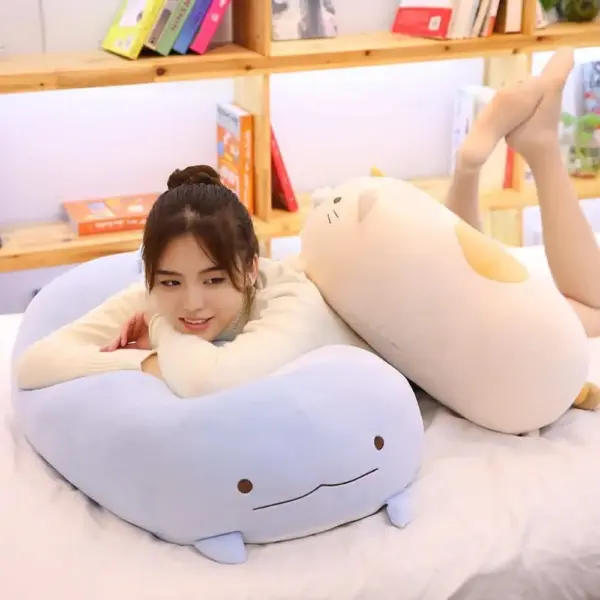
What Does Sumikko Gurashi Mean in Japanese?
Sumikko Gurashi means “living in the corner.” It is written すみっコぐらし in Japanese, and the name is the whole concept in three syllables. These are characters who would genuinely rather be tucked against a wall than sitting in the middle of a room.
If you have ever chosen the seat furthest from the door, or felt calmer with your back against something solid, you already understand the joke. That recognition is why the characters travelled so far beyond Japan.
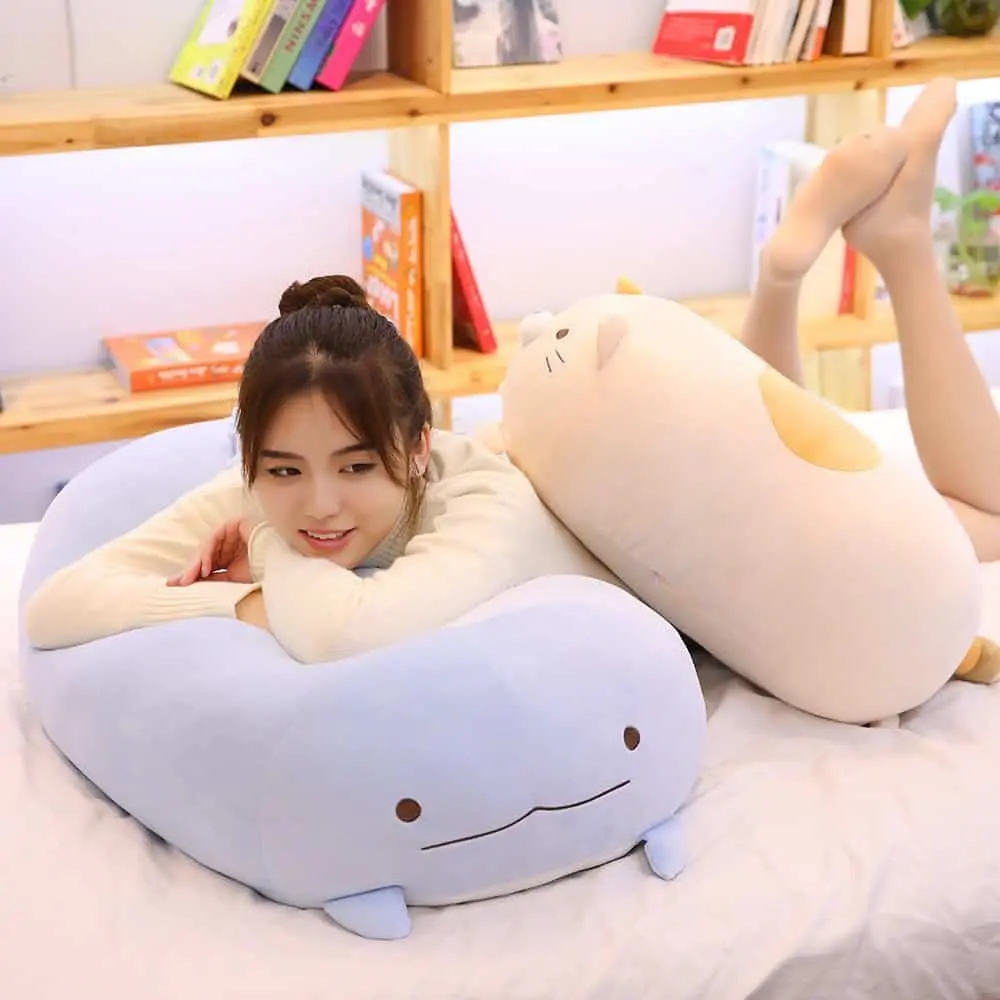
Breaking down the name
Two words are doing the work here.
Sumikko (隅っこ) comes from sumi, meaning corner or edge. The added kko ending makes it softer and more affectionate, the way English might turn a word into something smaller and fonder. So sumikko is not simply “corner.” It is closer to “the little corner,” said warmly.
Gurashi (暮らし) means living or daily life. It is the ordinary word for how someone gets through their days, not an exciting word at all. Put together, the name reads as “little corner life,” which is exactly right for characters whose main ambition is to be left alone somewhere cosy.
You may also see the name written すみっコぐらし with a katakana コ in the middle. That is the official styling, and the mixed script gives the name a slightly playful look on packaging.
Why the corner matters
In Japanese there is a well known observation that people instinctively fill the edges of a space before the middle. Trains, waiting rooms, cafes: the corners go first. The characters take that ordinary habit and treat it as a personality.
None of them are heroes. None of them want an adventure. They want a warm spot, a snack, and no attention. For a franchise aimed partly at stressed adults, that is a surprisingly radical pitch.
How Sumikko Gurashi Started
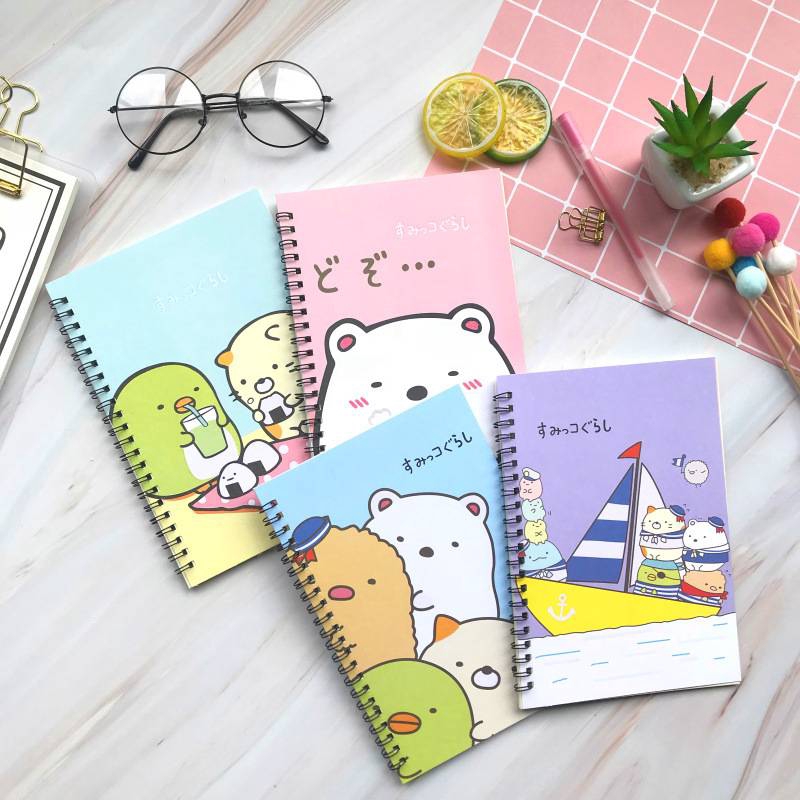
The characters first appeared in 2012, created by a Japanese stationery and character company known for gentle, slightly melancholy designs. They began on notebooks, pencil cases, and small desk goods rather than in a cartoon, which is unusual. The personalities arrived through tiny illustrations and short captions printed on things people already used every day.
Growth was steady rather than explosive. Plush toys followed the stationery, then home goods, then games, then a feature film in 2019. By that point the cast had grown to roughly fifty characters, and the corner had become quite crowded.
That stationery origin still shows. Sumikko Gurashi designs tend to work best small and printed, which is why a Sumikko Gurashi notebook feels so natural next to a plush version of the same character.
Meet the Five Main Sumikko
Five characters form the core group. Each one is defined by a small, specific anxiety, which is the running joke of the whole series.
Shirokuma (しろくま)
A polar bear who does not like the cold. The name means “white bear,” and the character left the far north because it simply could not cope with the weather. Shirokuma is the calmest of the group, fond of hot tea, warm baths, and drawing. It carries a furoshiki cloth everywhere and uses it as a blanket.
Penguin? (ぺんぎん?)
The question mark is genuinely part of the name. This character is not certain it is actually a penguin. It has a vague memory of once having a dish on its head, which suggests it may be something else entirely. Penguin? spends its time reading and quietly investigating its own identity, which is a very relatable way to live.
Tonkatsu (とんかつ)
A leftover piece of fried pork cutlet, specifically the fatty end that nobody ate. Tonkatsu is ninety nine percent fat and one percent meat, and is quietly hoping that someday somebody will finish it. It is the smallest and possibly the most tragic member of the group.
Neko (ねこ)
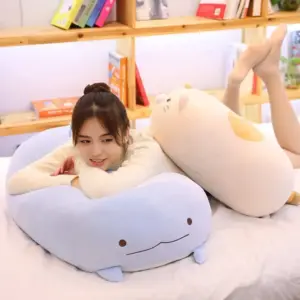
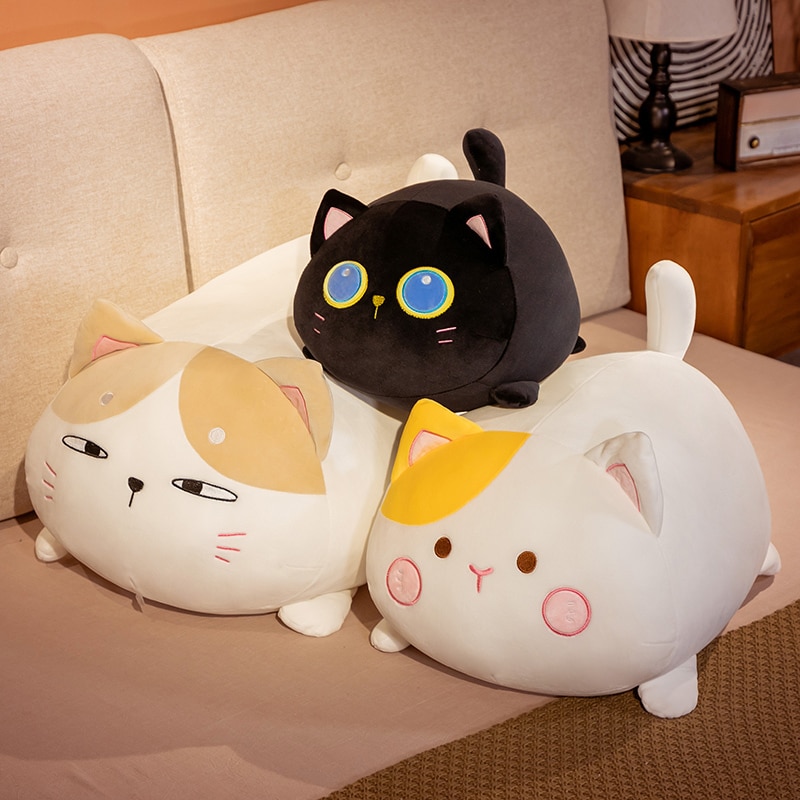
Simply “cat.” A shy, rounded cat who is self conscious about its weight and prefers corners because they feel safe. Neko is the character most people point to first, partly because the shape is so satisfying and partly because the anxiety is so familiar. If you like this one, our Kawaii Cat Plush and Fat Cat Plush land in similar territory.
Tokage (とかげ)
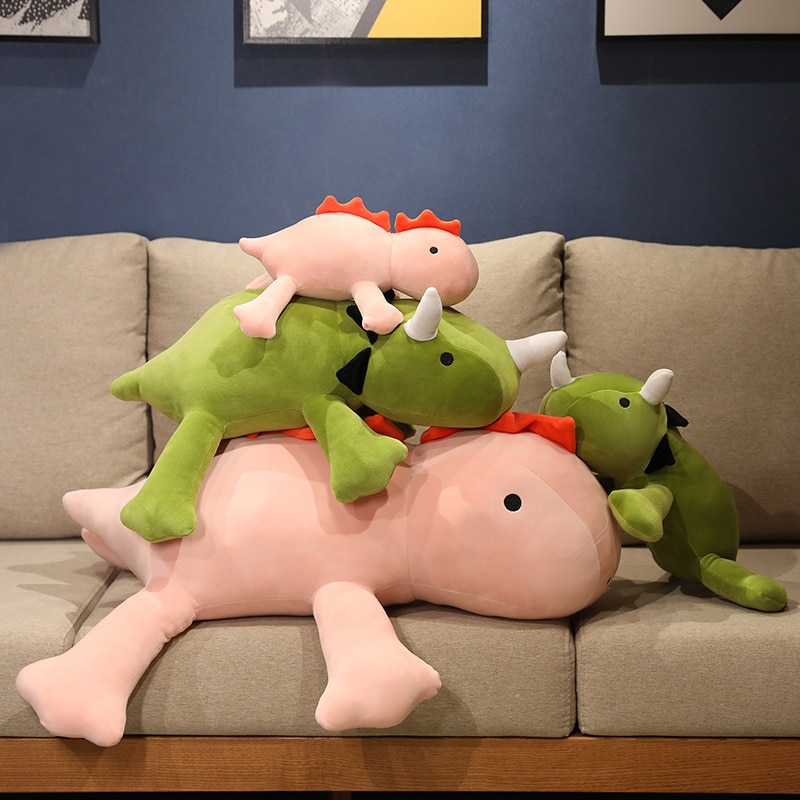
Presented as a lizard, but actually a surviving dinosaur pretending to be a lizard so it does not get captured. Tokage keeps the secret from almost everyone and lives with a low level fear of being found out. A weighted dinosaur plush is a fitting companion piece if this is your favourite.
The Minikko: Smaller Friends in the Corner
Beyond the main five sits a much larger group called the Minikko, the little ones. These are objects and creatures that hang around the same corners. A few of the best known:
- Ebifurai no Shippo (えびふらいのしっぽ): the tail of a fried prawn, left uneaten for the same reason as Tonkatsu. The two are close friends for obvious reasons.
- Furoshiki (ふろしき): a polka dot wrapping cloth, used by Shirokuma as a blanket and occasionally as a hiding place.
- Zassou (雑草): a weed with a stubbornly positive attitude, hoping one day to be part of a proper bouquet.
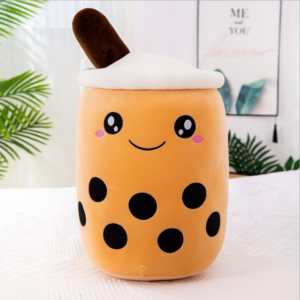
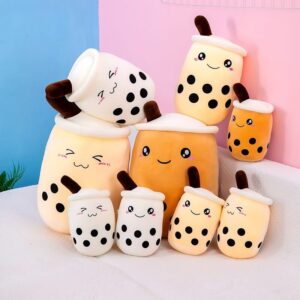
- Tapioca (タピオカ): leftover bubble tea pearls that were too slow to be drunk through the straw.
- Hokori (ほこり): dust bunnies who gather in corners, which does not entirely please the residents already there.
- Nisetsumuri (にせつむり): a slug wearing a borrowed shell, quietly passing as a snail.
- Suzume (すずめ): an ordinary sparrow with an unfortunate fondness for Tonkatsu.
Across all the groups the cast runs to around fifty characters. Collectors tend to pick a favourite early and build outward, which is the same instinct we wrote about in our guide to starting a plush collection.
Why Sumikko Gurashi Resonates So Widely
Plenty of cute characters exist. Very few build an entire identity around wanting to be left alone. Three things explain the reach.
The anxieties are specific. A polar bear who hates the cold is funnier and more memorable than a generically happy mascot. Each character has one clear worry, and that worry is small enough to feel real.
Nothing is fixed at the end. Tonkatsu is never eaten. Penguin? never confirms what it is. The characters simply keep living in the corner, and the series treats that as a perfectly acceptable outcome rather than a problem to solve.
The design is quiet. Muted pastels, rounded shapes, minimal faces. Nothing shouts. That restraint is why the characters sit comfortably in an adult room in a way brighter designs sometimes do not, something we explored in why Gen Z is obsessed with plushies.
Japanese Words Worth Knowing
A few terms come up constantly once you start reading about these characters:
- Sumikko (隅っこ): a little corner or edge of a room.
- Gurashi (暮らし): daily living.
- Minikko (みにっこ): the small supporting characters.
- Kawaii (可愛い): cute, in the broad aesthetic sense rather than simply pretty.
- Nukui (ぬくい): pleasantly warm, a word that suits the mood of the series well.
If you enjoy this side of things, our Japanese culture guide and the Kawaii Encyclopedia go further into the vocabulary.
Bringing the Corner Home
The appeal translates easily into a room. A few practical notes:
- Corners genuinely work. Placing a plush on a shelf corner or a bed corner suits the theme and looks deliberate rather than accidental.
- Keep the palette muted. These designs sit best against cream, dusty pink, sage, and pale grey rather than bright primaries.
- Mix sizes. One larger plush with two or three small ones reads better than several of the same size in a row.
- Start with desk goods. Stationery is where the characters began, and it is the cheapest way in. Browse Kawaii Stationery or Kawaii Desk Accessories.
For the plush side, the Sumikko Gurashi Plush Large is the natural centrepiece, and our Collectible Plushies range covers the rest of the shelf.
Frequently Asked Questions
What does Sumikko Gurashi mean in English?
It means “living in the corner,” from sumikko (little corner) and gurashi (daily life). The name describes characters who prefer edges and quiet spaces.
How do you pronounce Sumikko Gurashi?
Roughly “soo mee koh guh rah shee.” Each syllable gets even weight, with no strong stress on any one part.
How many Sumikko Gurashi characters are there?
Around fifty in total. Five form the main group, and the rest are Minikko and other smaller friends added over the years.
Who is the most popular Sumikko Gurashi character?
Neko the cat and Shirokuma the polar bear are the two most commonly named favourites, largely because their shapes work best as plush.
Is Sumikko Gurashi for children or adults?
Both. The artwork appeals to children, while the humour about anxiety and wanting to be left alone lands more sharply with adults.
What is Tonkatsu in Sumikko Gurashi?
Tonkatsu is the leftover fatty edge of a fried pork cutlet, too oily to be eaten, still hoping someone will finish it.
Final Thoughts
Sumikko Gurashi works because it never asks its characters to change. They stay in the corner, keep their small worries, and the story treats that as fine. In a genre built on relentless cheerfulness, a set of characters who simply want a quiet spot feels genuinely different.
If you want to start your own corner, the Sumikko Gurashi Plush and our wider Kawaii Stuffed Animals range at My Heart Teddy are a good place to begin.